Stomach Channel
Not Contained
不容Bù RóngAnatomical location
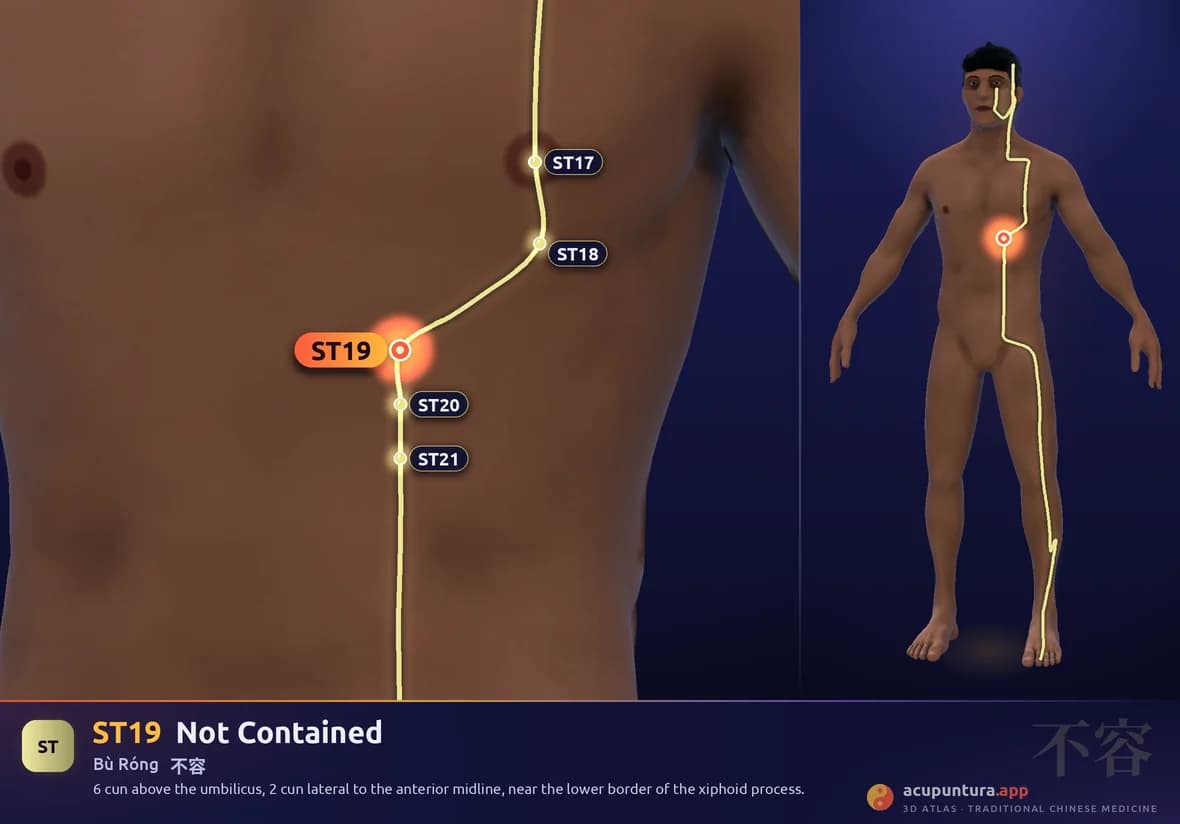
6 cun above the umbilicus, 2 cun lateral to the anterior midline, near the lower border of the xiphoid process.
Main function
Regulates Stomach Qi, descends rebellious Qi, relieves epigastric pain, harmonizes the Middle Jiao.
Therapeutic indications
- Epigastric pain
- nausea
- vomiting
- loss of appetite
- chest distension
- gastric pain
- abdominal distension
- lack of appetite
- hemoptysis
- gastroesophageal reflux
Name and classical tradition
Burong (不容) literally means “no room.” 不 is the negation; 容 means to hold or admit. The traditional reading, which the sources repeat consistently, is both anatomical and functional. The point lies six cun above the umbilicus, at the level of the upper border of the stomach as classical anatomy conceived it: when food reaches this level, the stomach can take in no more.
This is not a modern energetic gloss but a reading grounded in the location, and it fits the name of its immediate neighbor, ST20, “receiving fullness.” Together with ST21, ST22, ST23, and ST24, the epigastric points form a sequence of names that follows the course of food. The first work to record it is the Zhenjiu Jiayi Jing (Systematic Classic of Acupuncture and Moxibustion), which places it “在幽門傍各一寸五分,去任脈二寸”, one and a half cun beside Youmen, KI21, and two cun from the Ren Mai (Conception Vessel).