Stomach Channel
Flesh Gate
滑肉门Huá Ròu MénAnatomical location
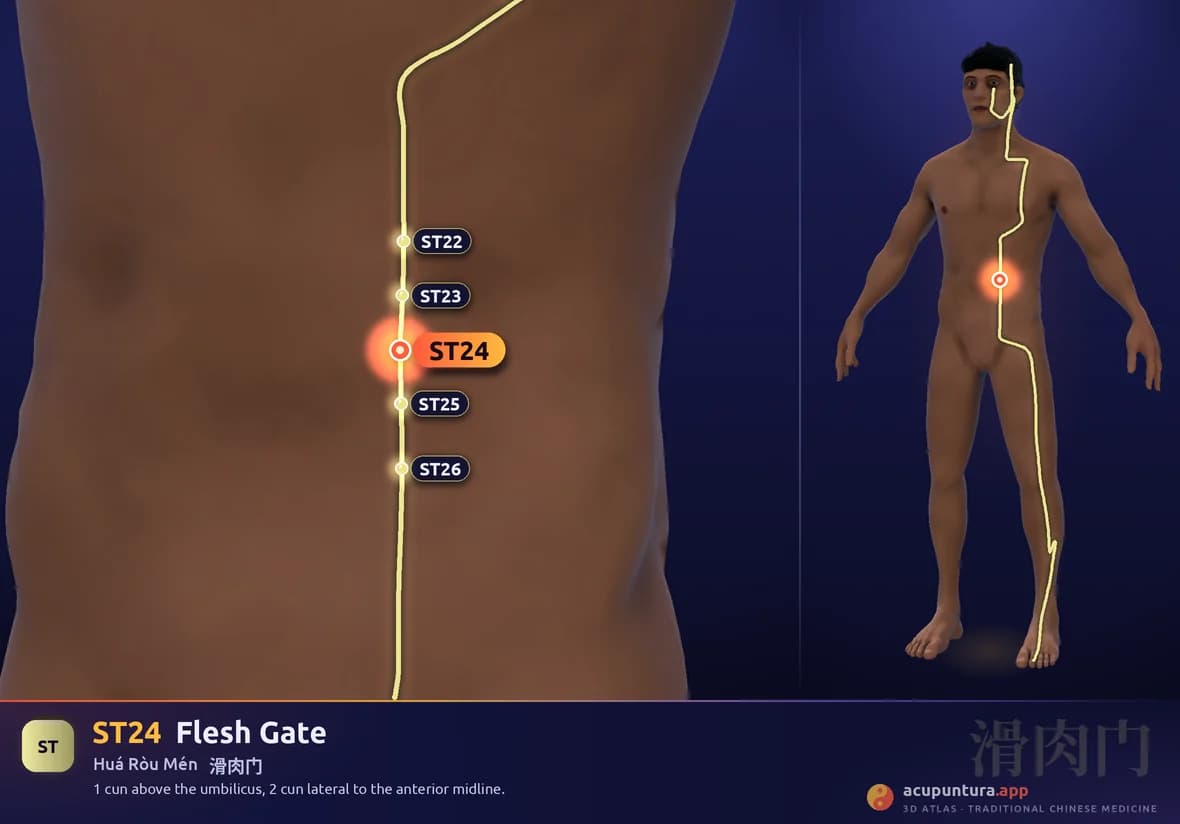
1 cun above the umbilicus, 2 cun lateral to the anterior midline.
Main function
Regulates the Stomach, strengthens the Spleen, transforms Dampness, relieves abdominal pain.
Therapeutic indications
- Abdominal pain
- vomiting
- loss of appetite
- diarrhea
- constipation
- gastric pain
- mania
- stiff tongue
Name and classical tradition
Huaroumen (滑肉门) is the “gate of slippery flesh.” 滑肉 designates the smooth, mobile structures of the body, such as the tongue or the intestines; 门 is the gate. The traditional reading links the name to the point's classical indications, which have to do precisely with the tongue.
The Zhenjiu Jiayi Jing (Systematic Classic of Acupuncture and Moxibustion) already attributes to it, together with its neighbor ST23, Taiyi, madness and epilepsy with the tongue protruding: “狂癲疾,吐舌,太乙及滑肉門主之”. Wang Tao's Waitai Miyao (Arcane Essentials from the Imperial Library), from the Tang period, repeats the indication. Yang Jizhou's Zhenjiu Dacheng (Great Compendium of Acupuncture and Moxibustion), from the Ming period, extends the list: “主癲狂嘔逆,吐舌舌強”, mental disorders, nausea with reflux, protruding tongue, and stiff tongue. The tongue is the “slippery flesh” par excellence, and the quotations indirectly support that reading of the name. The citations of the indications are firm; the etymology deduced from them is reasonable, but no commentator states it.
Huangfu Mi already includes it in the Zhenjiu Jiayi Jing. It closes the sequence of epigastric names, just before ST25.