Triple Energizer Channel
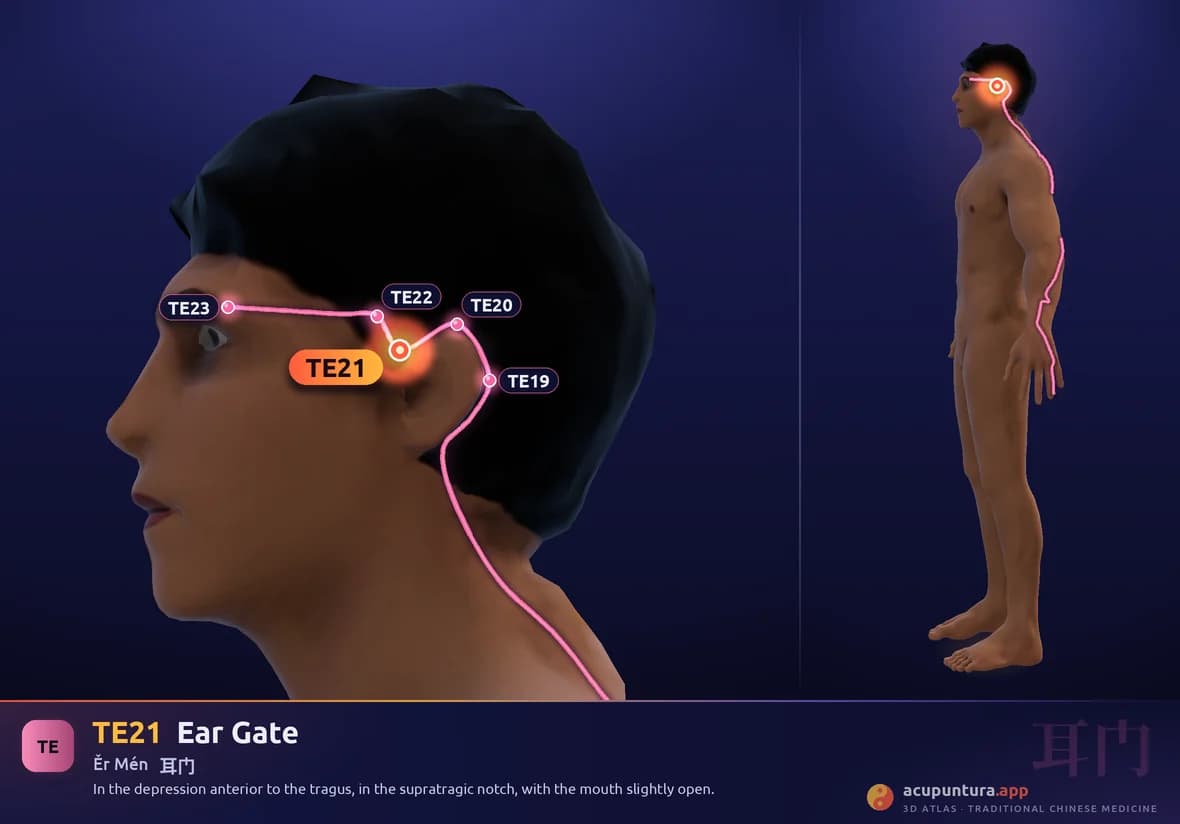
Ear Gate
耳门Ěr MénAnatomical location
In the depression anterior to the tragus, in the supratragic notch, with the mouth slightly open.
Main function
Benefits the ears, expels Wind, relieves pain.
Therapeutic indications
- Deafness
- tinnitus
- ear pain
- jaw pain
- toothache
- headache
- otitis
- temporomandibular joint pain
Name and classical tradition
Ermen (耳门) is the “ear gate”: 耳, the ear, and 门 (門), the gate. The name is transparent. The point lies in front of the supratragic notch, at the entrance to the auditory region, and has always been used for deafness and ringing in the ears. The first work to record it is the Zhenjiu Jiayi Jing (Systematic Classic of Acupuncture and Moxibustion), which forbids moxa when there is pus in the ear: “耳門耳中有膿,禁不可灸”.
In front of the ear there are three points almost in a row, from three different channels, all with ear-related names and all devoted to the ear: Ermen, of the Triple Energizer, above; SI19, Tinggong, the “Palace of Hearing,” of the Small Intestine, in the middle; and GB2, Tinghui, the “Meeting of the Ears,” of the Gallbladder, below. It is the area of the body where they are easiest to confuse.