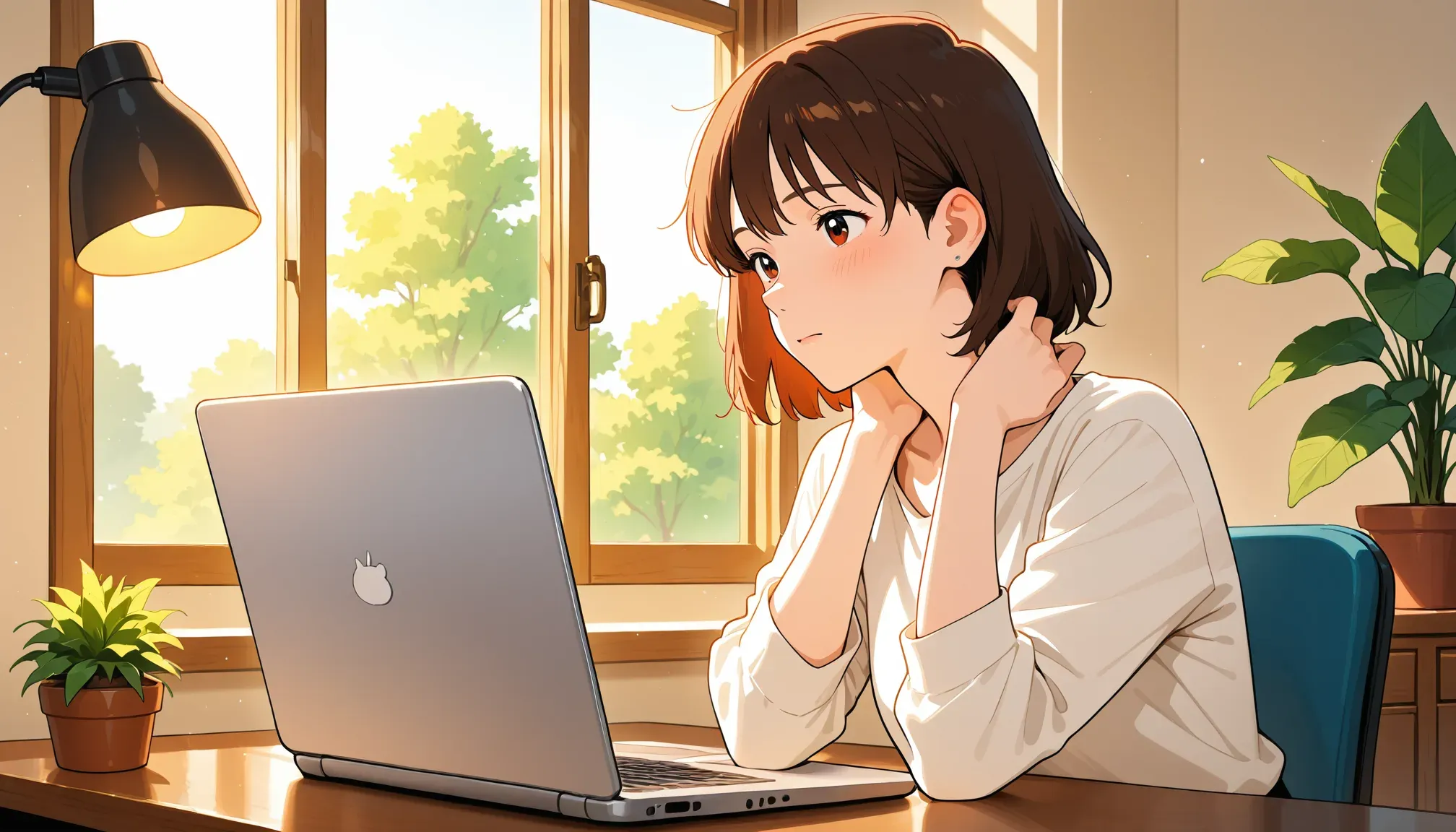
If you spend long hours in front of a computer or looking at your phone, chances are you know the feeling all too well: a stiff neck, raised and aching shoulders, and a dull discomfort that can creep all the way up into your head. Muscle knots and neck tension are among the most common complaints in practice today, and that's no coincidence: a lifestyle full of screens, held postures and stress is the perfect breeding ground for overloaded neck and shoulder muscles. In this article we explain why tension builds up in exactly that spot, what you can do at home to prevent it with stretches and active breaks, and how techniques like acupuncture and cupping can help you release those muscles once they've seized up.
What exactly is a neck muscle knot?
When we talk about a muscle knot (a contracture), we mean a sustained, involuntary contraction of a muscle or group of muscles. Normally, muscles contract and relax in turn; the problem starts when an area stays "switched on" continuously and never quite manages to let go.
In the cervical region, which is the neck, this mostly affects the upper trapezius, the muscles that lift the shoulder blade, and the deep muscles surrounding the spine in that area. The result is that typical stiffness, sometimes with very localized painful spots (the famous "knots"), difficulty turning or tilting your head and, often, pain that radiates into the shoulders, the upper back or even the head in the form of a tension headache.
It's important to know that in most cases a muscle knot is not a serious injury: it's a warning sign that the muscle is working harder than it can handle or has been tense for too long. That said, if the pain is intense, comes with tingling or loss of strength in your arms or hands, or doesn't improve over time, you should see a doctor to rule out other causes.
It's worth telling a simple muscle knot apart from a condition involving a cervical herniated disc or cervical disc disease (wear or displacement of a disc between the vertebrae of the neck): in that case the pain usually comes with tingling, numbness or loss of strength that travels down the arm, rather than staying only in the neck. That is a medical diagnosis, not something you can tell apart at home, and it changes the approach: acupuncture can support pain management, but it does not treat the herniation itself.
Why does tension build up in the neck and shoulders?
The neck area doesn't get overloaded by chance. Several reasons make it the weak spot of our modern bodies.
Your head is heavy, very heavy
An adult's head weighs several kilos, and the neck muscles are designed to hold it balanced on top of the spine. The problem is that when we tilt the head forward, as we do when looking at a phone or leaning in toward a computer screen, the effort those muscles have to make multiplies. Holding that posture for hours is like asking them to do continuous work they aren't built for.
Screens freeze us in place
It's not just the position of the head: in front of a screen we tend to stay still for a long time, with our shoulders slightly raised and our breathing shallow. The human body is made to move, and prolonged stillness reduces the flow of blood and nutrients to the muscles, encouraging stiffness and muscle fatigue.
Stress settles into the shoulders
When we're tense, worried or under pressure, the body reacts automatically: the jaw clenches, breathing gets shorter and the shoulders rise toward the ears. It's a primitive protective response. If the stress is occasional, the tension fades; if it's chronic, the muscles stay in that state of constant alert and end up knotting. That's why many people notice their necks getting worse during busy or worrying periods, even if they haven't changed anything about their posture.
Cold and other everyday factors
Drafts, an air conditioner pointing at your neck, sleeping in an awkward position or carrying a heavy bag on one shoulder also contribute. None of these factors is usually decisive on its own, but added to hours of screen time and stress, they complete the picture.
Stretches and active breaks to prevent neck tension
The good news is that most neck muscle knots can be prevented with simple habits. The key isn't doing one big stretching session once a week, but breaking up stillness regularly throughout the day.
Active breaks: little and often
The general recommendation is to get up and move for a couple of minutes every half hour or every hour of screen work. Nothing complicated is needed: walk around a little, move your arms, change position. The goal is to remind your muscles that they can, and should, relax and shift position.
Gentle stretches for the neck and shoulders
These movements, done slowly and without forcing, can help ease stiffness. Hold each position for 15 to 30 seconds, breathing calmly, and never to the point of pain:
Side neck tilt: sitting with your back supported, slowly bring your ear toward your shoulder, as if you wanted to touch it, without lifting the shoulder. Repeat on the other side.
Neck rotation: slowly turn your head to one side, as if looking over your shoulder, hold, and return to the center. Repeat on the other side.
Chin to chest: slowly lower your head, bringing your chin toward your chest and feeling the back of your neck stretch.
Shoulder circles: raise your shoulders toward your ears, roll them back and let them drop, drawing wide circles. Do several repetitions in each direction.
Doorway stretch: rest your forearm on a door frame and gently turn your torso the opposite way to stretch the chest, which, when shortened, pulls the shoulders forward.
Adjust your workstation
Small ergonomic changes make a big difference: the screen at eye level, your phone held up instead of looked down at, your forearms supported and your feet on the floor. And if you spend many hours on the phone, use headphones instead of holding the phone between your ear and shoulder.
Heat, a simple ally
Applying local heat, such as an electric blanket, a heat pack or a hot shower over the area, helps relax the muscles and eases the feeling of stiffness, especially at the end of the day.
How can acupuncture help with neck tension?
Acupuncture is an ancient technique from traditional Chinese medicine that involves inserting very fine needles into specific points on the body. If you've never tried it, the idea may sound strange, but the real experience is very different from what you might imagine: the needles are much thinner than those used for injections, and the usual sensation is barely a slight prick, often followed by a pleasant feeling of heaviness or relaxation in the area.
From the perspective of traditional Chinese medicine, pain and stiffness appear when Qi and Blood don't flow smoothly through an area of the body. Neck muscle knots are understood, in lay terms, as a "traffic jam" in the neck and shoulder area: sustained tension, stress or cold block that circulation, and where there is no circulation, there is pain and stiffness. The goal of treatment is precisely to restore movement and balance to that area.
From a more Western point of view, needle stimulation is thought to help relax contracted muscles, improve local circulation and modulate pain perception. Research into these mechanisms is ongoing, and the World Health Organization recognizes acupuncture as a traditional practice widely used around the world.
In practice, many people turn to acupuncture for neck tension when stretching and rest are no longer enough, or when the muscle knot keeps coming back. The acupuncturist will look at your case as a whole, not just your neck but also your stress level, your rest and your habits, because in this tradition the body is understood as a whole.
What about cupping? What it is and how it works
Cupping is another traditional technique that is especially valued for the muscles of the neck, shoulders and upper back. It involves placing glass, plastic or bamboo cups on the skin, creating a vacuum inside them that makes the skin and superficial tissue rise slightly into the cup.
What does that do? This gentle suction stretches and "lifts" the tissues, brings blood to the area and helps tight muscles let go. Many people describe it as a kind of reverse massage: instead of pressing inward, the tissue is pulled outward. The sensation during the session is usually one of relief and warmth in the treated area.
It's common to be left with round marks on the skin after the session, pink or purplish in color, which can take a few days to fade. They are not painful bruises or injuries: they are the normal result of the blood congestion the technique deliberately produces, and in most cases they aren't tender to the touch. Even so, it's good to know about them beforehand, especially in summer or if the area will be visible.
Acupuncture and cupping: why do they work so well together?
In many clinics it's common to combine both techniques in the same session for neck muscle knots, because they complement each other: cupping works more broadly and mechanically on the superficial muscles, while acupuncture acts more precisely and holistically, including the stress component that so often lies behind the tension built up in the neck and shoulders.
It's common to feel relief from the first sessions, although when the tension has been there for months or years, a short course of treatment is usually needed, along with changes to the habits that cause it. No technique works miracles if afterward we go back to spending eight hours hunched over without a single break: treatment works much better when it's accompanied by the preventive measures we've covered above.
Acupressure for the neck: points you can try at home
If you want something to do yourself between sessions, acupressure, which means pressing with your finger, without needles, on a few classic points in the neck area, can offer gentle relief:
Fengchi (GB20), "Wind Pool": at the base of the skull, in the two hollows on either side of the nape, right where the scalp begins. It's one of the most commonly used points for neck stiffness and the headache that goes with it.
Jianjing (GB21), "Shoulder Well": at the highest point of the trapezius, halfway between the neck and the shoulder. Ideal for shoulders that are "raised" from tension.
Houxi (SI3), "Back Stream": on the edge of the hand, below the little finger, where a crease forms when you make a fist. It's a classic distal point for neck stiffness.
Press with your thumb or fingers, gently and steadily, for 30 seconds to a minute on each point, a couple of times a day. Acupressure is not a substitute for acupuncture with needles or for medical evaluation when there is tingling or loss of strength in the arm: in those cases, see a doctor first.
When to see a professional
Occasional neck tension is very common and usually responds well to rest, heat and stretching. But there are situations in which you should see a doctor first:
- Very intense pain, or pain that appears suddenly for no clear reason.
- Tingling, numbness or weakness in the arms or hands.
- Pain that doesn't improve over several days or that comes back very often.
- Pain accompanied by fever, severe dizziness or a very strong headache that is different from your usual ones.
Acupuncture and cupping are understood as complementary therapies: they can be a great help in easing tension and improving quality of life, but they never replace medical diagnosis and treatment when it is needed.
Frequently asked questions
Does acupuncture hurt?
It's the most common question, and the short answer is that it usually doesn't. The needles are extremely thin, much thinner than those of a conventional syringe. You'll typically feel a slight prick as the needle goes in, and then sensations of heaviness, warmth or gentle tingling, which in this tradition are read as a good sign that the area is responding.
How many sessions does a neck muscle knot need?
It depends on each case: a recent, isolated knot may improve a lot in one or two sessions, while tension built up over years usually needs a somewhat longer course. The practitioner will assess your situation and tell you what progress to expect from the first visit.
Are cupping marks bad?
No. Those circles on the skin are a normal, expected effect of the technique, they aren't painful and they fade on their own within a few days. The only thing worth keeping in mind is how they look if the area will be uncovered.
Can I have acupuncture if I'm taking medication?
In general, acupuncture is compatible with most medical treatments, but it's essential to tell your acupuncturist about any medication you take, especially anticoagulants, as well as any relevant health condition. A qualified practitioner will always ask you these questions at your first visit.
Does acupuncture help if my neck pain is from stress?
It's precisely one of the cases where it's used the most. Traditional Chinese medicine regards the body and the emotional state as a whole, and treatment isn't limited to the painful area: it also aims to help the body come out of that state of constant alert that keeps the shoulders raised and the jaw clenched.
In summary
Muscle knots and neck tension are, in the vast majority of cases, the logical response of a body subjected to hours of screen time, held postures and stress. Preventing them is largely in your hands: active breaks, gentle stretches, heat and a well-adjusted workstation. And when the muscles have already seized up or the tension keeps coming back, acupuncture and cupping are two traditional tools with a long track record that can help you release your neck and shoulders safely and as a complement to other care.
If you suffer from persistent neck tension, we encourage you to see a qualified professional in acupuncture and traditional Chinese medicine, who can assess your case individually and guide you toward the treatment that suits you best. And remember: if you have any intense, persistent or unusual symptom, always check with your doctor first.