Bladder Channel
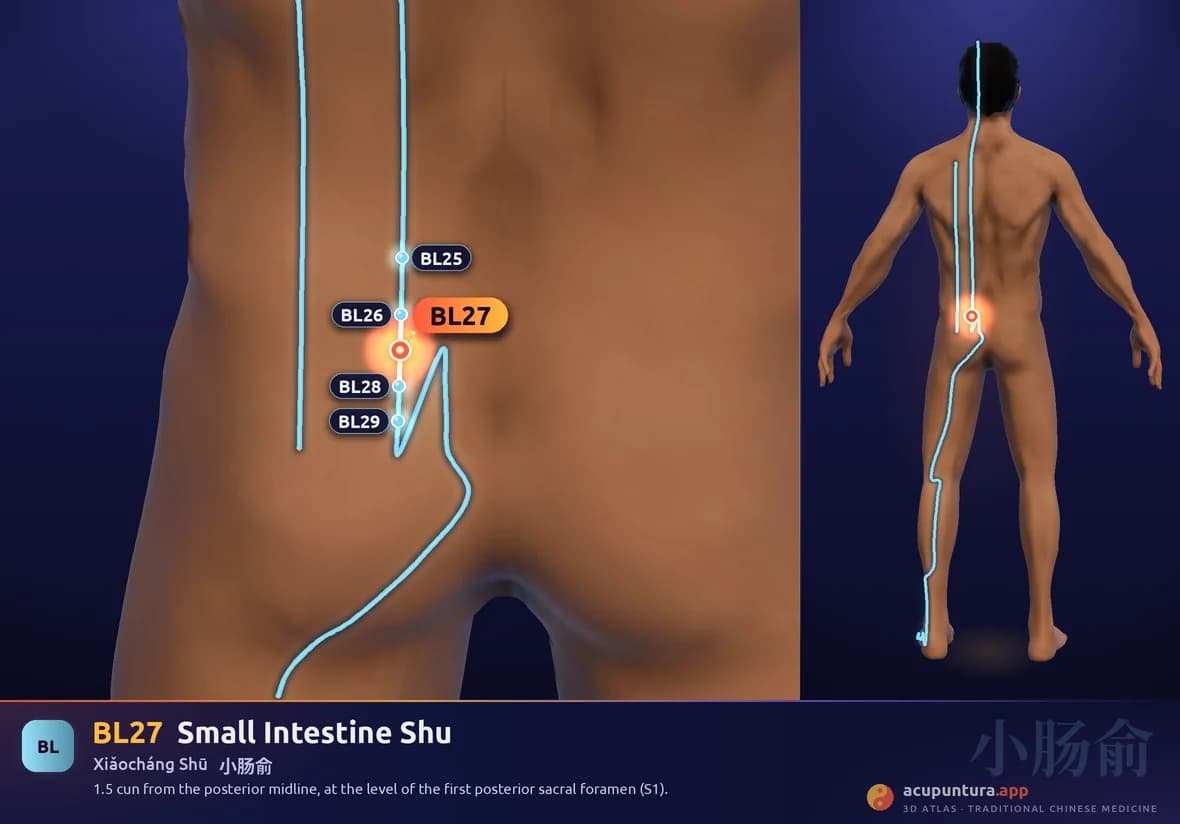
Small Intestine Shu
小肠俞Xiǎocháng ShūUse caution during pregnancy
Lumbosacral band over the sacrum; avoid.
Anatomical location
1.5 cun from the posterior midline, at the level of the first posterior sacral foramen (S1).
Main function
Regulates the Small Intestine, separates the pure from the impure, regulates Qi and Blood, benefits the bladder, regulates urination, eliminates Damp-Heat.
- Small Intestine Back-Shu point
Therapeutic indications
- Abdominal pain and distension
- diarrhea
- dysentery
- blood in the stool
- low back pain
- dysuria
- urinary retention
- enuresis
- hematuria
- leukorrhea
- sciatica
- hemorrhoids
- Sacral low back pain
- Ulcerative colitis and Crohn's disease
Name and classical tradition
Xiaochangshu, 小肠俞, is the Back-Shu point of the Small Intestine. 小肠 (小腸) is the small intestine; 俞 is the transport point. The Zhenjiu Jiayi Jing (Systematic Classic of Acupuncture and Moxibustion) places it «在第十八椎下兩傍各一寸五分», one and a half cun to each side below the eighteenth vertebra, at the level of the first posterior sacral foramen. With it, the series of Shu points passes from the lumbar region to the sacrum.
The secondary source that records the quotation attributes it to a work with a different name, probably through a transcription error. The origin in the Jiayi Jing is the one that matches the rest of the series. On the abdomen, its counterpart is CV4, Guanyuan, the Front-Mu point of the Small Intestine.