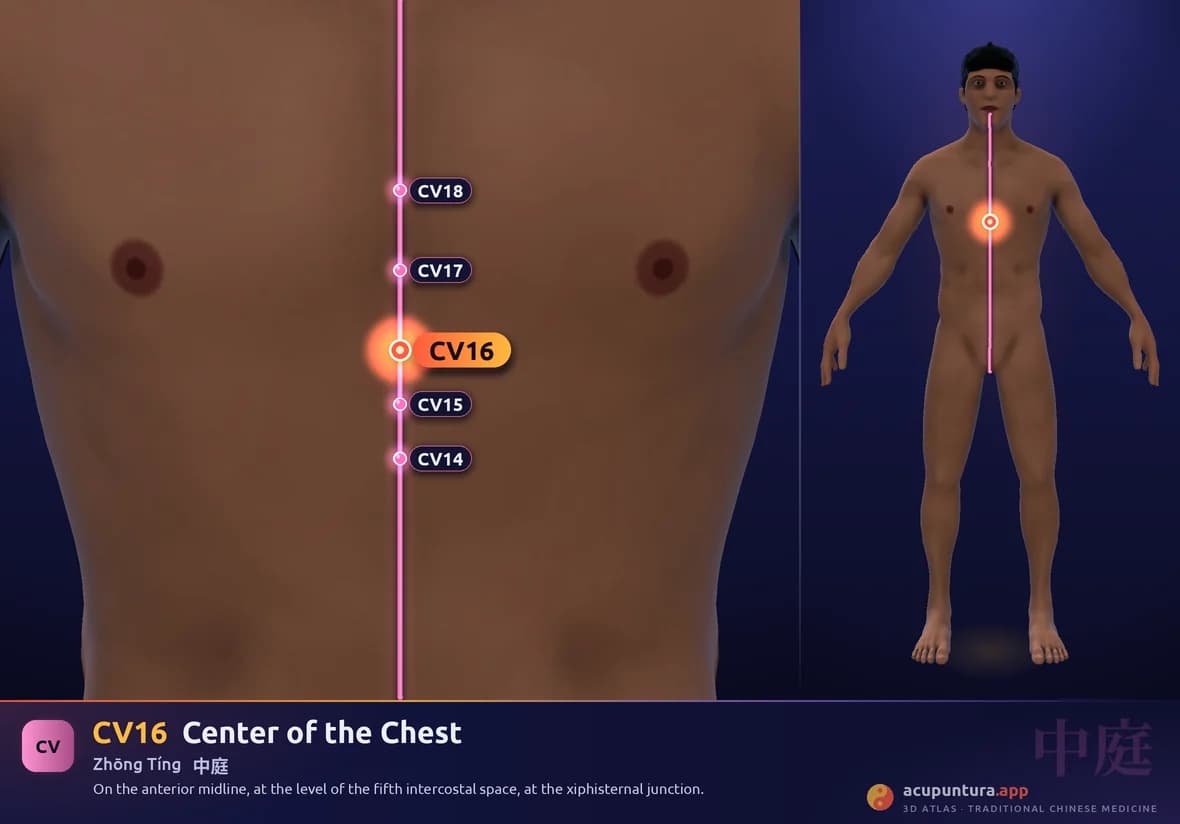
Ren Mai (Conception Vessel) Channel
Center of the Chest
中庭Zhōng TíngAnatomical location
On the anterior midline, at the level of the fifth intercostal space, at the xiphisternal junction.
Main function
Regulates the Qi of the chest, relieves chest oppression.
Therapeutic indications
- Chest pain
- cough
- asthma
- chest distension
- chest fullness
- hiccups
- vomiting
- poor appetite
- difficulty swallowing
Name and classical tradition
Zhongting, 中庭, is the "Central Courtyard." 中 is the center; 庭 is the courtyard, the vestibule of the house. One gloss explains it with the image of the court: the heart occupies the main hall, and the thorax is its courtyard; the point marks the center of that vestibule. It lies on the sternum, just below CV17, Danzhong.
It is one piece of the series of palatial names on the chest of the Ren Mai, which runs from CV14, the great gate, to CV21. It first appears in the Zhenjiu Jiayi Jing (Systematic Classic of Acupuncture and Moxibustion) and has no documented aliases.