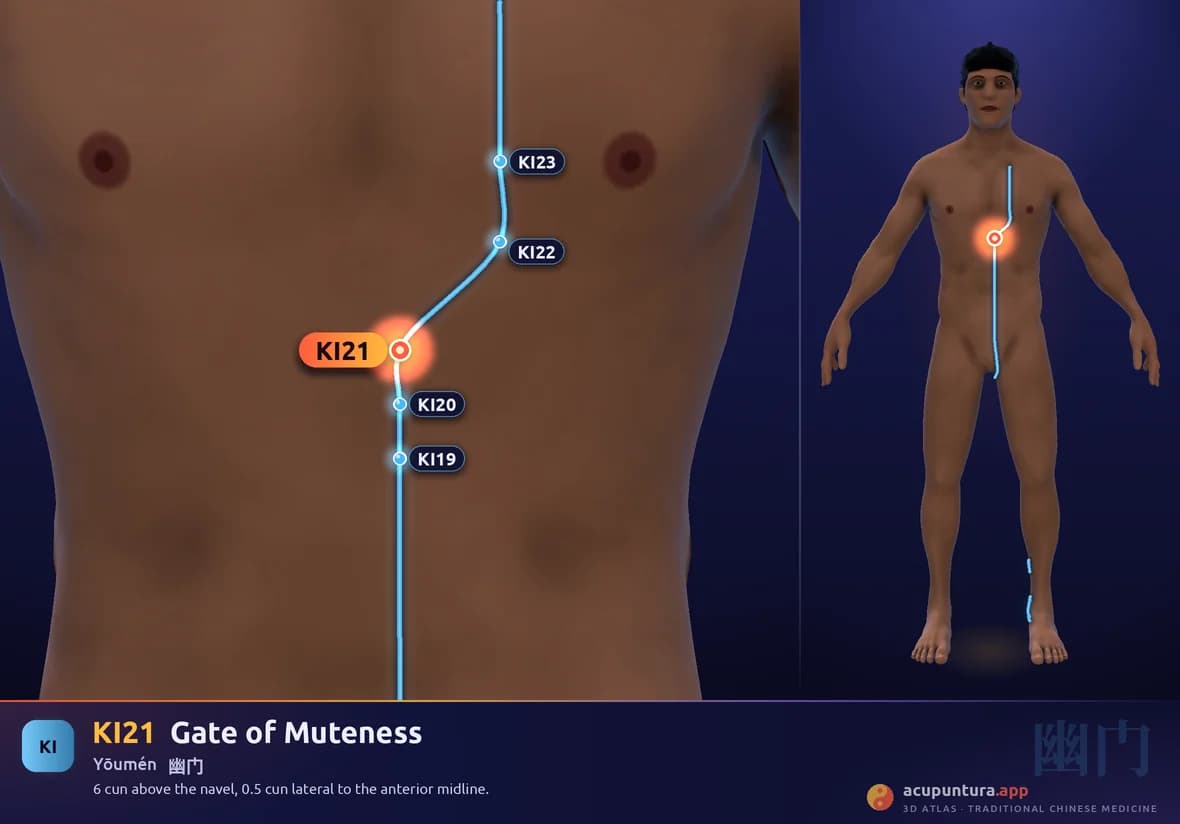
Kidney Channel
Gate of Muteness
幽门YōuménAnatomical location
6 cun above the navel, 0.5 cun lateral to the anterior midline.
Main function
Regulates Kidney Qi, harmonizes the Stomach, descends rebellious Qi, and treats gastric disorders.
- Crossing point with the Liver
Therapeutic indications
- Epigastric pain
- nausea
- vomiting
- hiccups
- anxiety
- chest oppression
- stomach pain
- diarrhea
- poor appetite
- mastitis
- vomiting of pregnancy
Name and classical tradition
Youmen, 幽门, is the "dark gate" or "hidden gate." 幽 means hidden, dark, deep; 门 (門) is the gate. The point lies in the upper abdomen, at the level of CV14, Juque, and is the last of the abdominal stretch in which the Kidney channel and the Chong Mai rise together. A modern gloss explains that only a small part of the Qi continues upward from here, with no classical support.
The term 幽門 also designates, in modern Chinese anatomy, the pylorus, the outlet of the stomach, although there is no evidence that this usage is related to the origin of the point's name. The reference works give it the alternate names 上門, 上關, and 幽關. The first work to record it is the Zhenjiu Jiayi Jing (Systematic Classic of Acupuncture and Moxibustion).
Other names
- 上門Jiayi Jing