Lung Channel
Passage Channel
经渠Jīng QúAnatomical location
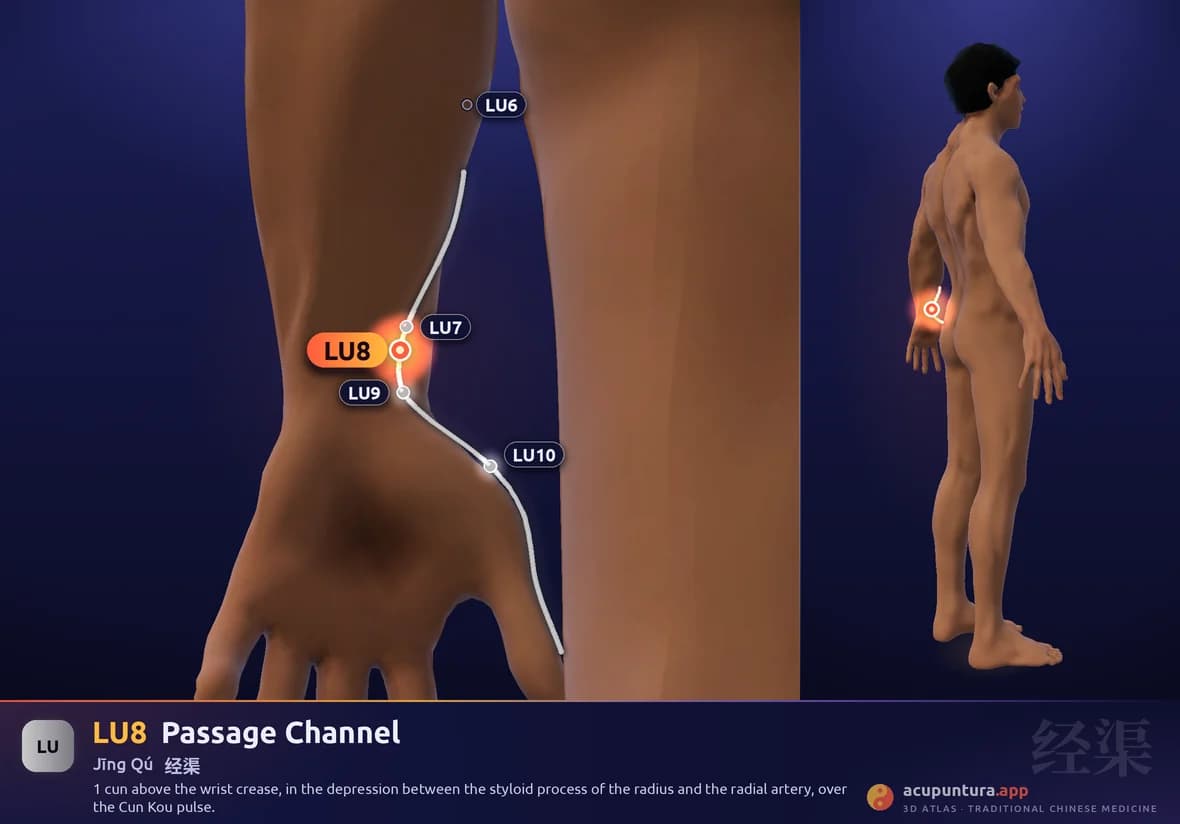
1 cun above the wrist crease, in the depression between the styloid process of the radius and the radial artery, over the Cun Kou pulse.
Main function
Regulates the Lung, relieves cough and asthma.
- Jing-River point (Metal)
Therapeutic indications
- Cough
- asthma
- sore throat
- wrist pain
- chest fullness
- fever without sweating
- wrist pain
- sensation of tightness in the chest
Name and classical tradition
Jingqu, 經渠 (经渠), is the «channel ditch.» 渠 designates a waterway opened by human hands, and 經 what flows continuously, the same character that names the channels and one of the five categories of transport points. Unlike other names, this one needs no later glosses: the canonical text itself explains what it means.
The Lingshu (Spiritual Pivot), in the Ben Shu chapter (本輸), describes the course of Lung Qi through its five points, from LU11 to the elbow, and when it reaches this one it says: «行於經渠,經渠寸口中也,動而不居,為經». Qi flows through Jingqu; Jingqu lies in the cunkou, the position of the radial pulse; it moves without settling, and for that reason it is a Jing point (經穴). The phrase «動而不居» is the key to the name: the water of this ditch never stagnates, and the beat of the artery under the fingers makes it perceptible. In the Five Phases (Five Elements) correspondence it is the Metal point of the channel, the one that shares its element with the Lung itself.
Few points have so complete and so literal a classical definition. Later sources add very little: the Yixue Rumen, from the Ming period, places it «近關上», near the guan position of the pulse, which confirms that the tradition always conceived of it through radial palpation, just like its neighbor LU9.
The Zhenjiu Jiayi Jing (Systematic Classic of Acupuncture and Moxibustion) defines it as «經渠者,金也。在寸口陷者中», the Metal point, in the depression of the cunkou, and attaches to it one of the most singular warnings in its lists: «不可灸,灸之傷人神明», no moxibustion, because it damages the clarity of the spirit.