Traditional Chinese Medicine channel
Lung Channel
手太阴肺经Metal03:00 - 05:0011 pointsLU1 → LU11
Description
The Lung channel governs breathing, Defensive Qi (Wei Qi), and our relationship with the outside world. It controls the skin and body hair, acting as the first line of defense against pathogenic factors. Imbalances can show up as respiratory problems, allergies, excessive sadness, and difficulty letting go of the old. It is essential for immunity and for the ability to receive new vital energy.
Main functions
- Governs Qi and breathing
- Regulates the water passages
- Controls the skin and body hair
Pathway
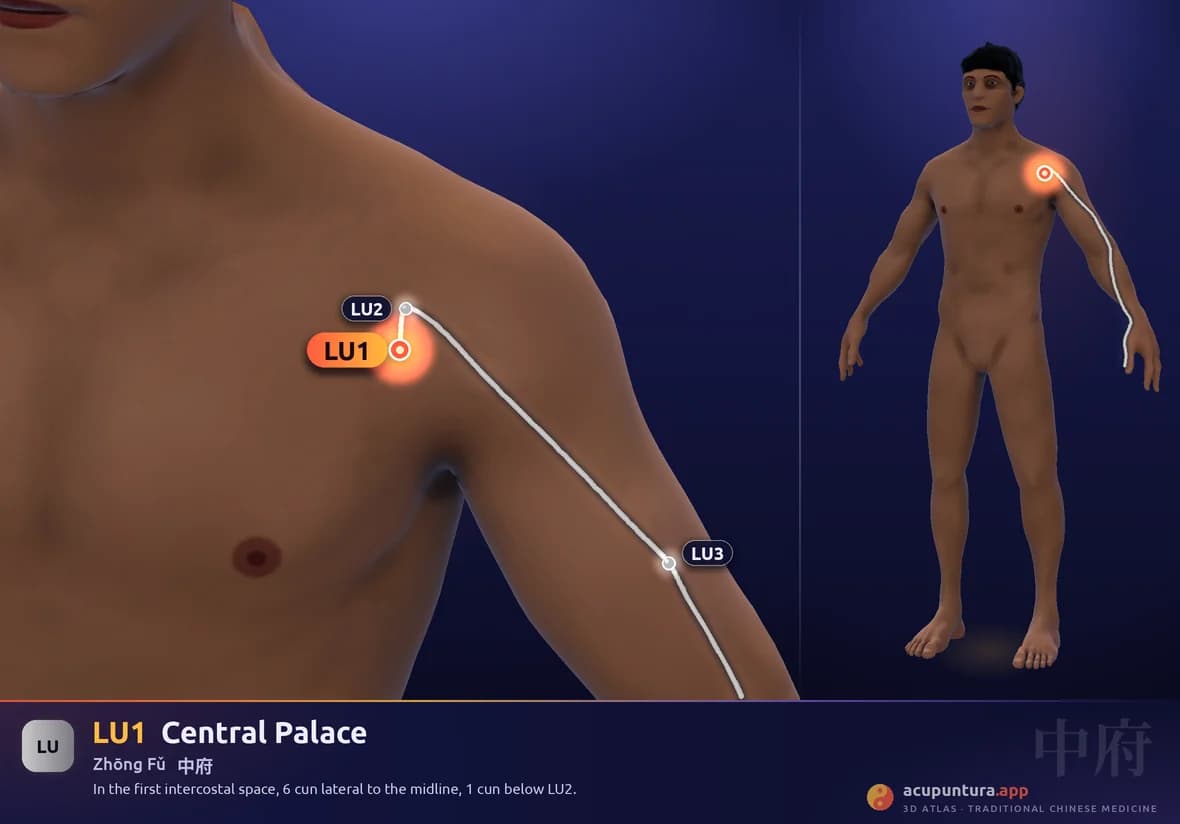
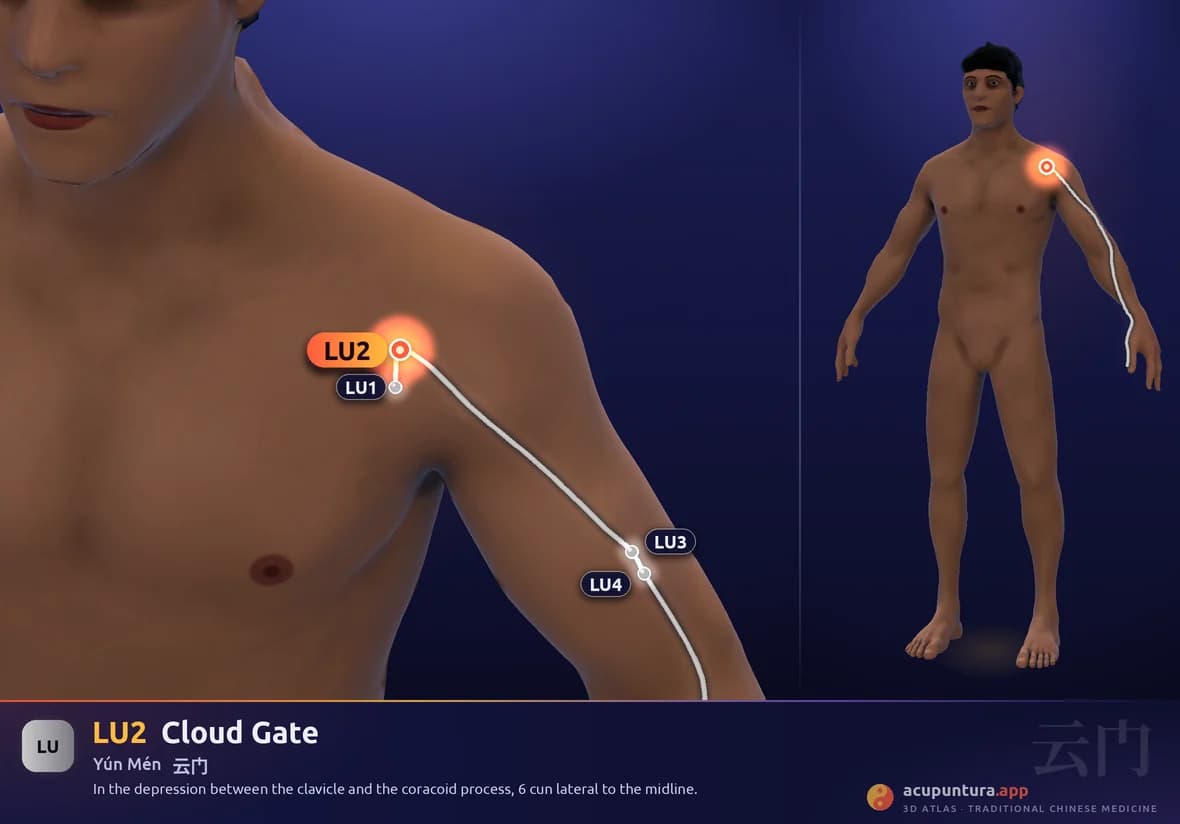
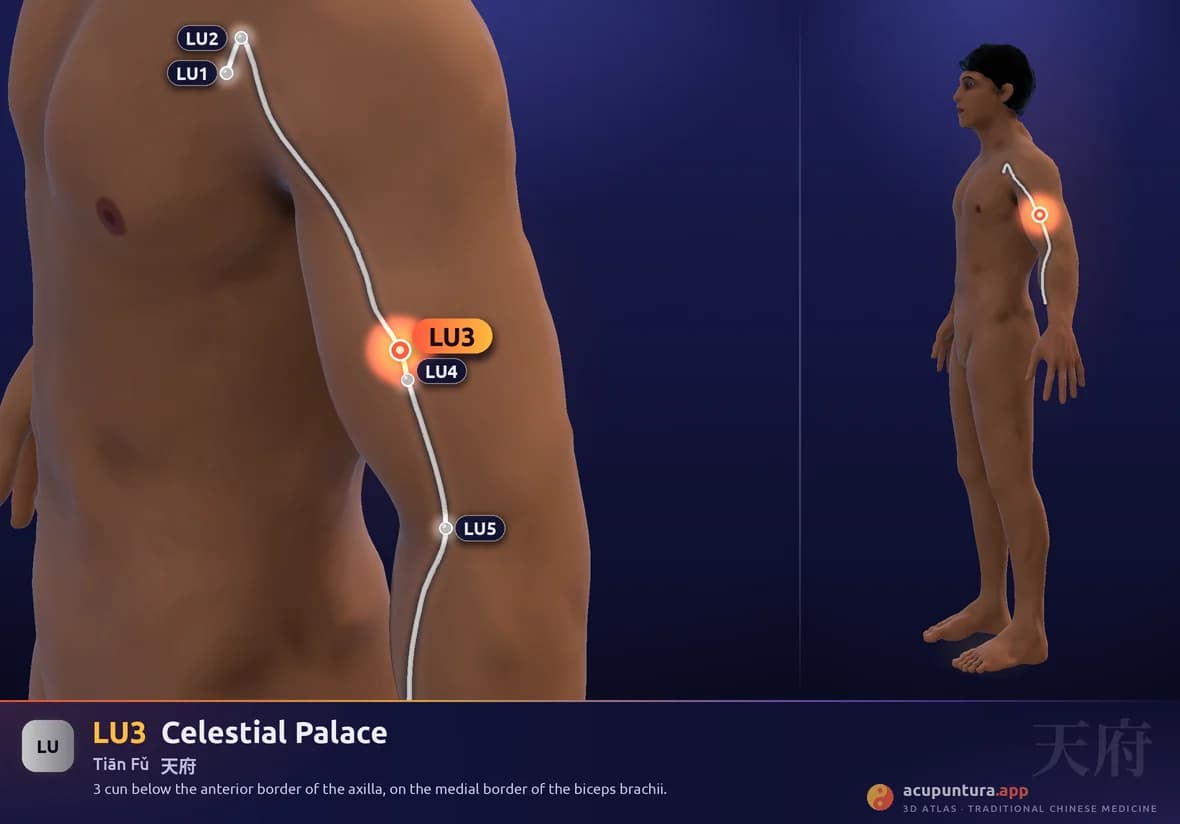
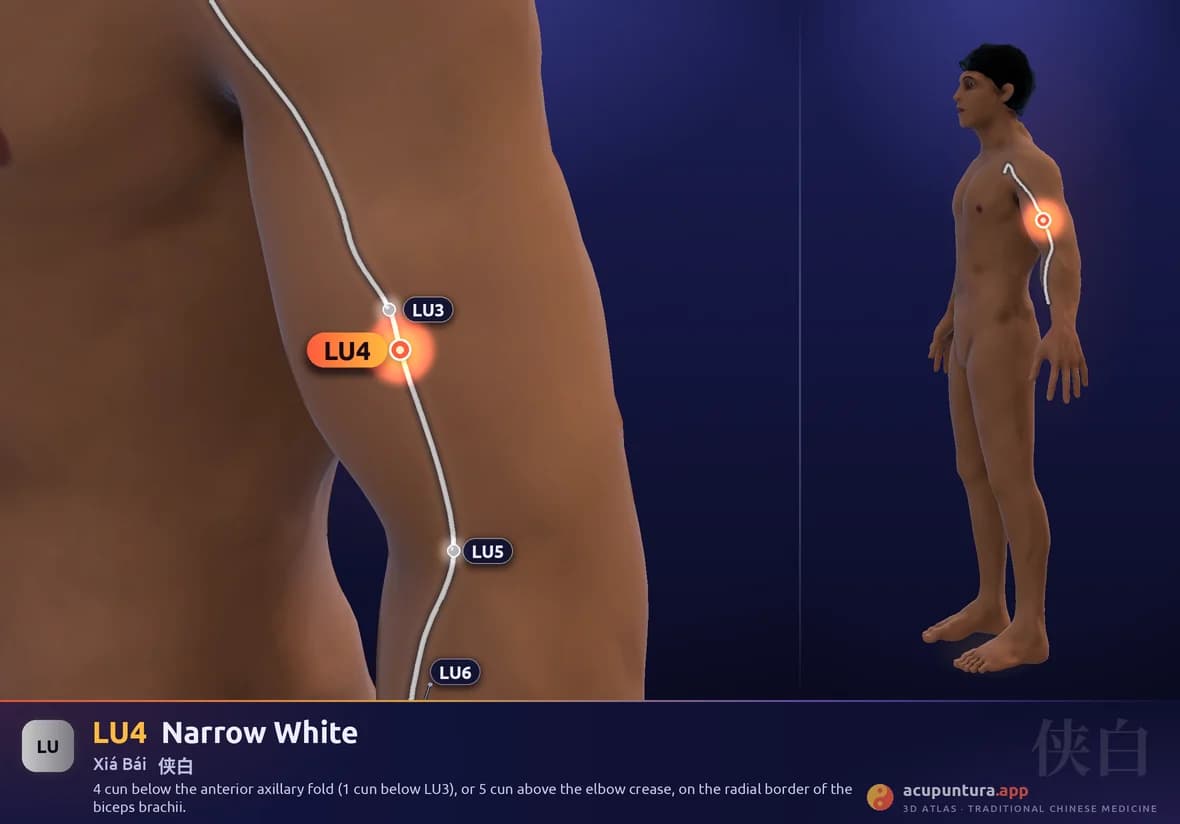
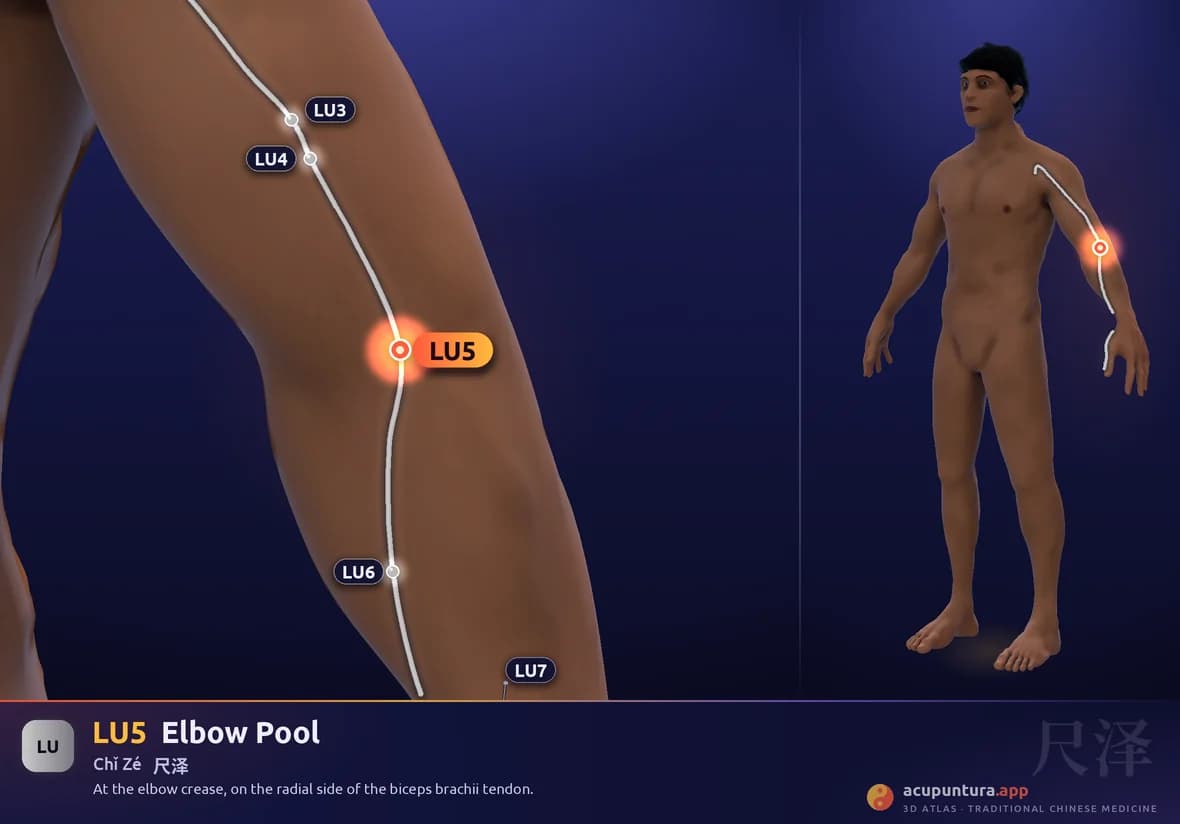
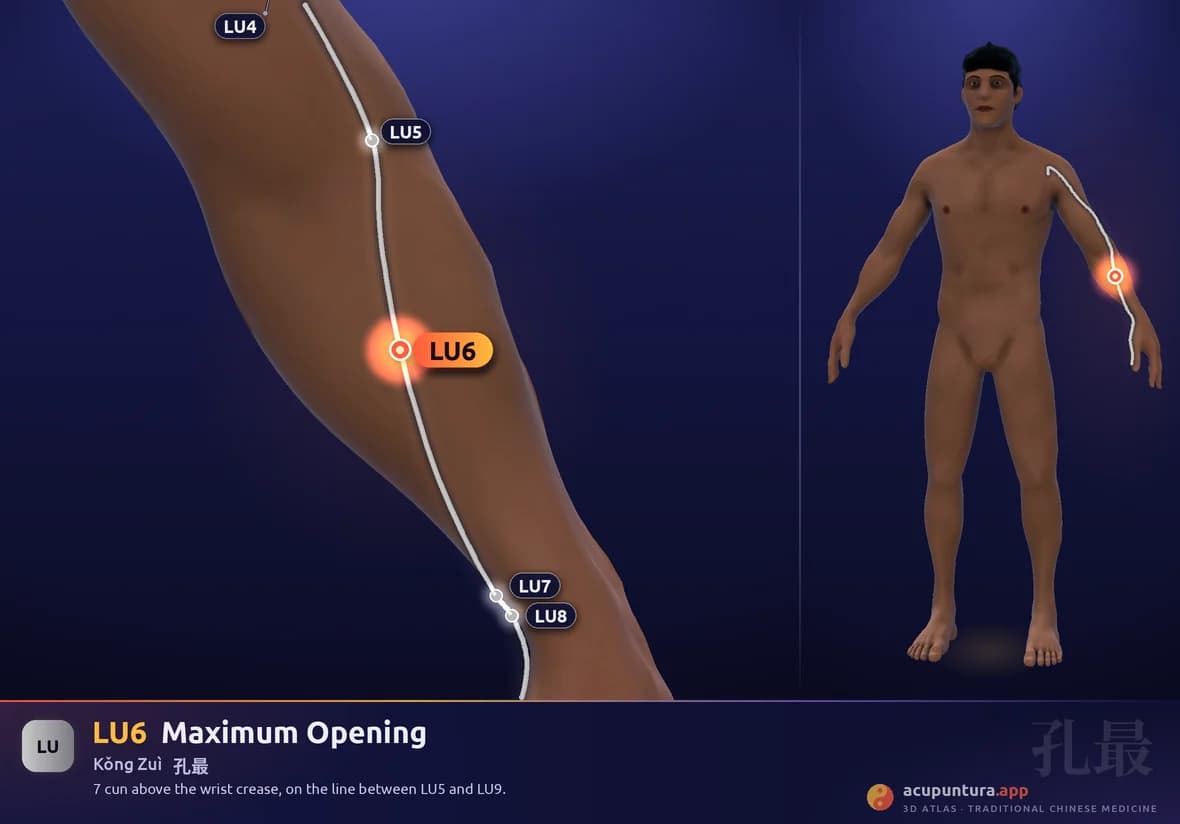
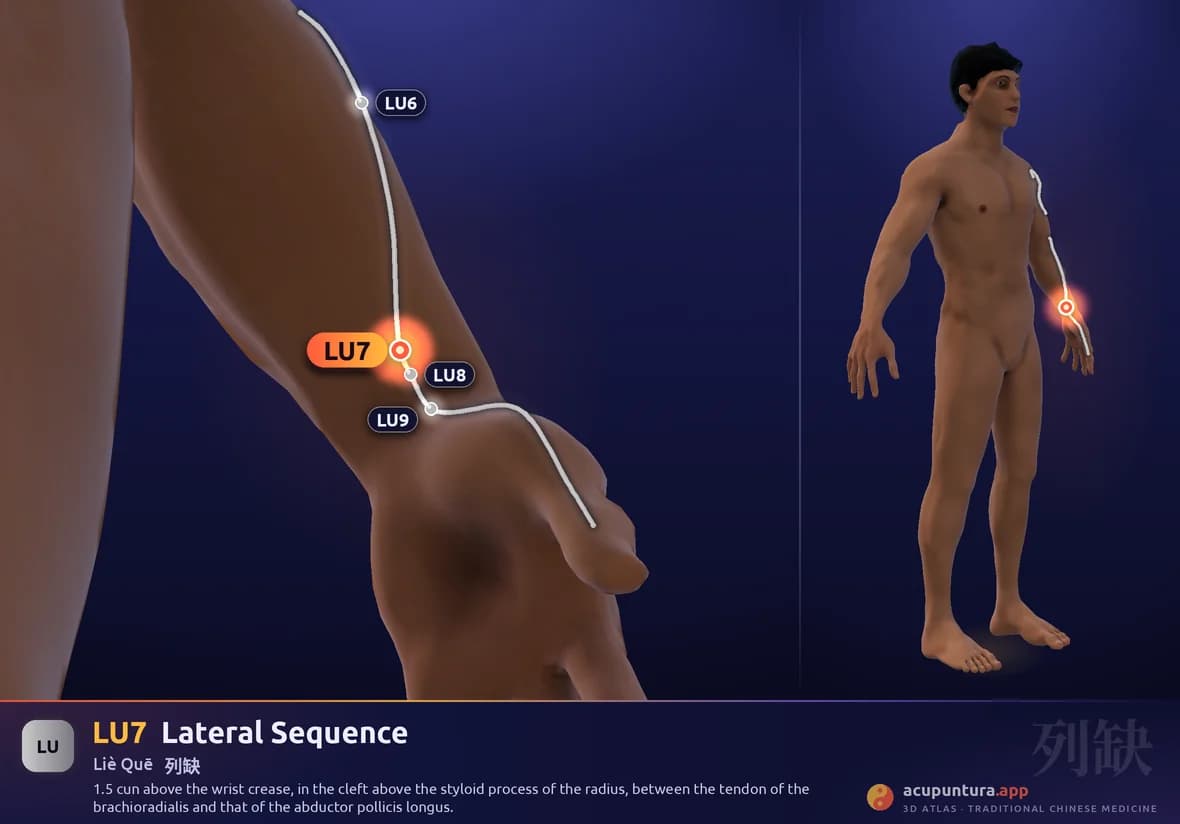
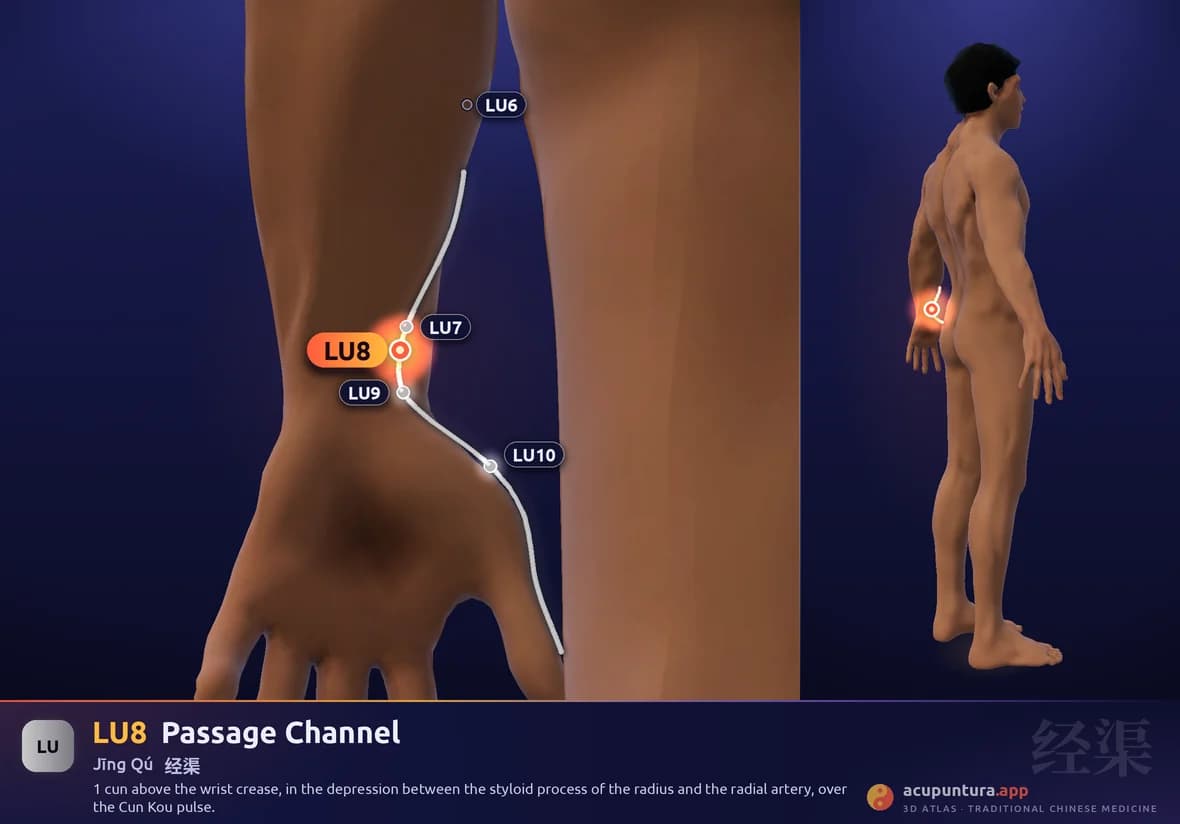
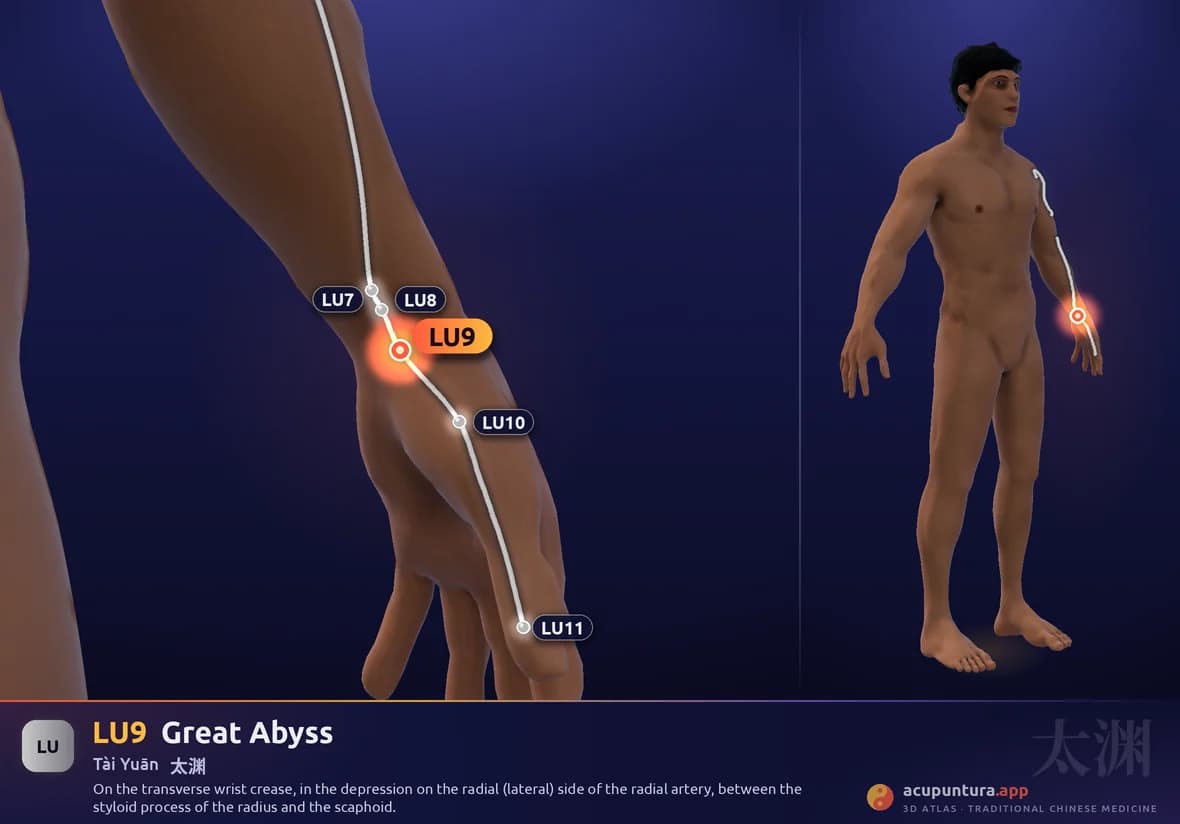
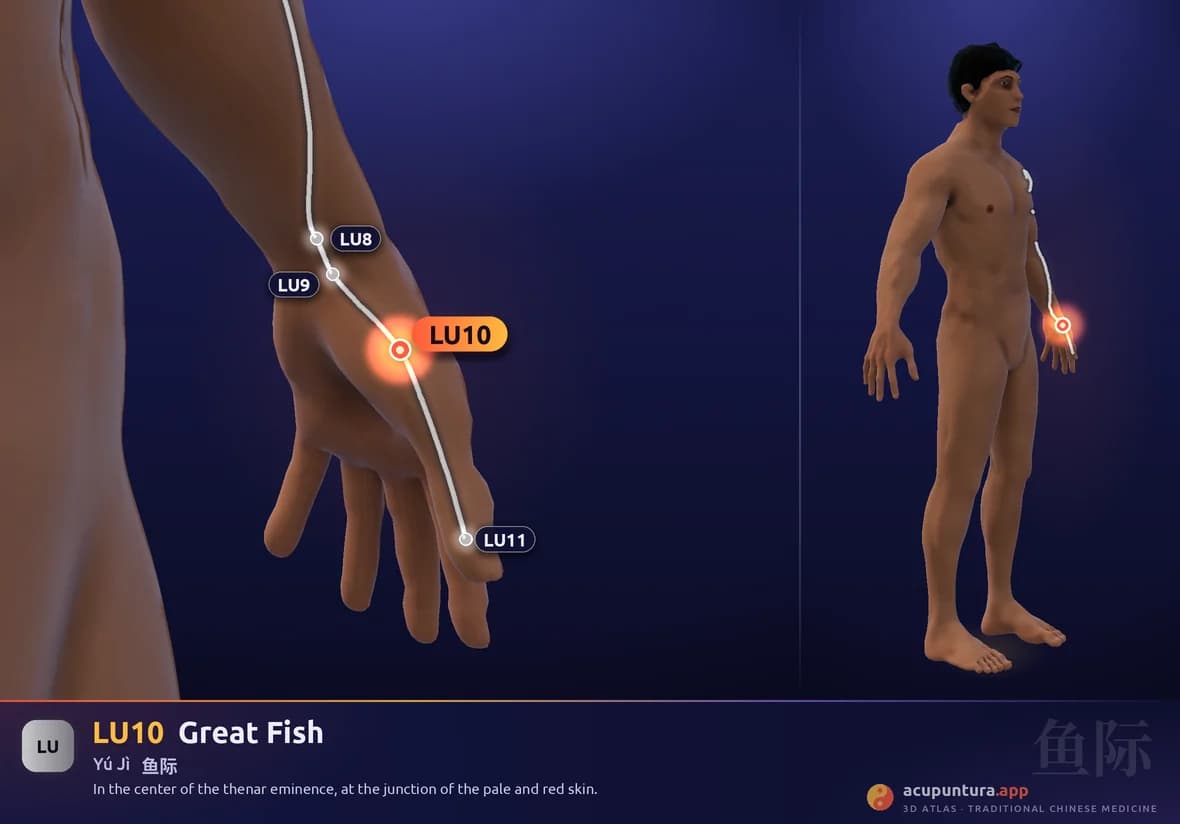
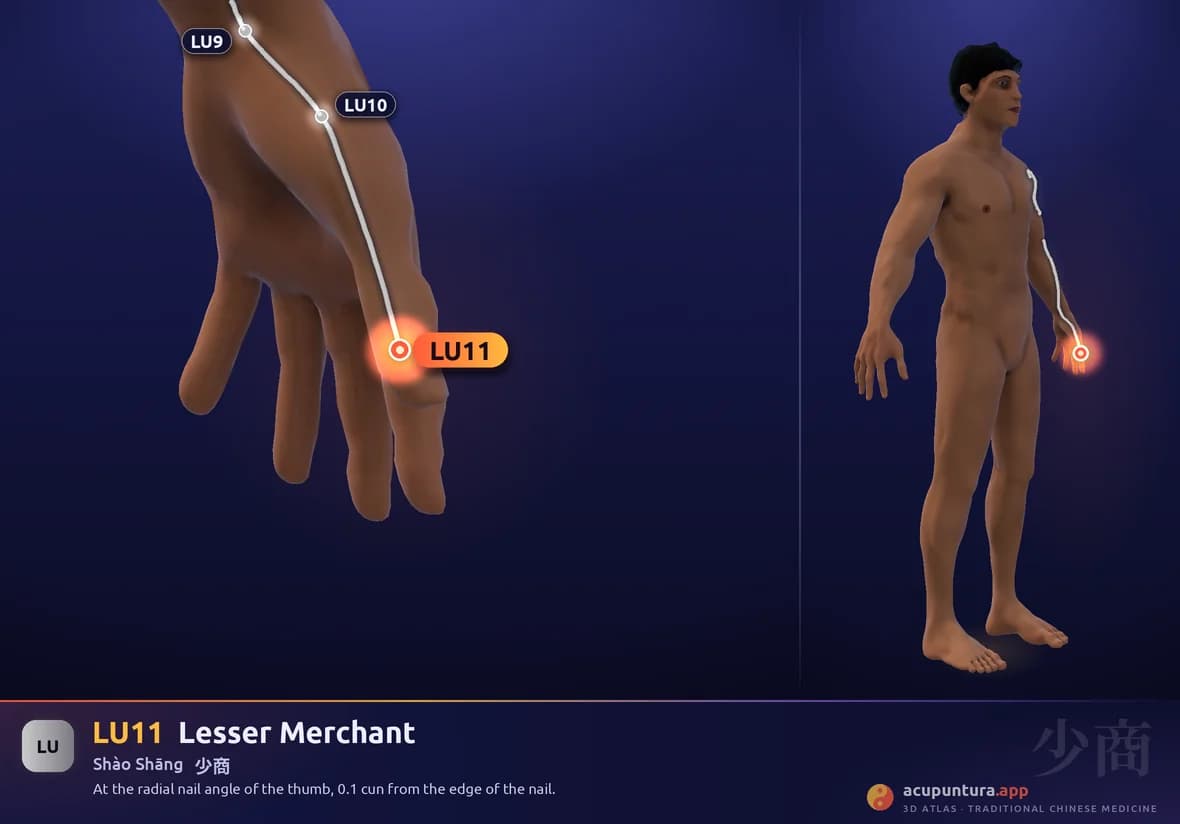
It begins in the chest (LU1), descends along the inner side of the arm, follows the radial side of the forearm, and ends at the radial corner of the thumbnail (LU11).
The channel in the Lingshu
In the Jing Mai chapter (經脈) of the Lingshu (Spiritual Pivot), the one that describes the twelve channels one by one, the Lung channel opens the series with a name that already says it all: «肺手太陰之脈», the channel of the Lung, hand Taiyin. The text does not begin it in the chest, but lower down: «起於中焦,下絡大腸,還循胃口,上膈,屬肺». It arises in the Middle Jiao, descends to connect with the Large Intestine, returns along the opening of the stomach, crosses the diaphragm, and belongs to the Lung. That whole stretch is internal. What is drawn on the skin today begins afterward, when the channel emerges below the armpit, at LU1, and runs along the inner side of the arm and the thenar eminence until «出大指之端», the tip of the thumb, at LU11. A branch leaves the wrist toward the index finger, and through it Qi passes to the Large Intestine.
The chapter assigns it two lists of disorders, a scheme it repeats for every channel. Those of «是動», when the channel is disturbed, belong to the chest: «肺脹滿,膨膨而喘欬», the lung full and distended, noisy breathing and cough. Those produced by the organ itself add heat in the palm and pain on the front of the arm. And it closes with a treatment rule that holds for all twelve: «盛則寫之,虛則補之,熱則疾之,寒則留之,陷下則灸之», disperse excess, tonify deficiency, needle quickly for Heat, retain the needle for Cold, and apply moxibustion to what is sunken.
Further on it names its branch: «手太陰之別,名曰列缺», the collateral of the hand Taiyin is called Lieque, LU7, and it separates toward the Yangming. In the circulation of Ying Qi (Nutritive Qi) described in the Ying Qi chapter (營氣), the Lung is the beginning of everything: «氣從太陰出注手陽明», Qi leaves the Taiyin and passes to the hand Yangming.