Stomach Channel
Ribbon Opening
条口Tiáo KǒuAnatomical location
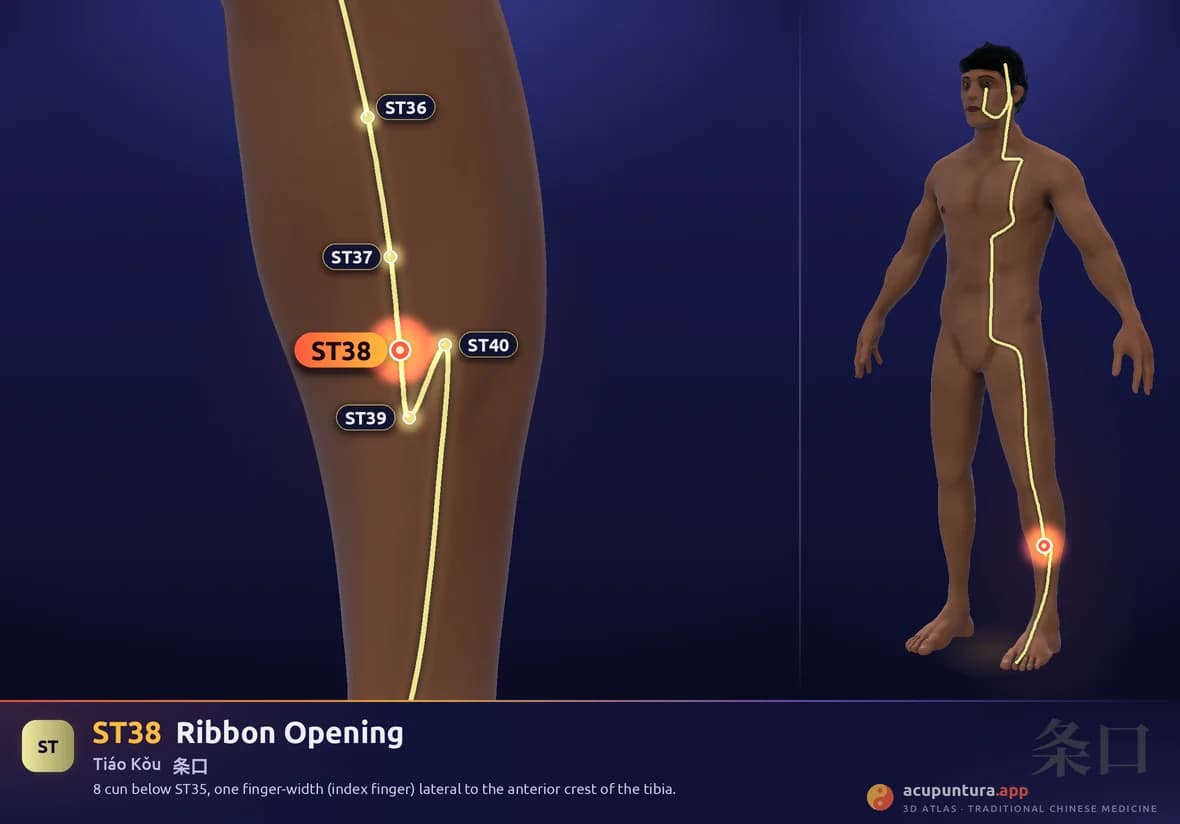
8 cun below ST35, one finger-width (index finger) lateral to the anterior crest of the tibia.
Main function
Disperses Wind-Dampness, benefits the shoulder and leg, relieves pain.
Therapeutic indications
- Shoulder pain
- knee pain
- paralysis of the lower limb
- sciatica
- frozen shoulder
- leg pain and weakness
- abdominal pain
- numbness of the foot
Name and classical tradition
Tiaokou, 条口, admits two readings. In the anatomical one, which is the dominant reading, 条 (條) is a strip, a long, narrow band, the tibialis anterior muscle, and 口 is the opening, the palpable hollow between the tibia and fibula at this point. In the other, 條 refers to 條風, the northeast wind, and the name would allude to the treatment of Wind disorders of the leg. This second reading is a minority view with weak support, probably a later reinterpretation.
The Zhenjiu Jiayi Jing (Systematic Classic of Acupuncture and Moxibustion) assigns it an indication that has been preserved verbatim: «脛痛,足緩失履,濕痹,足下熱不能久立,條口主之». Pain in the leg, a slack foot that loses its shoe, Damp obstruction (Bi), heat in the sole that prevents standing for long: Tiaokou takes care of all of these. These are local indications, of the leg and foot.
Today Tiaokou is known for a very different use: deep needling toward BL57, Chengshan, for a painful, stiff shoulder. This is a clinical development of the 20th century, not a use documented in the classics.