Bladder Channel
Stomach Granary
胃仓Wèi CāngAnatomical location
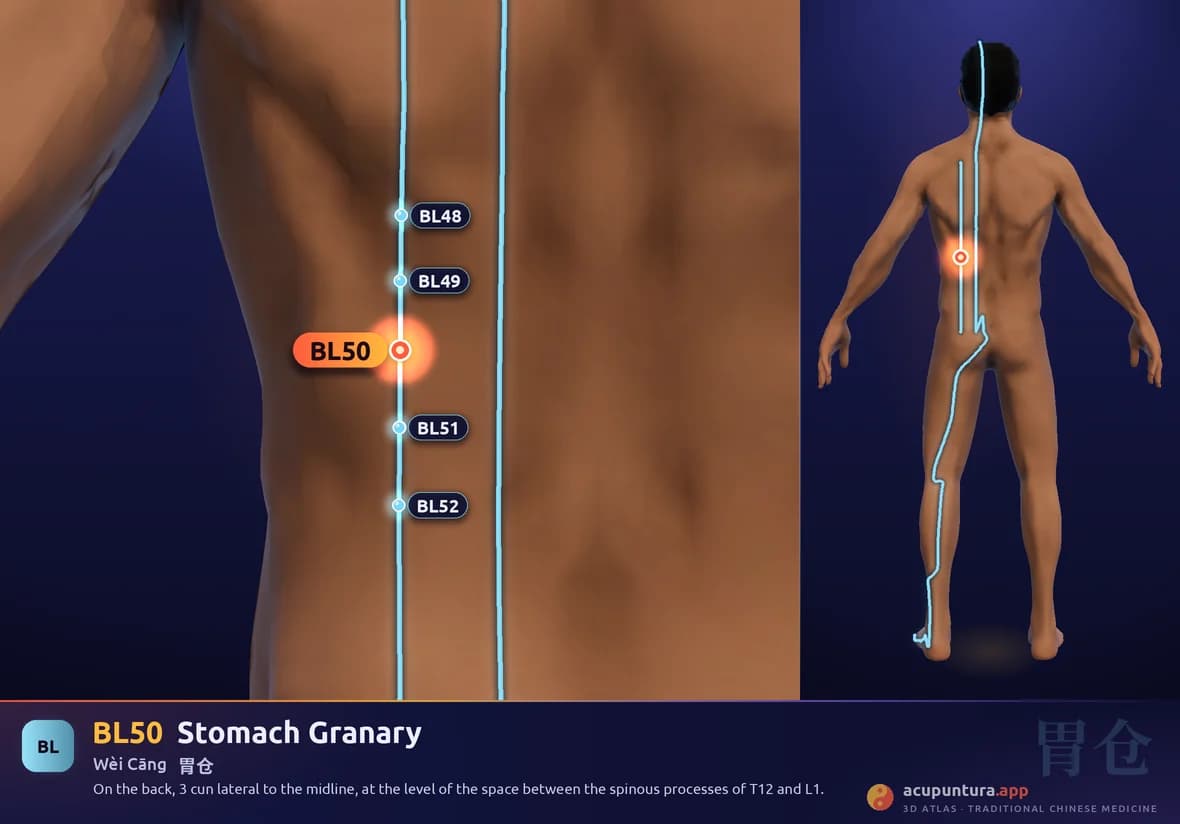
On the back, 3 cun lateral to the midline, at the level of the space between the spinous processes of T12 and L1.
Main function
Regulates the Stomach, harmonizes the Middle Jiao, relieves epigastric pain, strengthens the back.
Therapeutic indications
- Epigastric pain
- abdominal distension
- vomiting
- poor appetite
- back pain
- edema
- gastric pain
- infantile indigestion
Name and classical tradition
Weicang, 胃仓, is the “granary of the Stomach.” 胃 is the stomach; 仓 (倉) is the granary, the storehouse. The two characters say the same thing, because classical doctrine considers the Stomach the organ that receives grain and water (受納水穀之腑), the granary of the body. The point is on the outer line of the back, next to BL21, Weishu, the Back-Shu point of the Stomach.
The Zhenjiu Jiayi Jing (Systematic Classic of Acupuncture and Moxibustion) locates it “位於第十二椎下兩傍各三寸陷者中”: three cun to each side below the twelfth vertebra, in the depression. The granary reappears on the face, with ST4, Dicang, the “granary of the earth,” beside the mouth.