Bladder Channel
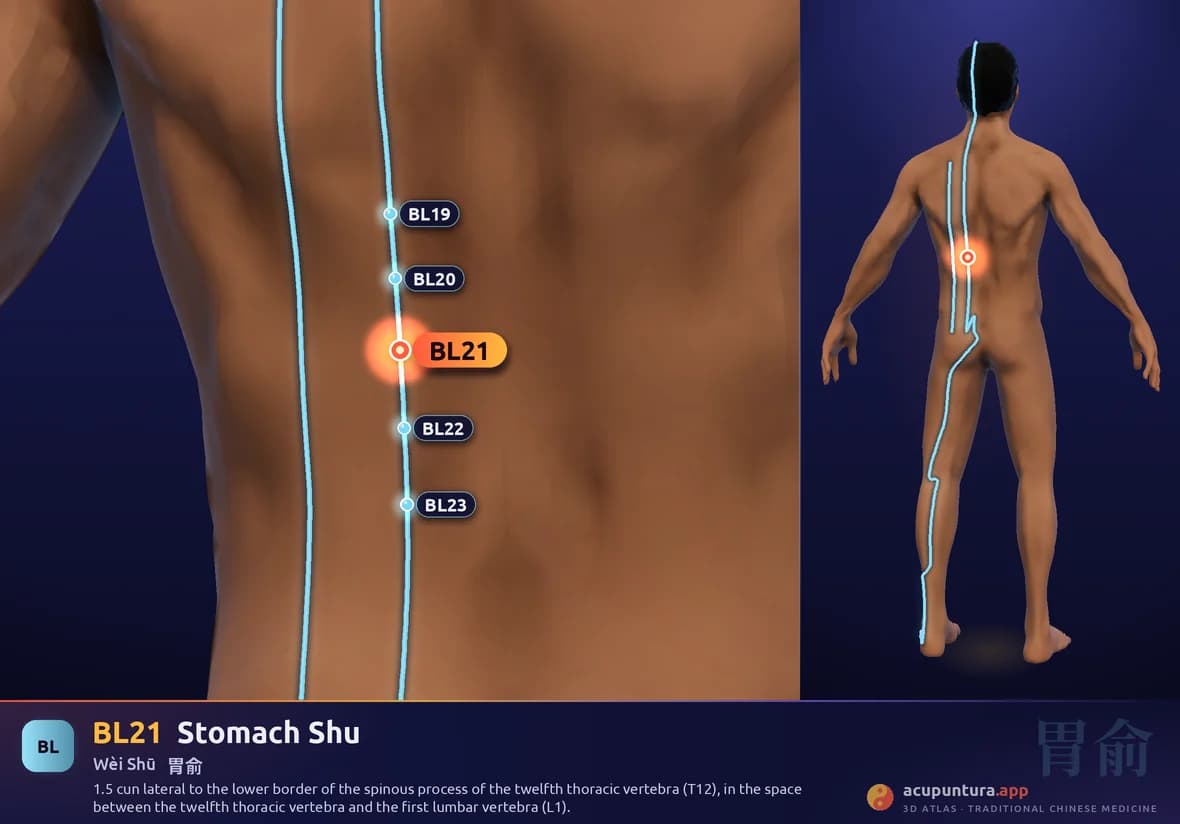
Stomach Shu
胃俞Wèi ShūAnatomical location
1.5 cun lateral to the lower border of the spinous process of the twelfth thoracic vertebra (T12), in the space between the twelfth thoracic vertebra and the first lumbar vertebra (L1).
Main function
Regulates the Stomach, harmonizes the Middle (Spleen-Stomach), descends rebellious Qi, relieves epigastric pain, strengthens digestive function, resolves Dampness and Heat, stops vomiting.
- Back-Shu point of the Stomach
Therapeutic indications
- Epigastric pain
- abdominal distension
- nausea
- vomiting
- belching
- hiccups
- poor appetite
- excessive thirst
- gastric ulcer
- gastritis
- pain in the chest and flanks
- hepatitis
- jaundice
- back pain
- general weakness
- diarrhea
- dysentery
- vomiting of blood
- gastrointestinal bleeding
- mental disorders
- insomnia
- anxiety
- Stomach pain
- Loss of appetite
- Indigestion
- Borborygmi
- Weight loss
- Diabetes mellitus (Xiao Ke)
- Obesity and overweight
- Hyperlipidemia (high cholesterol and triglycerides)
- Irritable bowel syndrome
- Gastroesophageal reflux
- Anemia
Name and classical tradition
Weishu, 胃俞, is the Back-Shu point of the Stomach. 胃 is the stomach; 俞 means to transport or to communicate. The name needs no gloss: it is the place on the back where the Qi of that Fu organ is poured. The Zhenjiu Jiayi Jing (Systematic Classic of Acupuncture and Moxibustion) places it «在第十二椎下兩傍各一寸五分», one and a half cun to each side below the twelfth vertebra, just below BL20, the Back-Shu point of the Spleen.
Sources also refer it to the Zhenjiu Dacheng (Great Compendium of Acupuncture and Moxibustion), though no citation was captured. Beside it, on the outer line, is BL50, Weicang, the «granary of the Stomach», with which it forms a pair of names devoted to the same Fu organ.