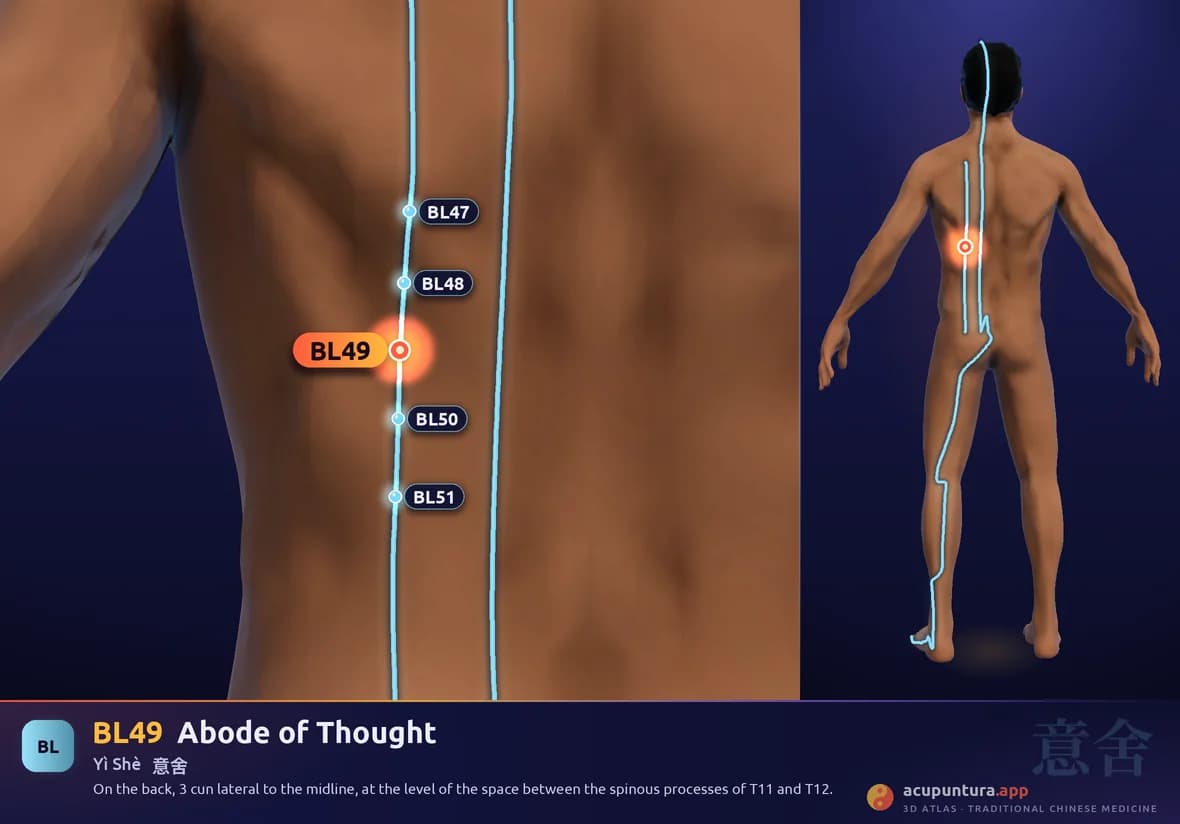
Bladder Channel
Abode of Thought
意舍Yì ShèAnatomical location
On the back, 3 cun lateral to the midline, at the level of the space between the spinous processes of T11 and T12.
Main function
Regulates the Spleen, harmonizes the Stomach, strengthens the Yi (mind), relieves abdominal distension, strengthens the back.
- Yi (mind) point
Therapeutic indications
- Abdominal distension
- back pain
- poor appetite
- diarrhea
- jaundice
- fatigue
- excessive worry
- borborygmi
- lack of appetite
- vomiting
- obsessive disorder (ruminative thinking)
Name and classical tradition
Yishe, 意舍, is the “dwelling of the Yi.” 意, the Yi, is the faculty of thought and intention; 舍 is the dwelling. The Lingshu (Spiritual Pivot), in the Ben Shen (本神) chapter, devotes two sentences to it: “心有所憶謂之意”, when the heart holds a memory it is called the Yi; and “脾藏營,營舍意”, the Spleen stores the Ying, and the Ying houses the Yi. Hence the 舍 in the name, the same verb as in the classical text.
The point is on the outer line of the back, next to BL20, Pishu, the Back-Shu point of the Spleen. It is the fourth piece of the series of soul points on the back, after BL42, BL44, and BL47, and before BL52. Here the name of the point reproduces almost literally the text that grounds it.