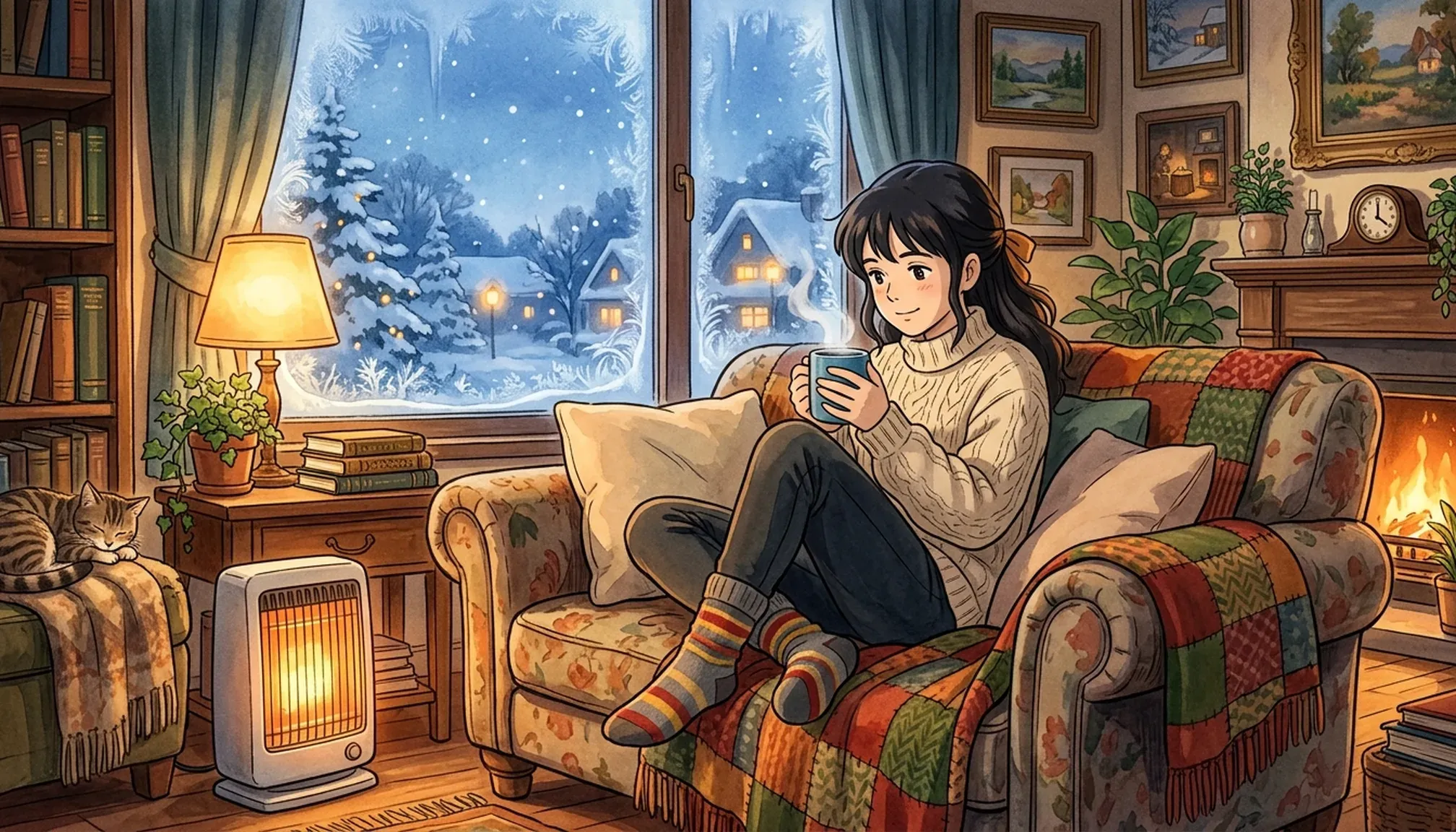
Some people head out in the dead of winter with a thin jacket and an open shirt, while others bundle up in a scarf and a heavy coat and still shiver. Maybe you have wondered why your partner complains about the heat with the windows shut while your feet are freezing under the table. Why are some people always cold and others always hot? The answer is not just a matter of "toughness." Metabolism, circulation, lifestyle habits and, according to Traditional Chinese Medicine (TCM), each person's individual constitution all have a decisive influence on how warm or cold we feel.
In this article we explain, in plain language, the most common reasons behind these differences and how you can adapt your clothing, your diet and your rest to your own situation.
Why do some people always feel cold and others always feel hot?
Body temperature is not a fixed number that is identical for everyone. Our body works like a thermostat regulated by the nervous system and by metabolism, and that "personal thermostat" is set differently in each person.
Metabolism as the body's furnace
Metabolism is the process by which the body converts food into energy, and a good part of that energy is released as heat. People with a more active metabolism generate more internal heat and tolerate cold better. Metabolism depends on factors such as age, muscle mass, physical activity and diet. That is why it is not unusual for a young, physically active person to "walk around in short sleeves" while someone with a more sedentary routine, or at a different stage of life, feels the cold much more intensely.
Circulation: how heat is distributed through the body
Even when the body holds a steady average temperature, blood does not reach every area in the same way. People whose hands and feet are cold all year round often have slower peripheral circulation: the body prioritizes warmth in the trunk and vital organs, and the extremities end up with a poorer blood supply. Nervousness, stress, or sitting for many hours can also affect peripheral circulation and make your feet turn cold even when the room is warm.
Weight, muscle and age
Muscle tissue generates heat continuously, while fat acts as insulation that retains body heat. Two people in the same house at the same temperature can experience it very differently depending on their body composition. With age, metabolism also tends to slow down and sensitivity to cold usually increases, something many people notice quite clearly after a certain age.
Habits that make you feel colder or hotter
It is not all down to genetics or constitution: much of how we feel temperature is built day by day through our habits.
Diet influences how we regulate heat. Very light meals or skipped meals can make us feel colder, while overdoing very large, spicy or alcohol-heavy meals produces that momentary flushed, overheated feeling.
Movement is the body's natural heater. People who walk or exercise every day usually have better circulation and less trouble warming up. Spending many hours motionless in front of a screen has the opposite effect.
Stress and emotions change how we perceive temperature. Tense situations can cause cold hands and feet, chills, or the opposite feeling of being flushed and overheated. Many people notice this before an exam, an interview or a difficult moment.
Irregular sleep throws off the thermostat. Sleeping too little or too poorly for weeks can disrupt the body's natural regulation and cause excessive feelings of cold or heat, in addition to fatigue.
Coffee and tobacco affect peripheral circulation. In some people, high consumption can contribute to cold extremities.
What Traditional Chinese Medicine says about each person's constitution
Traditional Chinese Medicine has observed for thousands of years that not everyone reacts the same way to cold, to heat, to the change of seasons or to foods. Its explanation is simple to grasp: each person is born with their own constitution, a particular way of organizing and balancing their internal energy.
From this perspective, the body is understood as a system in which energy (what the Chinese tradition calls qi, pronounced "chee") has to circulate freely and keep a balance between what warms the body and what cools it. Some people have a system that naturally tends to "run warm": they have heat to spare, they like cool water, they dress lightly and they sweat easily. Others have a system that tends to "run cool": their extremities feel cold, they have trouble warming up and they constantly seek out warmth.
TCM does not consider either type a problem in itself, but rather a personal characteristic, like eye color. However, when that imbalance becomes more pronounced—because of stress, poor diet, accumulated fatigue or changes of season—discomforts can appear, such as persistent cold, hot flashes, cold hands and feet, or a feeling of being "out of sync."
How does acupuncture work with this constitution?
Acupuncture, recognized by the World Health Organization as a traditional practice, is used in TCM to help the body recover its energetic balance and improve circulation. The underlying idea is to help energy flow better so that the body regulates its own temperature and sense of well-being. Research is ongoing into how acupuncture may influence circulation and the response of the nervous system, although it is wise to keep realistic expectations: it is a complement, never a substitute for medical evaluation and treatment.
If you notice excessive cold or heat that is new, intense or persistent, it is important to see your doctor first, since these sensations can hide causes that need attention.
Cold and heat in the hands, feet, skin and back: what Chinese medicine says
Chinese medicine does not only look at whether you feel cold or hot, but at where you feel it and at what time of day, because each combination points to a different imbalance. This is not a diagnosis you can make on your own, but knowing these clues helps you understand what a professional will tell you.
Cold and heat in the hands and feet
Cold hands and feet, especially when accompanied by tiredness, a wish to curl up and a taste for hot drinks, are associated with weak yang, the part of the body that warms and sets things in motion. When the cold reaches the knees or the lower back, TCM usually looks to the Kidney, which it considers the root of warmth for the entire body.
The opposite is also very common: heat in the palms of the hands and the soles of the feet, which makes you stick your feet out from under the sheet. Chinese medicine associates this with insufficient yin, the part that cools and nourishes, and not with a true excess of heat.
Cold and heat in the skin and back
For TCM, the skin is the first barrier against cold and wind from the outside. Feeling chills on the skin or a sudden cold between the shoulder blades, up toward the nape of the neck, is interpreted as the entry of an external factor, what in everyday language we call "catching a chill." By contrast, skin that is hot, reddened or itchy is associated with heat in the blood. A fixed cold in the lower back that improves with a hot water bottle once again points to Kidney yang.
Heat and cold at night
Hot flashes and heat that appear in the late afternoon or in the early morning hours, sometimes with night sweats and a dry mouth, are a typical sign of yin deficiency in Chinese medicine. Waking up uncovered and then feeling cold a little later, alternating between one sensation and the other, is linked more to a mismatch between qi and blood or to accumulated stress. Keep in mind that persistent night sweats and hormonal changes, such as menopause, always deserve a medical consultation.
Acupuncture, acupressure and moxibustion for cold and heat
Acupuncture for heat and cold in the body has no fixed recipe: the practitioner chooses points according to where and when the discomfort appears. When cold predominates, they usually work with points such as Guān Yuán (CV4), Mìng Mén (GV4) or Shèn Shū (BL23), on the abdomen and lower back. When heat predominates, with night hot flashes or hot palms and soles, they often turn to Tàixī (KI3), Zhàohǎi (KI6) or Sān Yīn Jiāo (SP6).
Moxibustion, which consists of warming the points with a lit mugwort stick, is the technique of choice when there is cold, but not when there is heat: applied to a person with hot flashes or internal heat, it can make the discomfort worse. That is why it is best to have a professional recommend it, and to take special care during pregnancy, with diabetes, or if there are areas with reduced sensation, where it is easy to get burned without noticing.
Acupressure for cold and heat can be practiced at home, with caution. Pressing Zú Sān Lǐ (ST36), below the knee, with your thumb for one or two minutes is a simple move for people who tend to feel cold. If what you notice is heat in the soles of your feet at night, you can gently massage Yǒngquán (KI1), on the sole of the foot, before going to sleep. If you are pregnant, avoid pressing Sān Yīn Jiāo (SP6) and check first with your midwife or your doctor.
How to adapt your life to your own constitution
Knowing yourself is the first step. These general guidelines can help you adjust your day-to-day life depending on whether you tend to feel cold or hot.
If you tend to feel cold all the time
Dress in layers and protect your neck, abdomen and feet in particular, areas where TCM considers that outside cold enters most easily.
Prioritize hot, cooked meals: soups, stews, hot herbal teas. Avoid overdoing very cold and raw foods, especially in the morning.
Move throughout the day. Even short walks or stretching every hour improve circulation and help you warm up.
Take care of your rest. Sleeping well helps the body recover its natural regulation.
Avoid tobacco and limit coffee, which can worsen circulation in the hands and feet.
If you tend to feel hot all the time or have hot flashes
Choose breathable clothing and light layers that you can easily take off or put on.
Include fresher, lighter foods in your diet, and stay well hydrated.
Cut back on spicy food, alcohol and very heavy meals, which in many people make the feeling of heat worse.
Practice activities that help release tension, such as walking, swimming or breathing techniques, since stress often shows up as feeling flushed and overheated.
Keep a steady sleep schedule: poor sleep tends to increase irritability and an unpleasant sense of body temperature.
In both cases, the key is consistency: the body adapts better to what is steady than to what is extreme. Abrupt temperature changes, chaotic schedules or very restrictive diets throw off even the healthiest people.
When to see a professional
Feeling cold or hot habitually and steadily over time is usually a personal characteristic of no great significance. However, some signs call for seeing a doctor:
- Intense cold or stifling heat appears suddenly, for no apparent reason.
- The temperature sensation comes with weight loss, palpitations, excessive sweating, dizziness or extreme fatigue.
- Your fingers change color in the cold and hurt.
- Symptoms persist for weeks and affect your quality of life.
In these cases, a medical evaluation is essential before considering any complementary therapy. Once causes that require medical treatment have been ruled out, a Traditional Chinese Medicine practitioner can help you understand your constitution and work on the balance of your body with acupuncture, moxibustion or other traditional techniques.
Frequently asked questions
Is it normal to always have cold hands and feet?
Yes, it is one of the most common complaints, and in most cases it is due to slower peripheral circulation, which does not imply any disease. However, if the cold is intense, new, or comes with other symptoms (pain, color changes, tingling), it is wise to talk to your doctor.
Why does my partner feel hot and I feel cold in the same room?
Because each person has their own constitution: metabolism, muscle mass, circulation, age, habits and nervous sensitivity are all different. It does not mean that one of you is doing something wrong; you are simply different. Adjusting your clothing and bedding in layers is usually the most practical solution.
Can acupuncture help regulate the feeling of cold or heat?
Acupuncture is traditionally used to promote circulation and the body's energetic balance, and many people use it as a complement to improve how they feel temperature-wise and their overall well-being. It should always be performed by a qualified professional and only after ruling out medical causes with your doctor.
Does moxibustion help if I feel hot instead of cold?
In general, no. Moxibustion adds heat, and Chinese medicine reserves it for cold patterns, such as icy hands and feet or a cold lower back. If what you notice is hot flashes, night heat, or hot palms and soles, it can make the discomfort worse; in those cases the practitioner prefers acupuncture or gentle acupressure.
Does diet really influence whether I feel cold or hot?
Yes, indirectly. The type of food, its temperature and the rhythm of your meals affect metabolism and circulation. For example, a person who tends to feel cold usually improves with hot meals and regular mealtimes, while someone who tends to feel hot usually benefits from lighter, fresher dishes.
Does sensitivity to cold tend to increase with age?
In general, yes. Over the years metabolism slows down and there may be less muscle mass, which makes us feel colder. In addition, peripheral circulation usually becomes somewhat slower. Dressing in layers and staying physically active helps compensate.
A personal balance for every body
That you feel cold and your neighbor feels hot is not a whim: it is the expression of a constitution, habits and circulation that are yours alone. Understanding how your body works lets you adapt your diet, your clothing and your rest so you feel better every day. And if your symptoms worry you or persist, remember that the first step is a good medical evaluation; from there, a qualified Traditional Chinese Medicine practitioner can accompany you on the path to your personal balance.