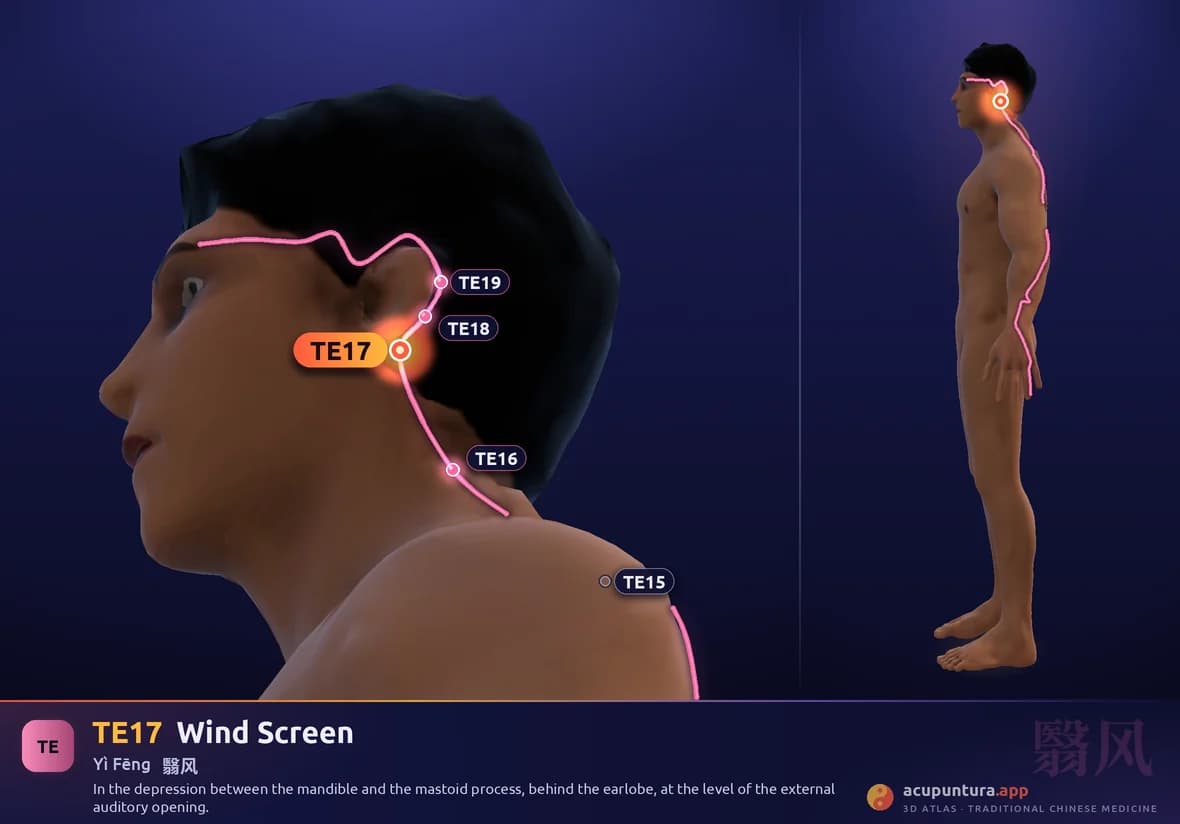
Triple Energizer Channel
Wind Screen
翳风Yì FēngAnatomical location
In the depression between the mandible and the mastoid process, behind the earlobe, at the level of the external auditory opening.
Main function
Expels Wind, benefits the ears, relieves pain, unblocks the channels.
Therapeutic indications
- Deafness
- tinnitus
- ear pain
- facial paralysis
- toothache
- jaw pain
- headache
- otitis
- mumps
- trismus
- vertigo
Name and classical tradition
Yifeng, 翳风, is the “screen from the wind.” 翳 originally referred to a feather fan, the kind used as a parasol or screen in ceremonies, and by extension anything that covers and hides; 风 (風) is the wind. The point is behind the earlobe, in front of the mastoid process, hidden by the auricle as if behind a fan. The ear also acts as a screen against wind for that area, “以耳為之蔽風”. The name plays at once on form and on function, because the point has been used in disorders caused by Wind.
This is a well-documented double meaning, consistent across sources. The first work to record the point is the Zhenjiu Jiayi Jing (Systematic Classic of Acupuncture and Moxibustion), and it is a crossing point of the hand and foot Shaoyang, the Triple Energizer and the Gallbladder.