Bladder Channel
Wind Gate
风门Fēng MénAnatomical location
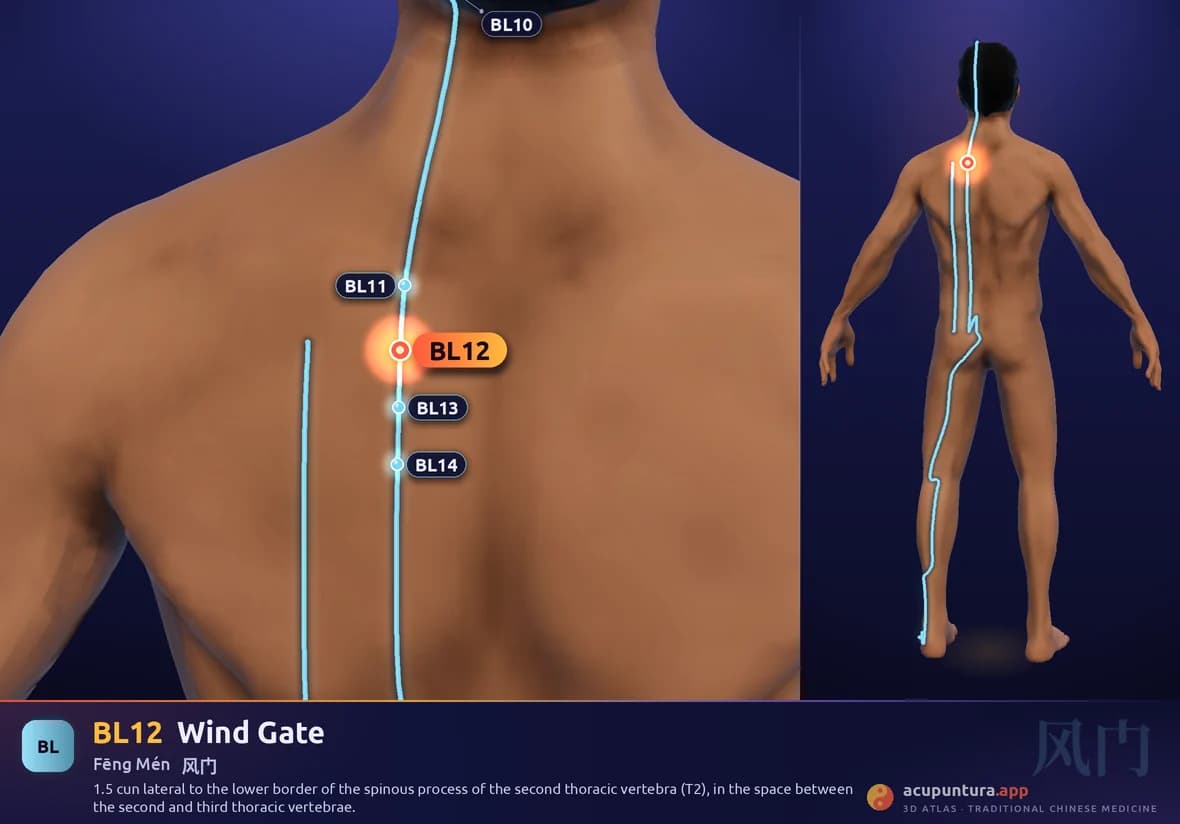
1.5 cun lateral to the lower border of the spinous process of the second thoracic vertebra (T2), in the space between the second and third thoracic vertebrae.
Main function
Expels Wind, releases the exterior, benefits the Lung, relieves cough and asthma, strengthens the Wei Qi (Defensive Qi).
Therapeutic indications
- Common cold
- fever
- cough
- asthma
- sore throat
- back pain
- shoulder pain
- headache
- stiff neck
- allergic rhinitis
- bronchitis
- pneumonia
- skin diseases
- hives
- spontaneous sweating
- colds
- sneezing
- COPD and chronic bronchitis
Name and classical tradition
Fengmen, 风门, is the “wind gate.” 风 (風) is Wind in its medical sense, the pathogenic factor that enters from the outside; 门 (門) is the gate. The point is regarded as the place where Wind enters and leaves the body, a well-established concept in the classical nosology of Wind. The name is doctrine, not gloss.
The Zhenjiu Jiayi Jing (Systematic Classic of Acupuncture and Moxibustion) places it one and a half cun on each side of the space below the second thoracic vertebra. The reference works record the alternative name 熱府, “storehouse of heat,” the same one attributed to GB20, Fengchi, another Wind point. Together with Fengchi and GV16, Fengfu, it forms the series of points that carry Wind in their names on the nape and upper back.