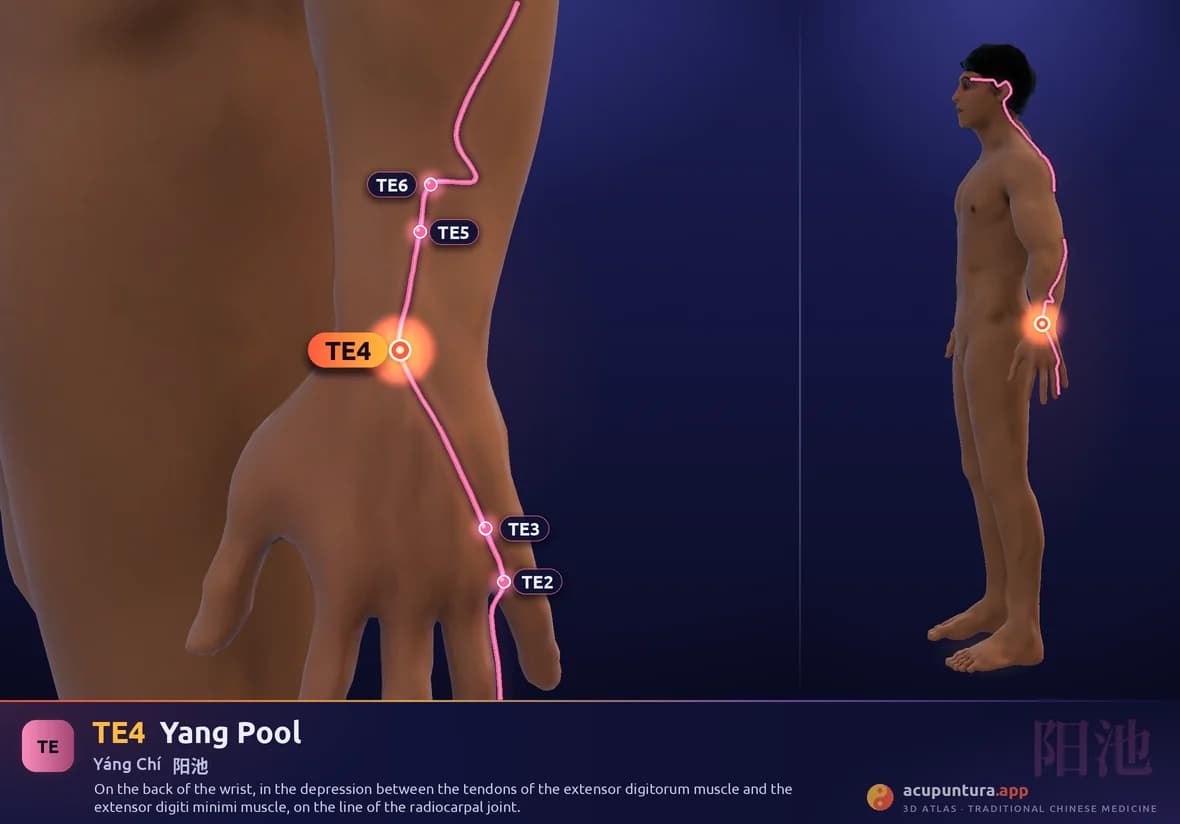
Triple Energizer Channel
Yang Pool
阳池Yáng ChíAnatomical location
On the back of the wrist, in the depression between the tendons of the extensor digitorum muscle and the extensor digiti minimi muscle, on the line of the radiocarpal joint.
Main function
Yuan-Source point, benefits the ears, regulates the Triple Energizer, disperses Cold, relieves pain.
- Yuan (Source) point
- Ryodoraku point H5 (Triple Energizer)
Therapeutic indications
- Wrist pain
- pain on the back of the hand
- deafness
- sore throat
- fever
- general fatigue
- Wrist tendinitis
- Intense thirst
- Malaria
- Shoulder and arm pain
- Tinnitus
- Diabetes mellitus (Xiao Ke)
Ryodoraku
H5Triple RecalentadorMeasurement point no. 10
Yuan-Source point of the Triple Energizer, back of the wrist.
Name and classical tradition
Yangchi, 阳池, is the «yang pool». 阳 (陽) is yang, heat, and also the dorsal side of the wrist, where the point is found; 池, the pool. It is the Yuan-Source point (原穴) of the Triple Energizer, and the usual reading describes it as the place where the channel's yang Qi accumulates, as in a pool. The Lingshu (Spiritual Pivot), in the Ben Shu chapter (本輸), places it «在腕上陷者之中也», in the depression on the back of the wrist.
It shares 池 with other pools of the body, such as LI11, Quchi, at the elbow, GB20, Fengchi, at the nape of the neck, or PC1, Tianchi, in the chest, but Yangchi is the only one in its channel.
The Zhenjiu Jiayi Jing (Systematic Classic of Acupuncture and Moxibustion) gives it the alternative name 別陽, «yang that separates», and the repertories add 發陽, «yang that sprouts». The first coincides with one of the aliases of GB35, Yangjiao.
Other names
- 別陽Jiayi Jing