Traditional Chinese Medicine channel
Pericardium Channel
手厥阴心包经Fire19:00 - 21:009 pointsPC1 → PC9
Description
The Pericardium channel acts as the protector of the Heart, regulating blood circulation and the emotions. Known as the “Minister of the Heart,” it governs joy, intimacy, and the capacity to connect with others. Imbalances can show up as heart problems, chest pain, palpitations, anxiety, and trouble sleeping. It is essential for maintaining emotional stability and the ability to form healthy relationships with others.
Main functions
- Protects the Heart
- Regulates circulation
- Harmonizes the Shen
Pathway
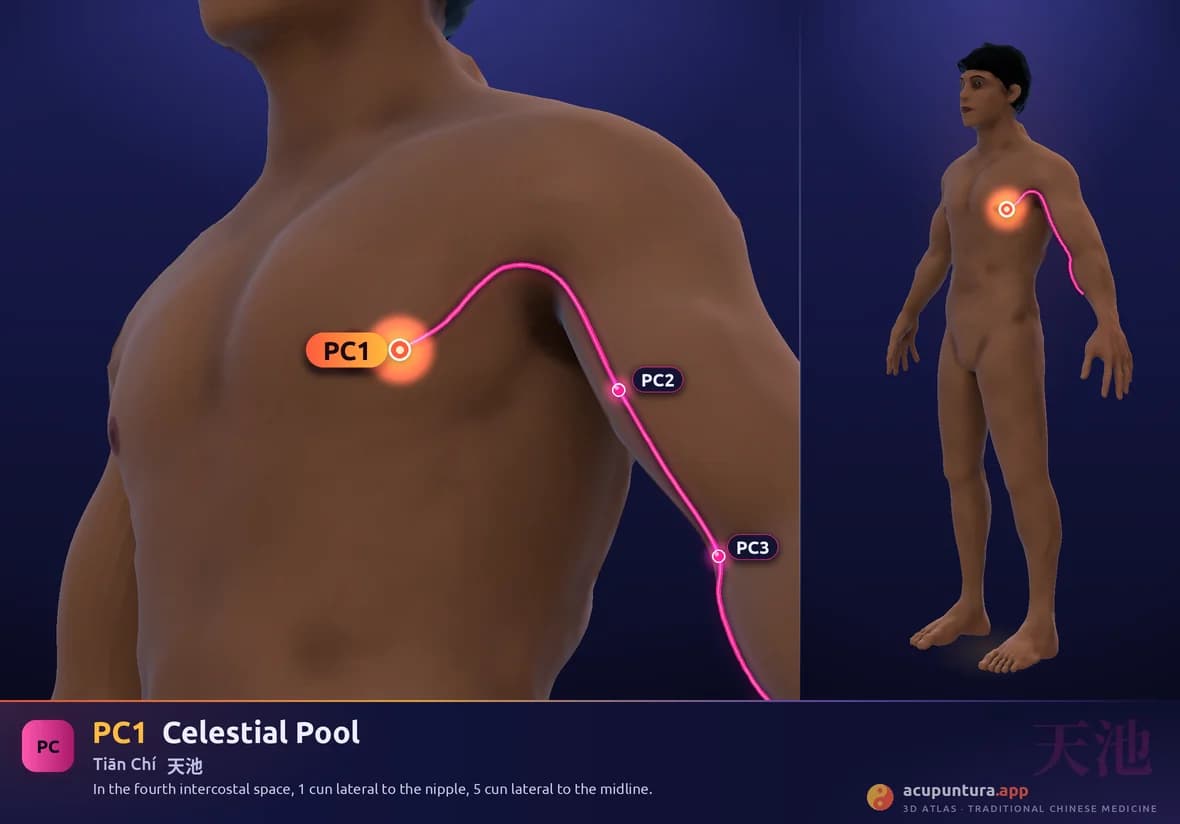
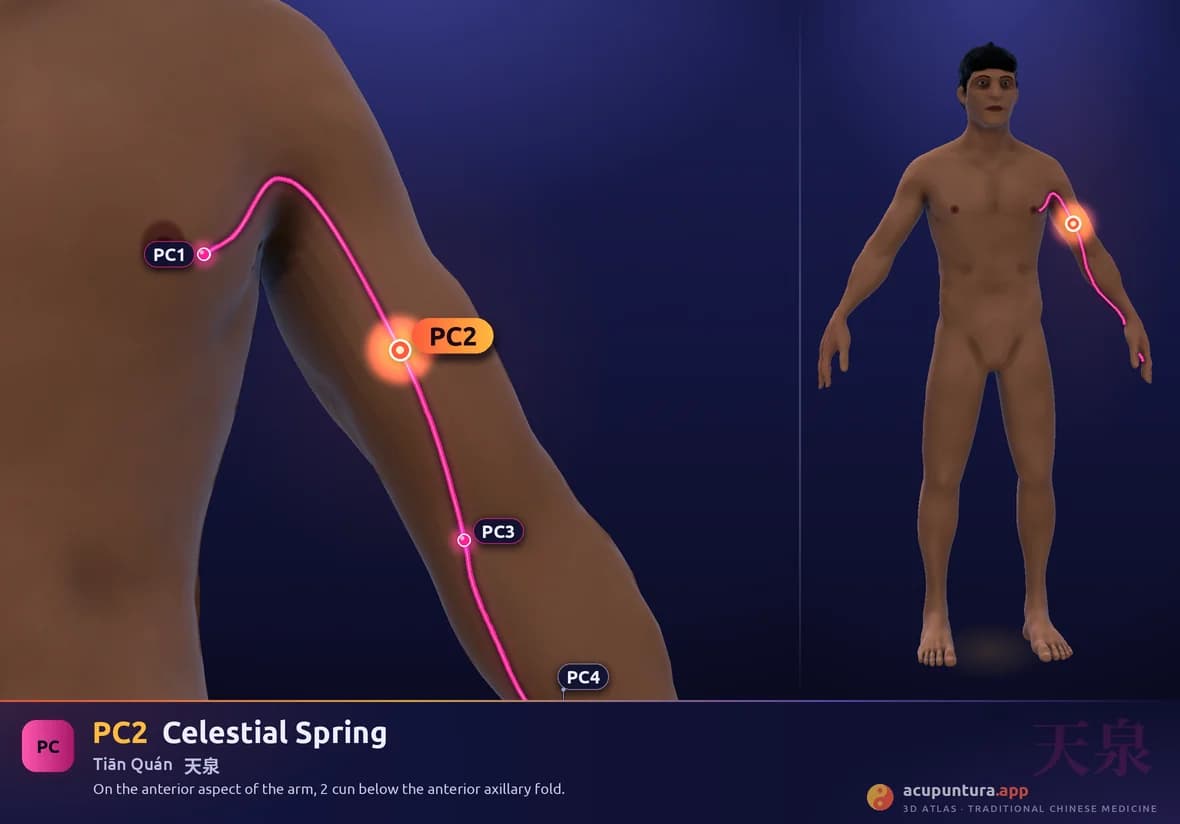
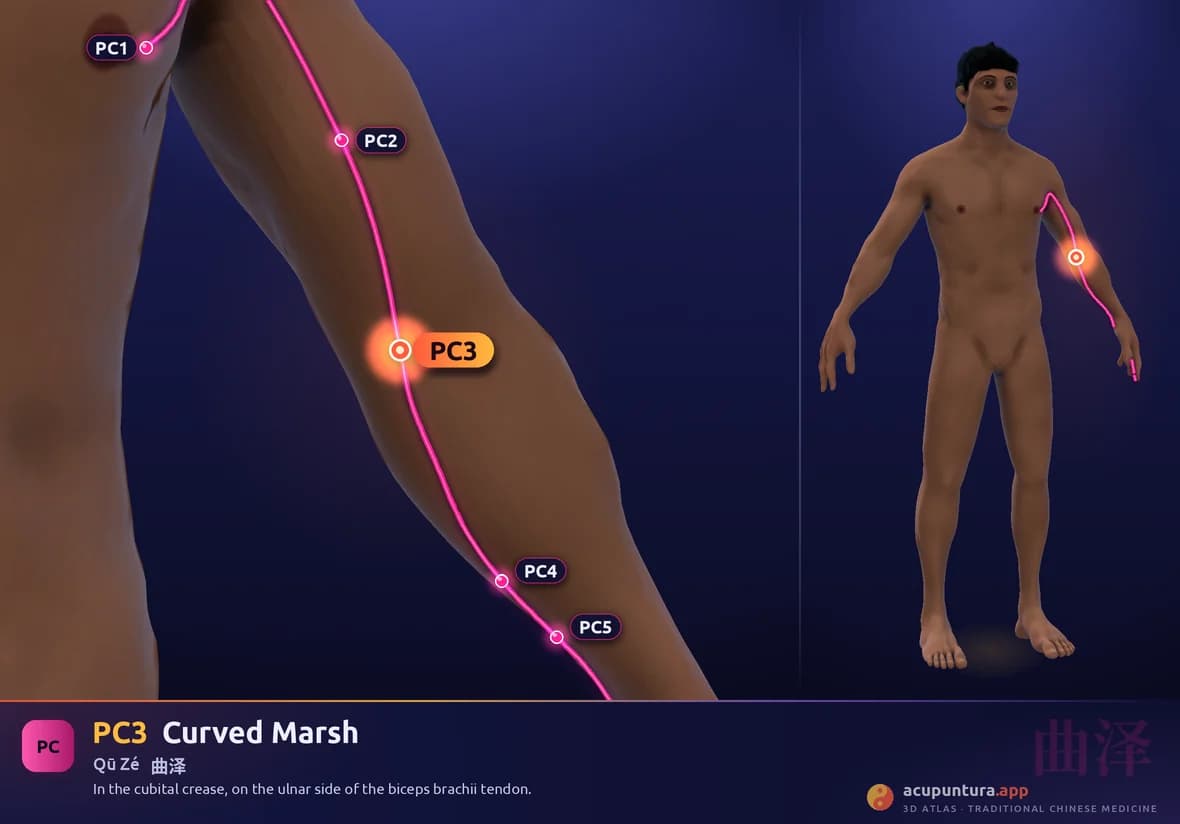
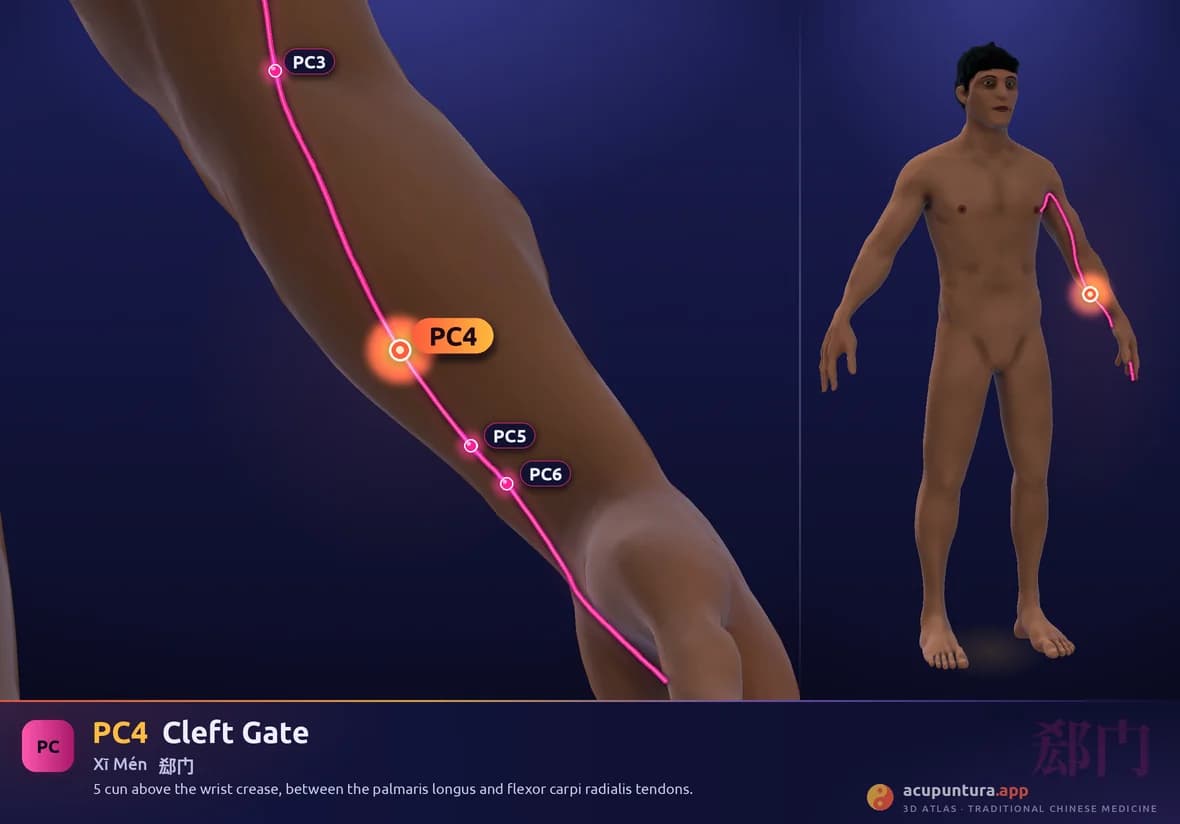
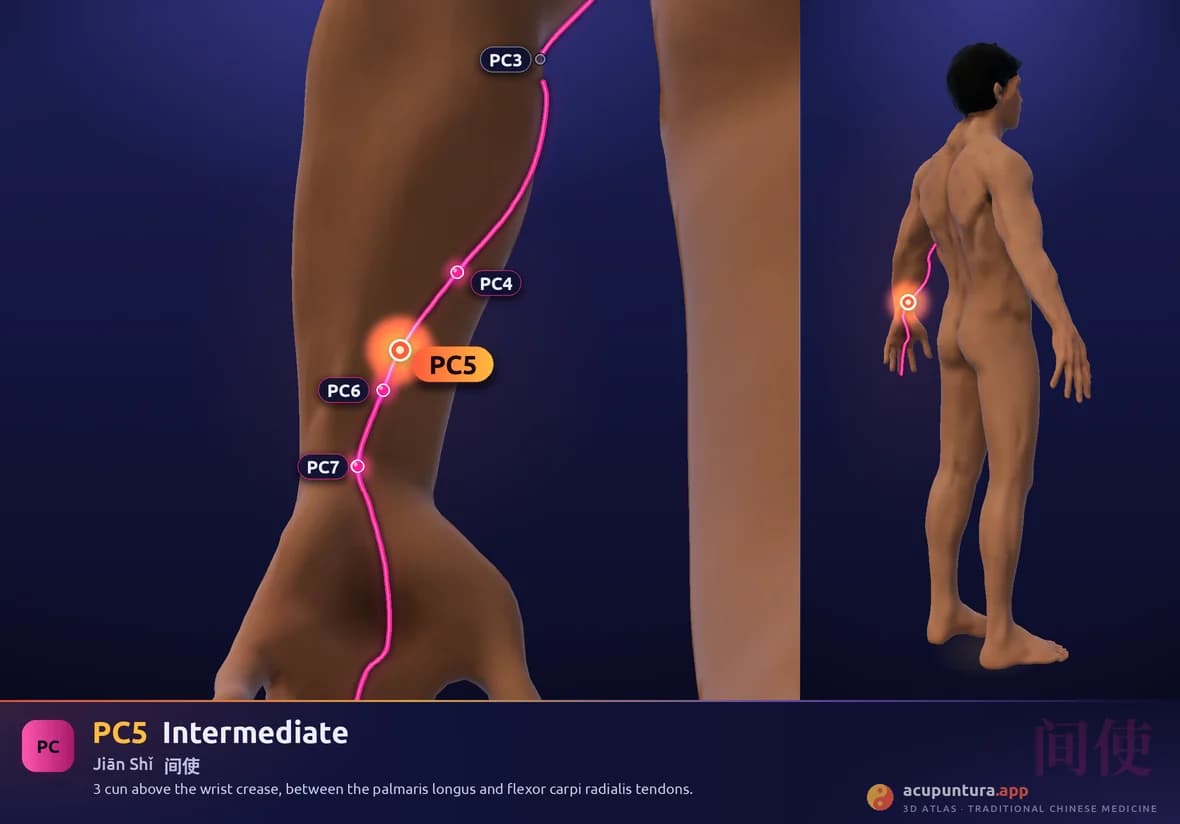
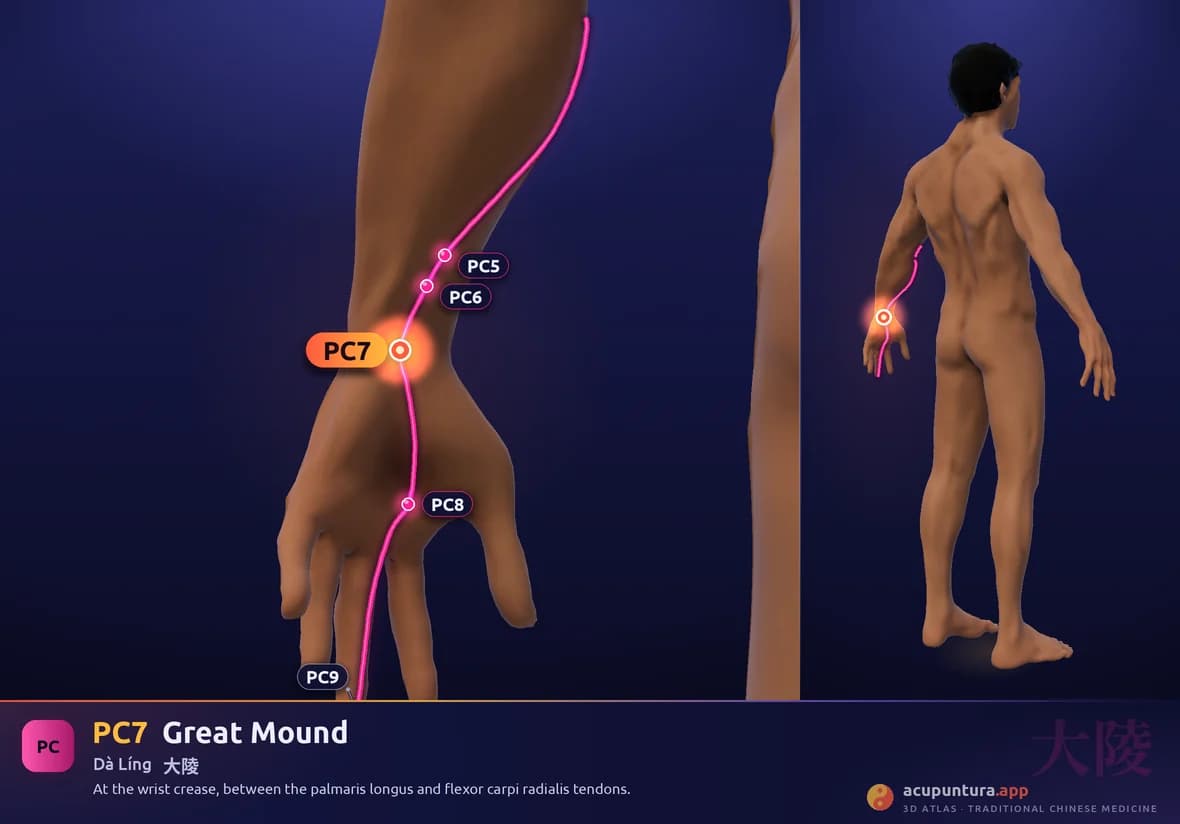
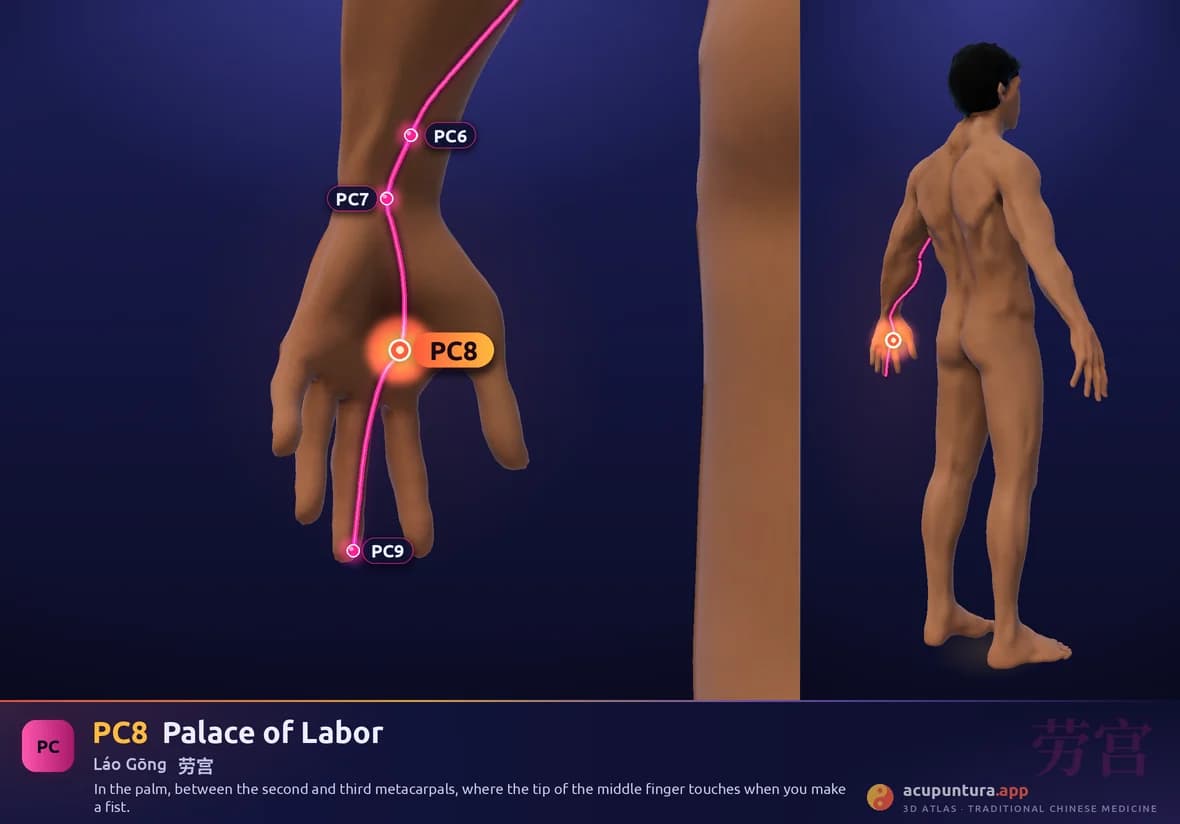
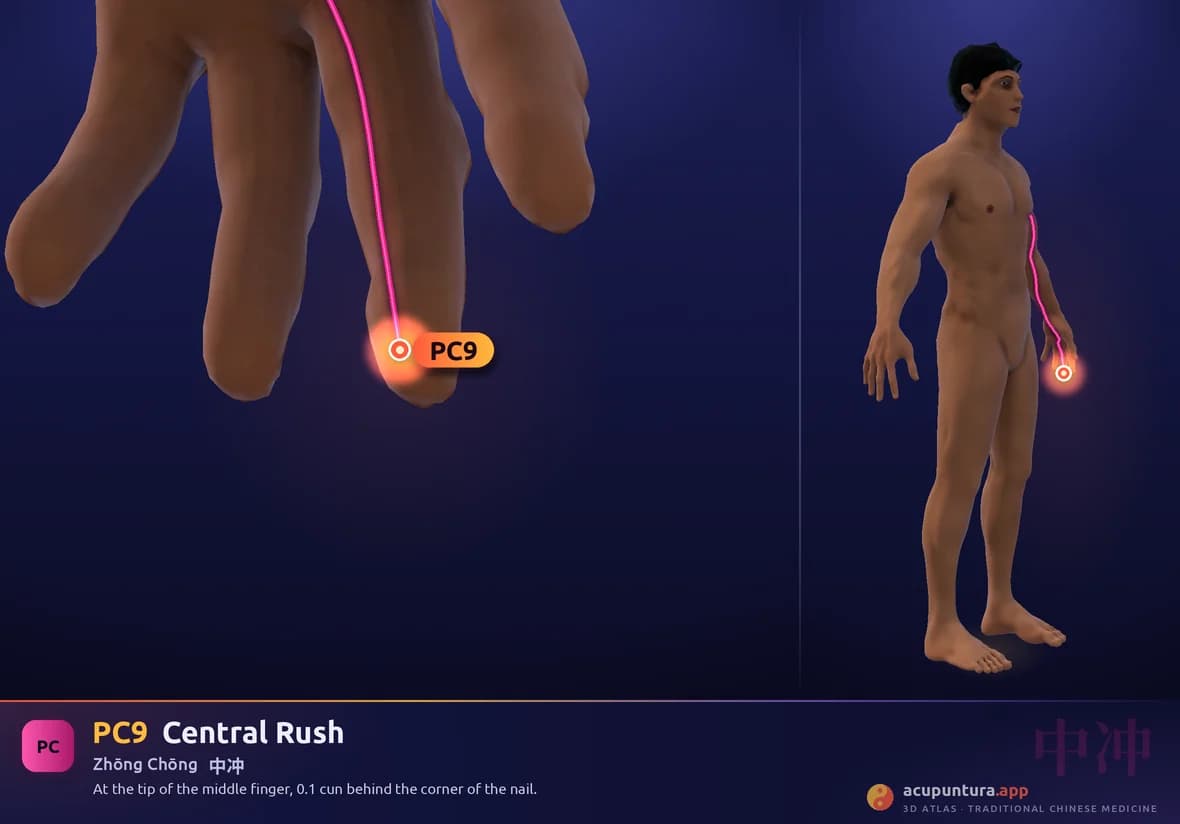
Begins in the chest, emerges in the axillary region (PC1), descends along the medial aspect of the arm, forearm, and wrist, to the middle finger (PC9).
The channel in the Lingshu
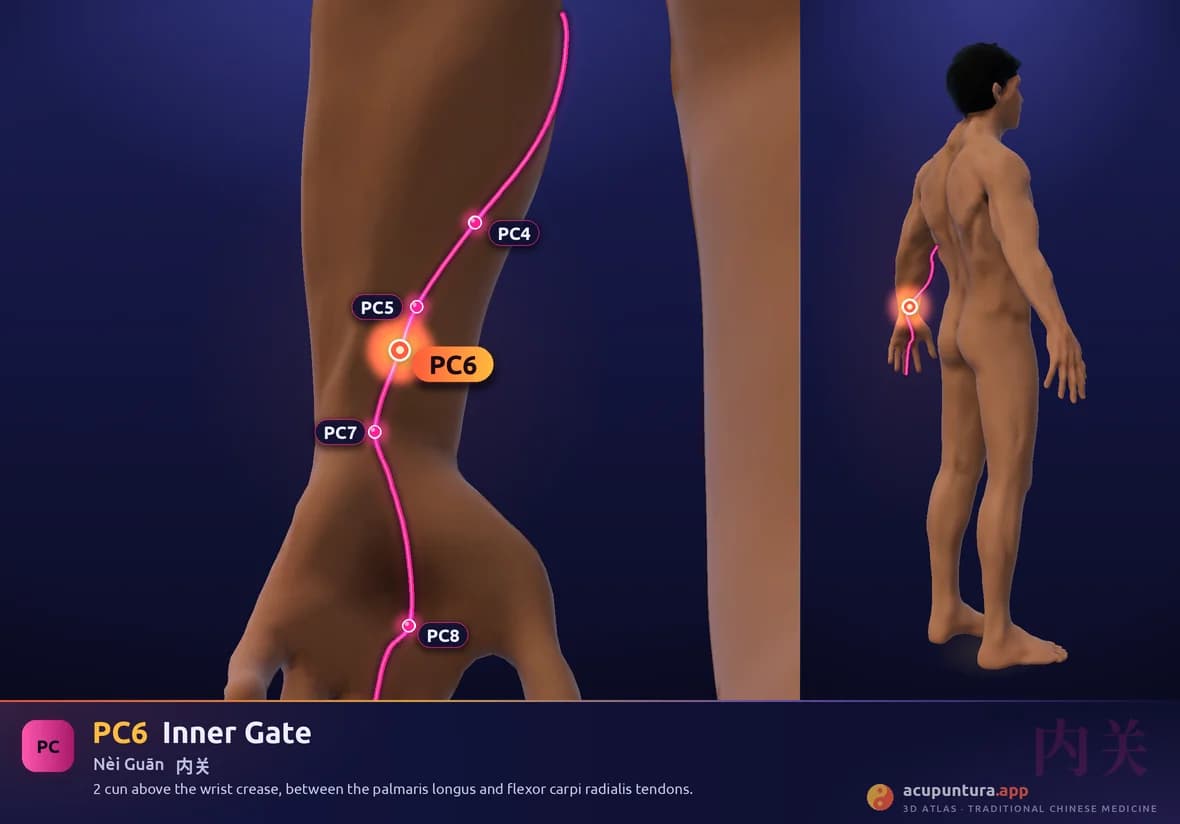
In the Lingshu (Spiritual Pivot), the Pericardium channel has a double name that sums up its role: «心主手厥陰心包絡之脈», the channel of the Heart Master, hand Jueyin, the envelope of the Heart. It begins in the chest, «起於胸中,出屬心包絡»: it belongs to the envelope of the Heart and descends through the diaphragm to connect in turn with the three Jiao. Its external branch emerges at the side, three cun below the axilla, where PC1 is, rises to the axilla and descends along the center of the inner arm, between the Lung and the Heart: «行太陰、少陰之間». In the forearm it runs between the two tendons, enters the palm, and ends at the tip of the middle finger, PC9. A branch leaves the palm toward the ring finger, where the Triple Energizer begins.
Its role is to protect. In the Xie Ke chapter (邪客), the Lingshu explains that the pathogens that reach the Heart stay in its envelope: «諸邪之在於心者,皆在於心之包絡». Its «是動» disorders are those of an agitated Heart: hot palms, a contracted elbow, a swollen axilla and, in severe cases, «心中憺憺大動», a violent pounding in the chest, with a red face, yellow eyes, and laughter that will not stop. The chapter gives it dominion over the vessels (是主脈所生病者).
Its collateral is «手心主之別,名曰內關», Neiguan, PC6, two cun from the wrist, which emerges between the two tendons, rises along the channel, and ties into the envelope of the Heart.