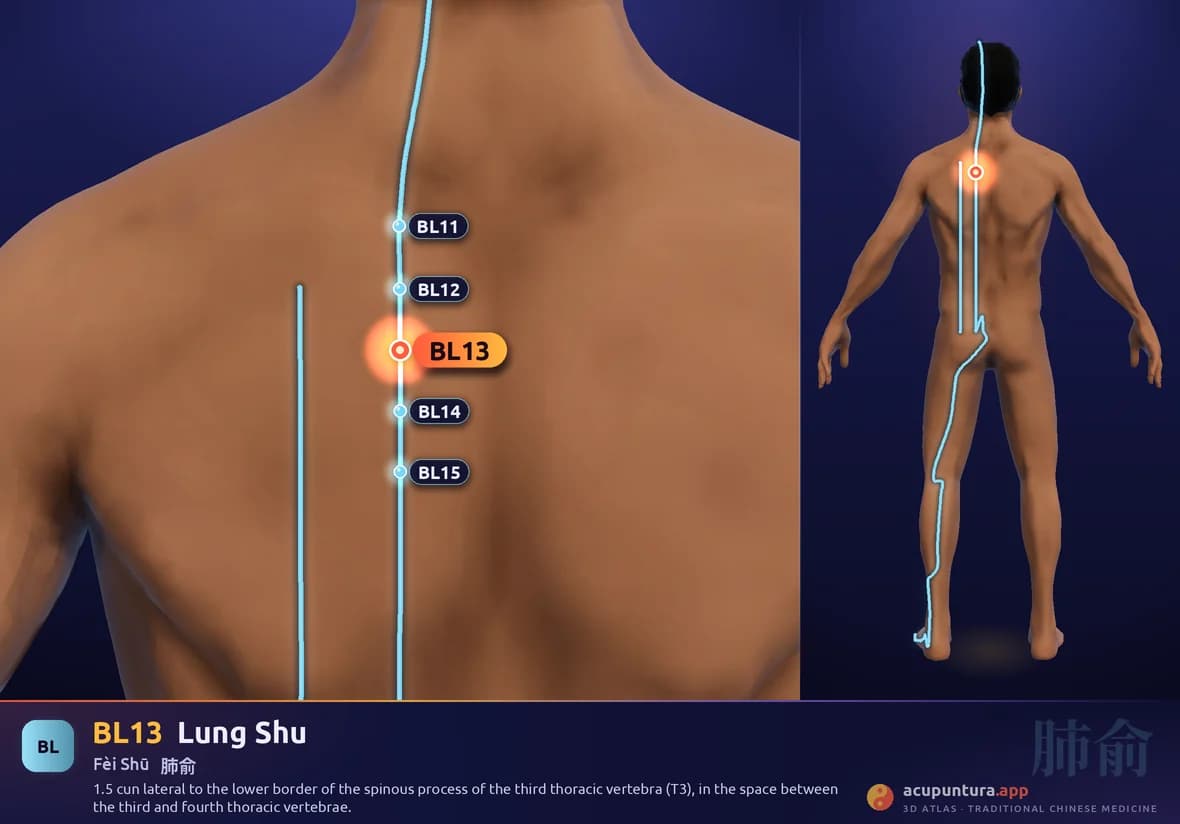
Bladder Channel
Lung Shu
肺俞Fèi ShūAnatomical location
1.5 cun lateral to the lower border of the spinous process of the third thoracic vertebra (T3), in the space between the third and fourth thoracic vertebrae.
Main function
Regulates Lung Qi, resolves Phlegm, relieves cough and asthma, strengthens the Wei Qi (Defensive Qi), benefits the skin, nourishes Lung Yin.
- Back-Shu point of the Lung
Therapeutic indications
- Cough
- asthma
- bronchitis
- pneumonia
- pulmonary tuberculosis
- sore throat
- hoarseness
- back pain
- spontaneous sweating
- fever
- common cold
- skin diseases
- hives
- hemoptysis
- sensation of chest tightness
- night sweats
- acne
- itching
- dyspnea
- diabetes mellitus (Xiao Ke)
- COPD and chronic bronchitis
- allergic rhinitis
- psoriasis
- atopic dermatitis
Name and classical tradition
Feishu, 肺俞, is the back transport point of the Lung: 肺, the lung, and 俞 (腧), the place where Qi is transported, poured, and communicated. It opens the series of back Shu points (背俞穴), in which each Zang and Fu organ has a point along the Bladder channel, one and a half cun from the spine.
The Lingshu (Spiritual Pivot), in the chapter Bei Shu (背腧), lists the Shu points of the organs by vertebra number: “肺腧在三焦之間”, the Shu of the Lung is in the space of the third vertebra. The same chapter explains how to check the location: “按其處,應在中而痛解,乃其腧也”, on pressing, the response is felt inside and the pain is relieved; that is the point. This method of locating by palpation, which predates any system of measurement, is one of the most interesting facts about these points. The Zhenjiu Jiayi Jing (Systematic Classic of Acupuncture and Moxibustion) proposes measuring by the distance between the nipples, and the Tongren Shuxue Zhenjiu Tujing, in the Song period, adds a cross-palpation technique: “搭手,左取右,右取左”: resting the hand on the shoulder, the left hand is used to find the right side and the right hand the left.
Next to it, on the outer line, is BL42, Pohu, the “gate of the po,” which points to the spiritual aspect of the Lung.