Bladder Channel
Gate of the Hun (Ethereal Soul)
魂门Hún MénAnatomical location
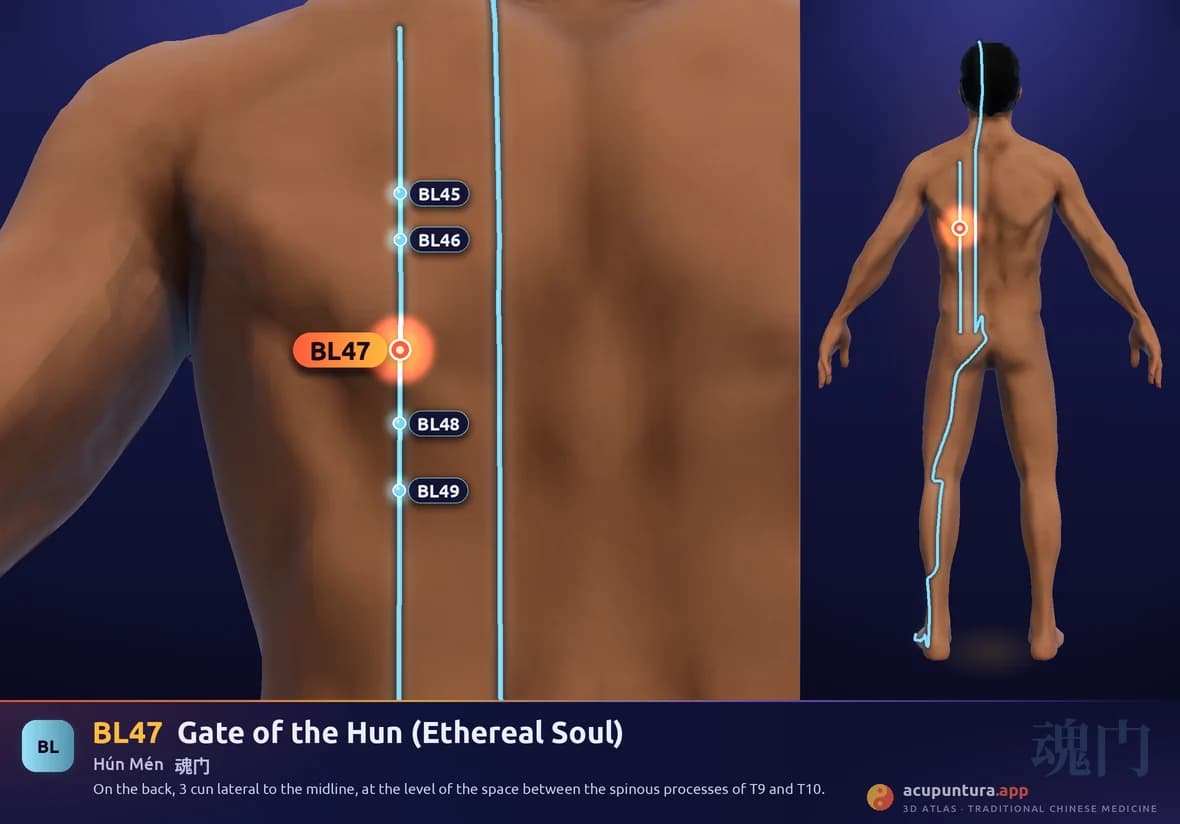
On the back, 3 cun lateral to the midline, at the level of the space between the spinous processes of T9 and T10.
Main function
Regulates the Liver, calms the Hun (Ethereal Soul), relieves chest oppression, strengthens the back, benefits the eyes.
- Point of the Hun (ethereal soul)
Therapeutic indications
- Hypochondriac pain
- back pain
- depression
- frustration
- anger
- blurred vision
- chest pain
- jaundice
- costal pain
- vomiting
- indigestion
- insomnia
- anxiety
Name and classical tradition
Hunmen, 魂门, is the “door of the Hun.” 魂, the Hun, is the soul that accompanies the spirit, and that Chinese medicine links with the Liver: the Liver stores the Blood, and the Blood houses the Hun. The Lingshu (Spiritual Pivot), in the Ben Shen (本神) chapter, defines it with a precise phrase: “隨神往來者謂之魂”, that which follows the spirit in its comings and goings is called the Hun. 门 is the door.
The point is on the outer line of the back, next to BL18, Ganshu, the Back-Shu point of the Liver. The Zhenjiu Jiayi Jing (Systematic Classic of Acupuncture and Moxibustion) locates it below the ninth vertebra, in a depression. It is the third piece of the series of soul points on the back: after BL42, the Po of the Lung, and BL44, the Shen of the Heart, comes the Hun of the Liver, and then BL49 and BL52.