Bladder Channel
Abode of the Will
志室Zhì ShìAnatomical location
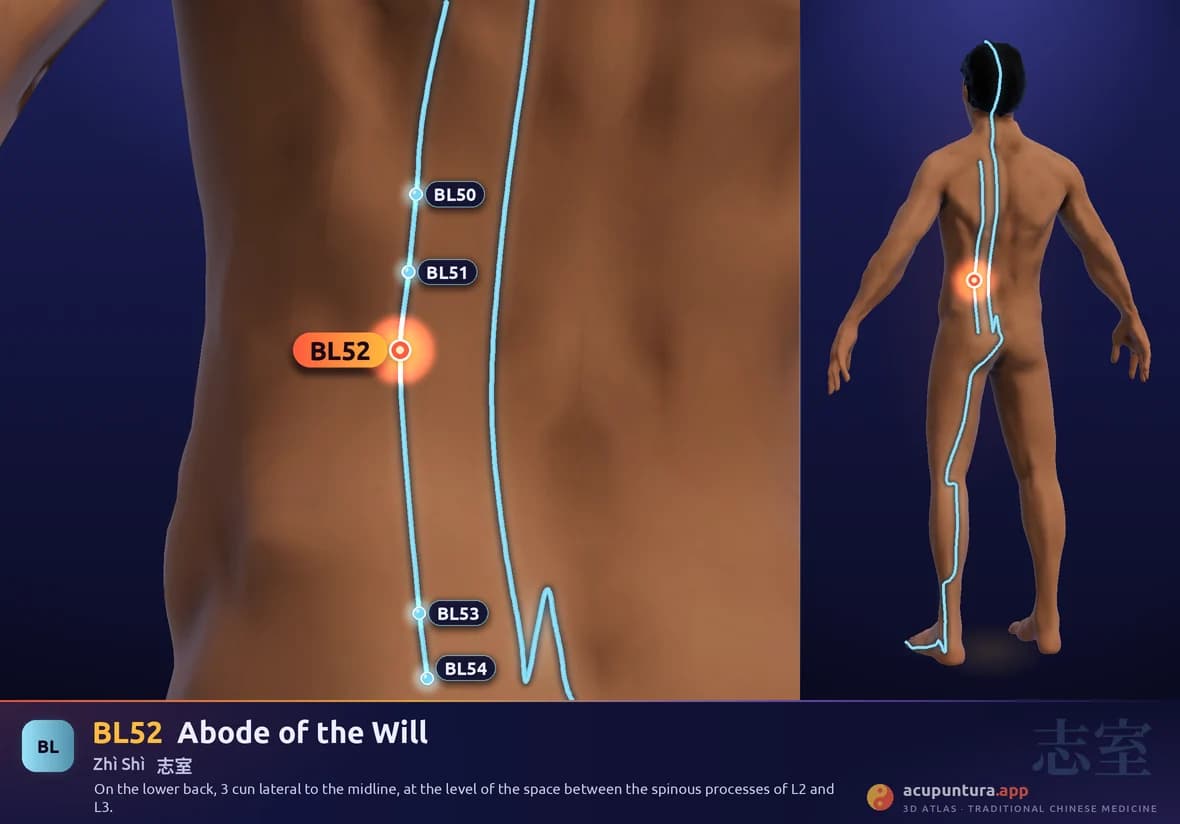
On the lower back, 3 cun lateral to the midline, at the level of the space between the spinous processes of L2 and L3.
Main function
Strengthens the Kidney, nourishes the Essence (Jing), strengthens the willpower (Zhi), benefits the lumbar region, regulates urination.
- Point of the Zhi (will)
Therapeutic indications
- Low back pain
- weak knees
- dysuria
- enuresis
- impotence
- spermatorrhea
- fatigue
- edema
- nocturnal emission
- lumbago
- lumbar stiffness
- kidney stones and renal colic
- prostatitis and benign prostatic hyperplasia
- lumbar disc herniation
- ankylosing spondylitis
- osteoporosis
Name and classical tradition
Zhishi, 志室, is the “room of the zhi.” 志, the zhi, is willpower, the determination that Chinese medicine links to the Kidney; 室 is the room. The Lingshu (Spiritual Pivot), in the Ben Shen (本神) chapter, states that the Kidney stores the Essence, and the Essence houses the zhi.
The point lies on the outer line of the back, next to BL23, the Back-Shu point of the Kidney, and it closes the series of five spirit points of the back: BL42, the po of the Lung; BL44, the shen of the Heart; BL47, the hun of the Liver; BL49, the yi of the Spleen; and Zhishi, the zhi of the Kidney. With it, the full scheme of the Ben Shen faculties is completed on the second line of the back.
The Yixue Rumen (Introduction to Medicine), from the Ming period, gives it the alternate name 精宮, “palace of the Essence,” consistent with the role of the Kidney. The same name is sometimes attributed to its neighbor Shenshu, and it is unclear which of the two received it first.