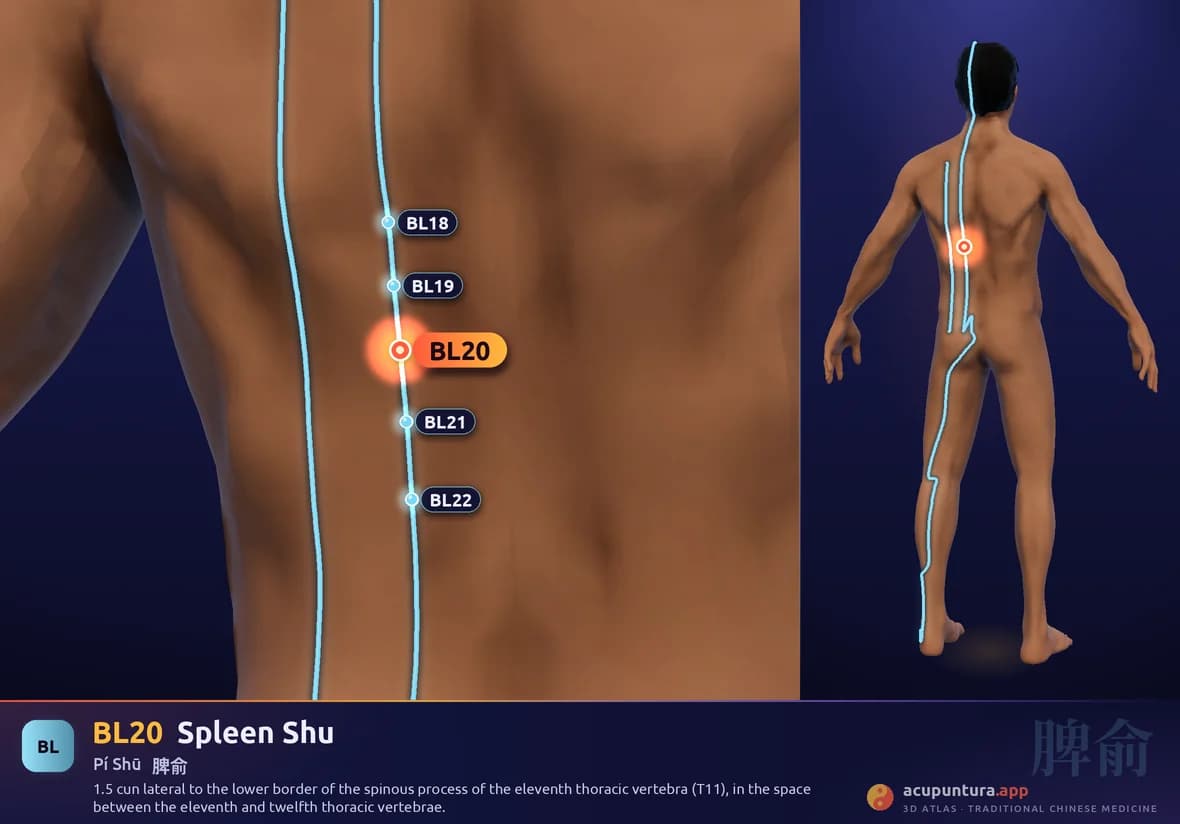
Bladder Channel
Spleen Shu
脾俞Pí ShūAnatomical location
1.5 cun lateral to the lower border of the spinous process of the eleventh thoracic vertebra (T11), in the space between the eleventh and twelfth thoracic vertebrae.
Main function
Strengthens the Spleen, harmonizes the Stomach, benefits transformation and transportation, resolves Dampness, nourishes the Blood, stops bleeding, strengthens the muscles and the four limbs.
- Spleen Back-Shu point
Therapeutic indications
- Abdominal distension and pain
- poor appetite
- vomiting
- diarrhea
- dysentery
- jaundice
- edema
- a feeling of fullness in the chest
- fatigue
- general weakness
- heavy limbs
- uterine bleeding
- irregular menstruation
- leukorrhea
- back pain
- low back pain
- hepatitis
- gastritis
- gastric ulcer
- anemia
- gastrointestinal bleeding
- Indigestion
- Abdominal distension
- Hemorrhage
- Loss of appetite
- Obsessive disorder (ruminative thinking)
- Cognitive decline and dementia
- Multiple sclerosis (Wei syndrome)
- Fibromyalgia
- Diabetes mellitus (Xiao Ke)
- Obesity and overweight
- Hyperlipidemia (high cholesterol and triglycerides)
- Hypothyroidism
- Irritable bowel syndrome
- Ulcerative colitis and Crohn's disease
- Fatty liver
- Atopic dermatitis
- Chemotherapy-induced nausea and vomiting
- Chemotherapy-induced leukopenia
Name and classical tradition
Pishu, 脾俞, is the Back-Shu point of the Spleen. 脾 is the spleen; 俞 is the transport point. The Lingshu (Spiritual Pivot), in the chapter Bei Shu (背腧), lists it among the Shu points of the organs: «脾腧在十一焦之間», the Shu of the Spleen lies in the space of the eleventh vertebra. Later sources agree on this location, and the Zhenjiu Dacheng (Great Compendium of Acupuncture and Moxibustion) devotes an entry to it.
It is therefore part of the oldest core of the Back-Shu system, along with BL13, BL15, BL18, and BL23. Just below it is BL21, the Back-Shu point of the Stomach, its paired Fu organ, and beside it, on the outer line, is BL49, Yishe, the «dwelling of the yi», the faculty of thought that the Lingshu associates with the Spleen.