Traditional Chinese Medicine channel
Heart Channel
手少阴心经Fire11:00 - 13:009 pointsHT1 → HT9
Description
The Heart channel governs blood circulation, vitality, and the spirit (Shen). As the emperor of the body, it is responsible for consciousness, thought, memory, and sleep. Imbalances can show up as heart problems, insomnia, memory loss, inappropriate speech, or emotional instability. It is essential for maintaining mental clarity, balanced joy, and the ability to relate to others harmoniously, and it directly shapes our capacity to experience and express emotions.
Main functions
- Governs the Blood and blood vessels
- Houses the Shen
- Controls sweating
- Opens into the tongue
Pathway
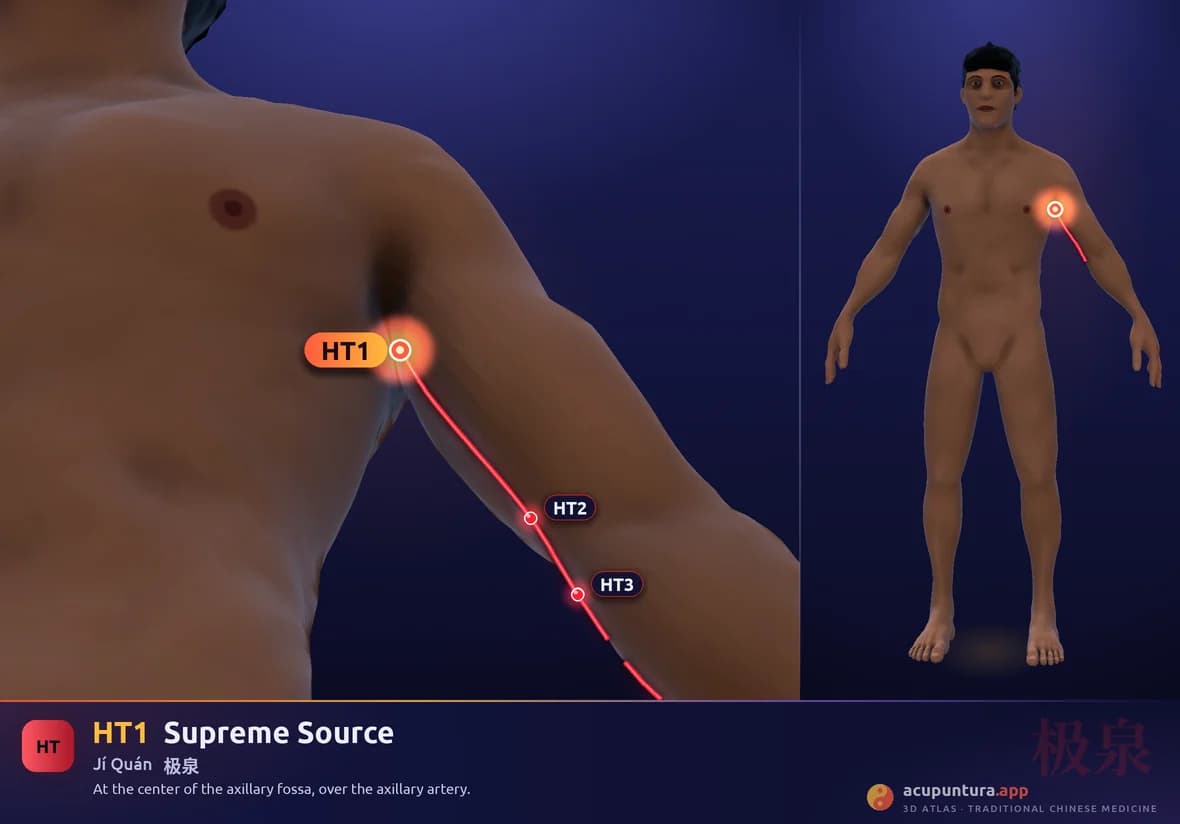
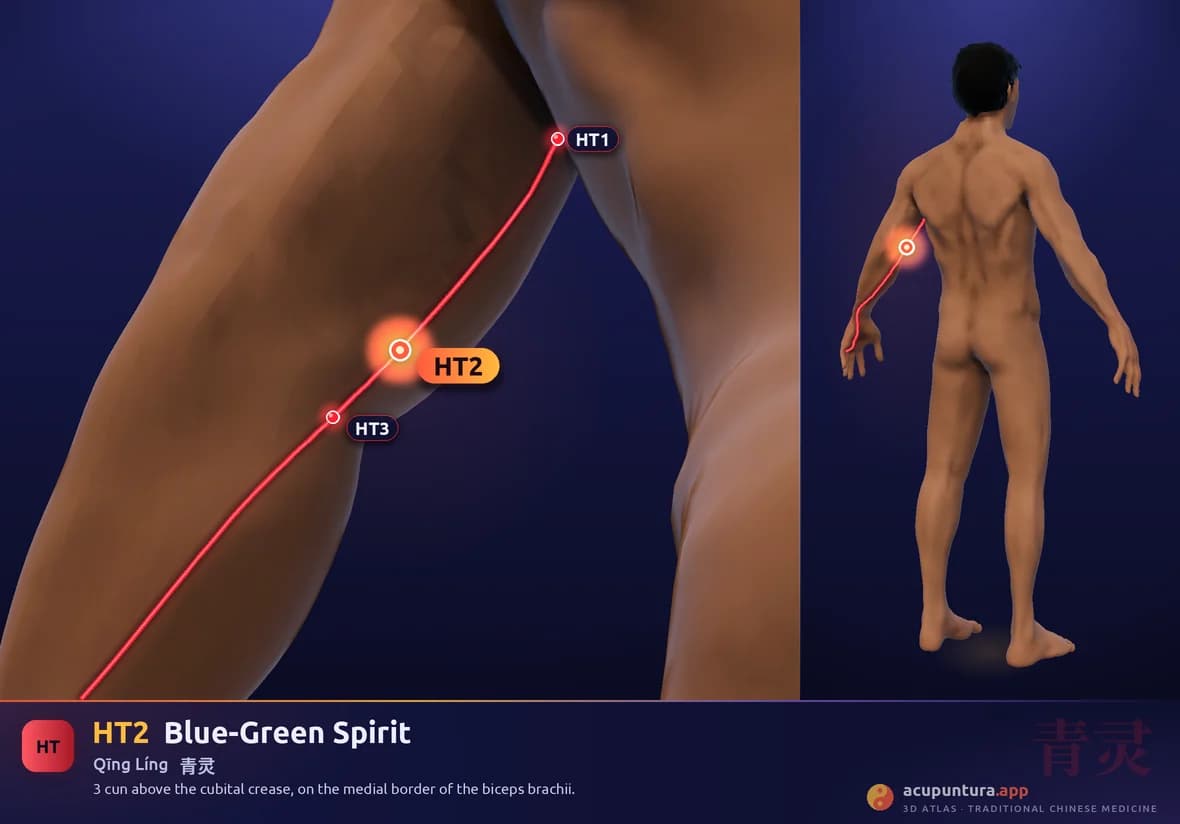
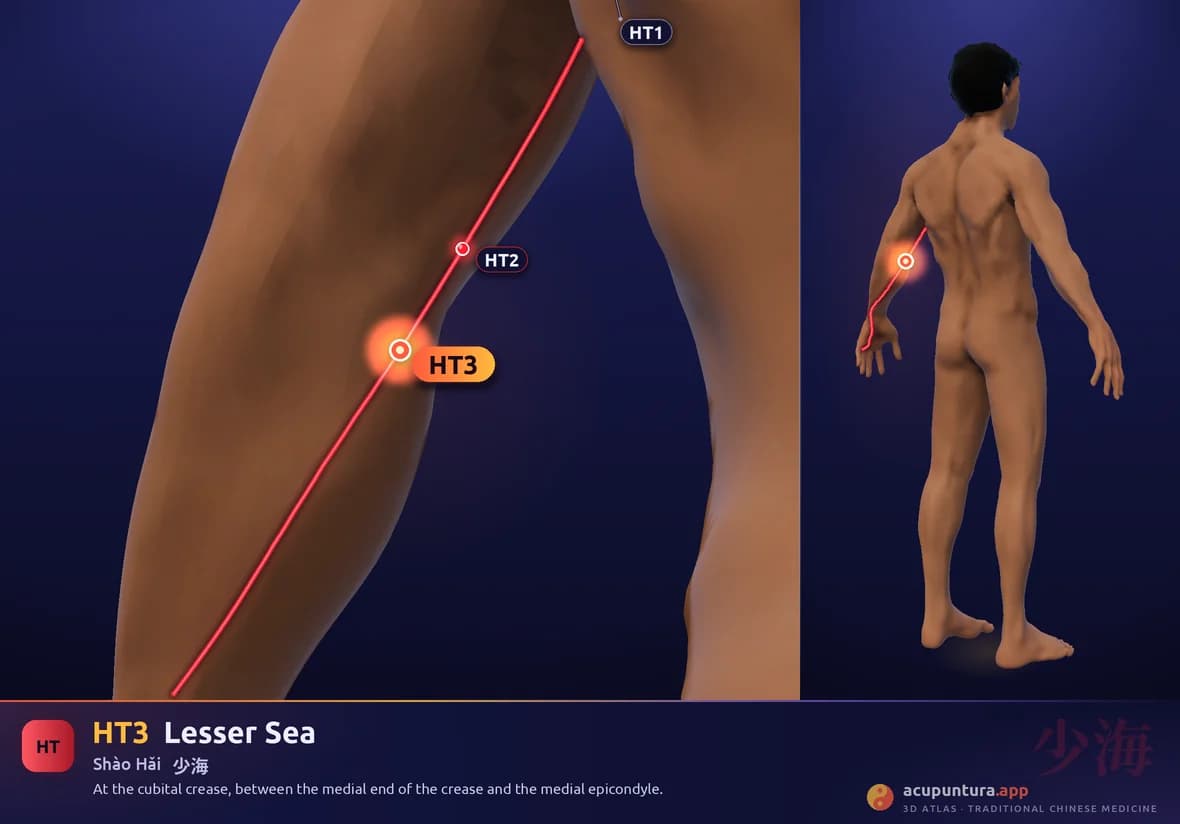
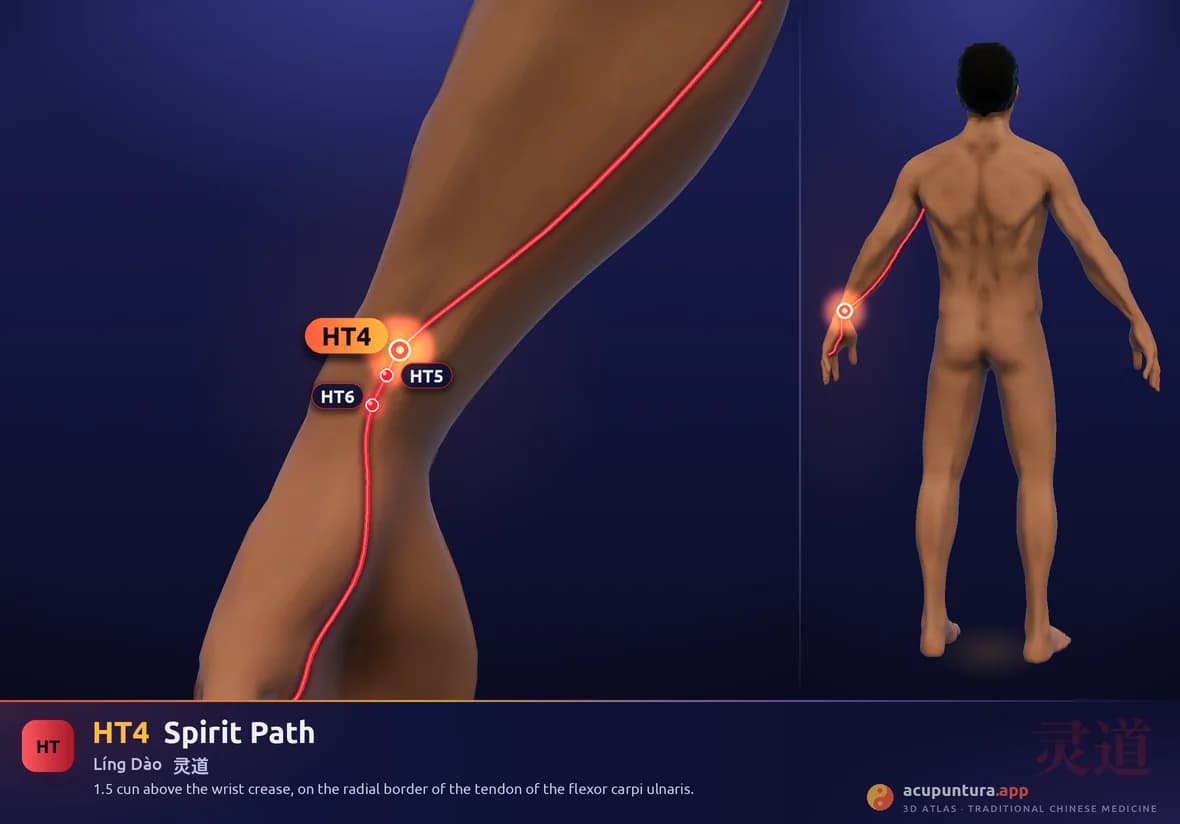
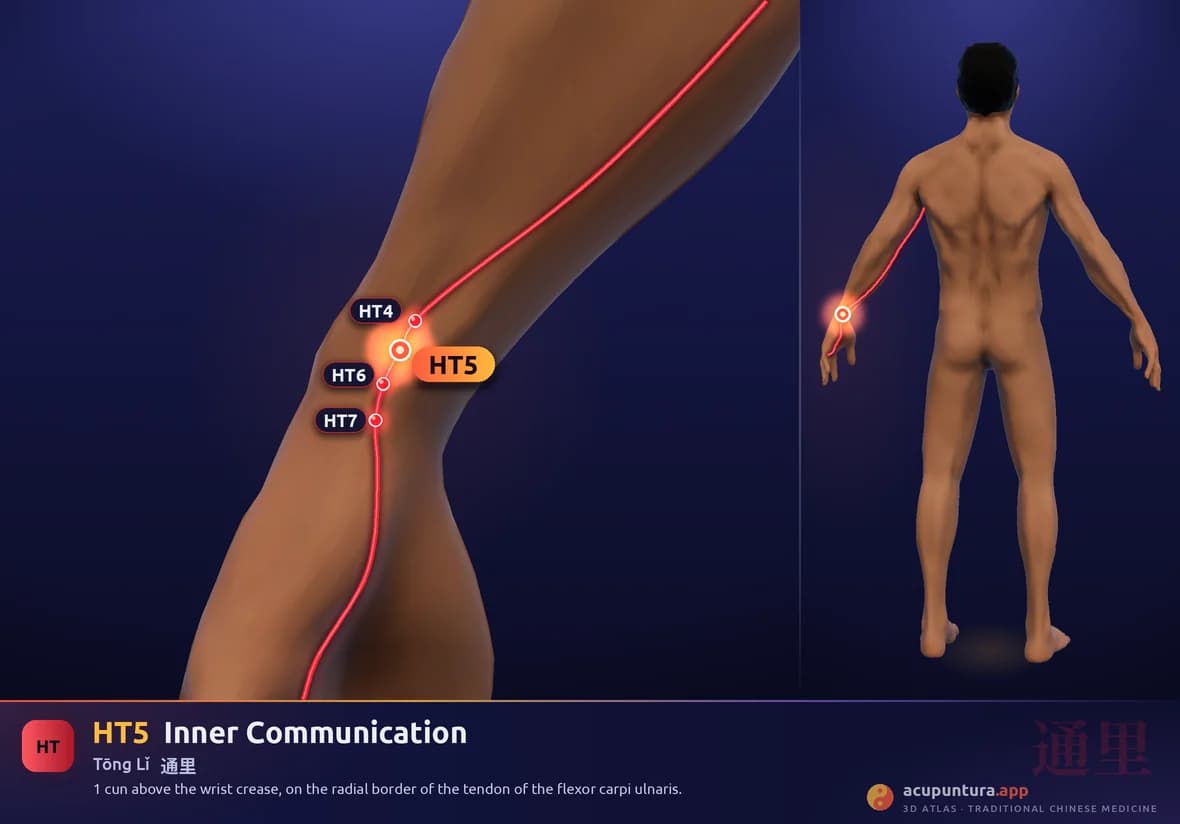
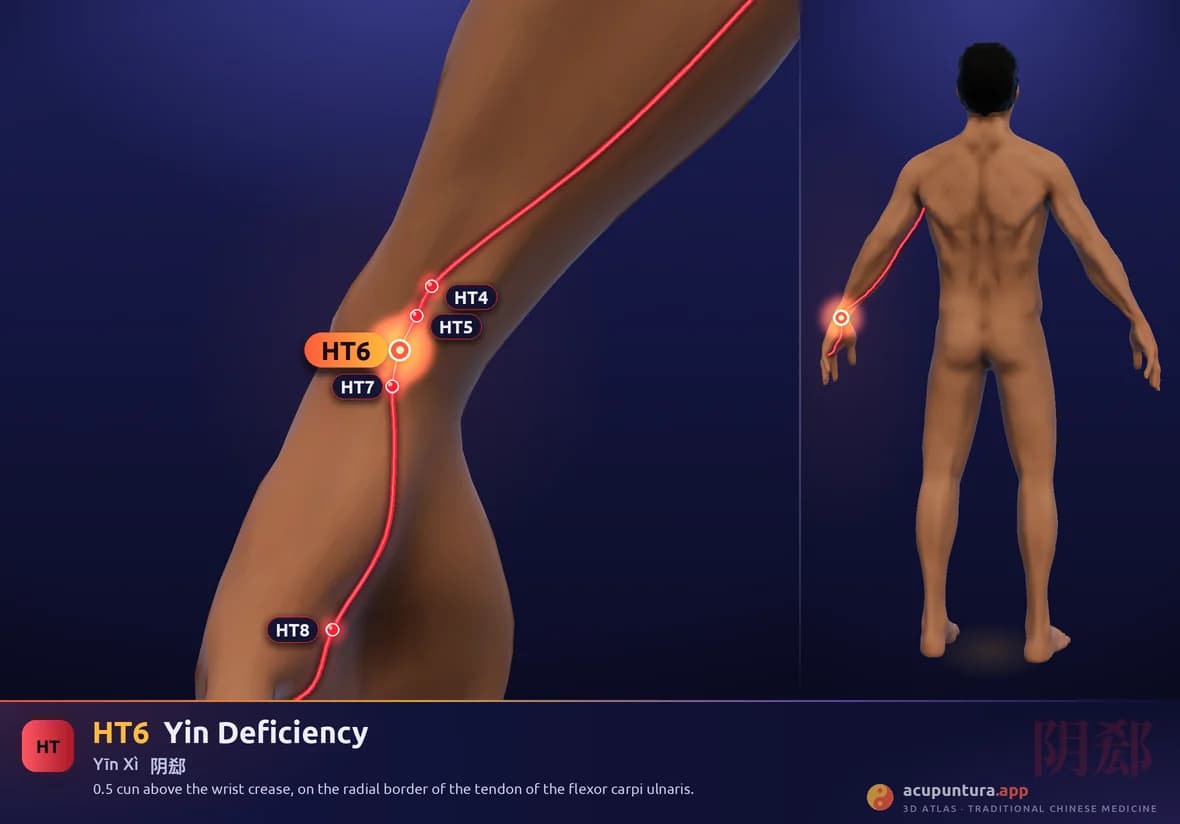
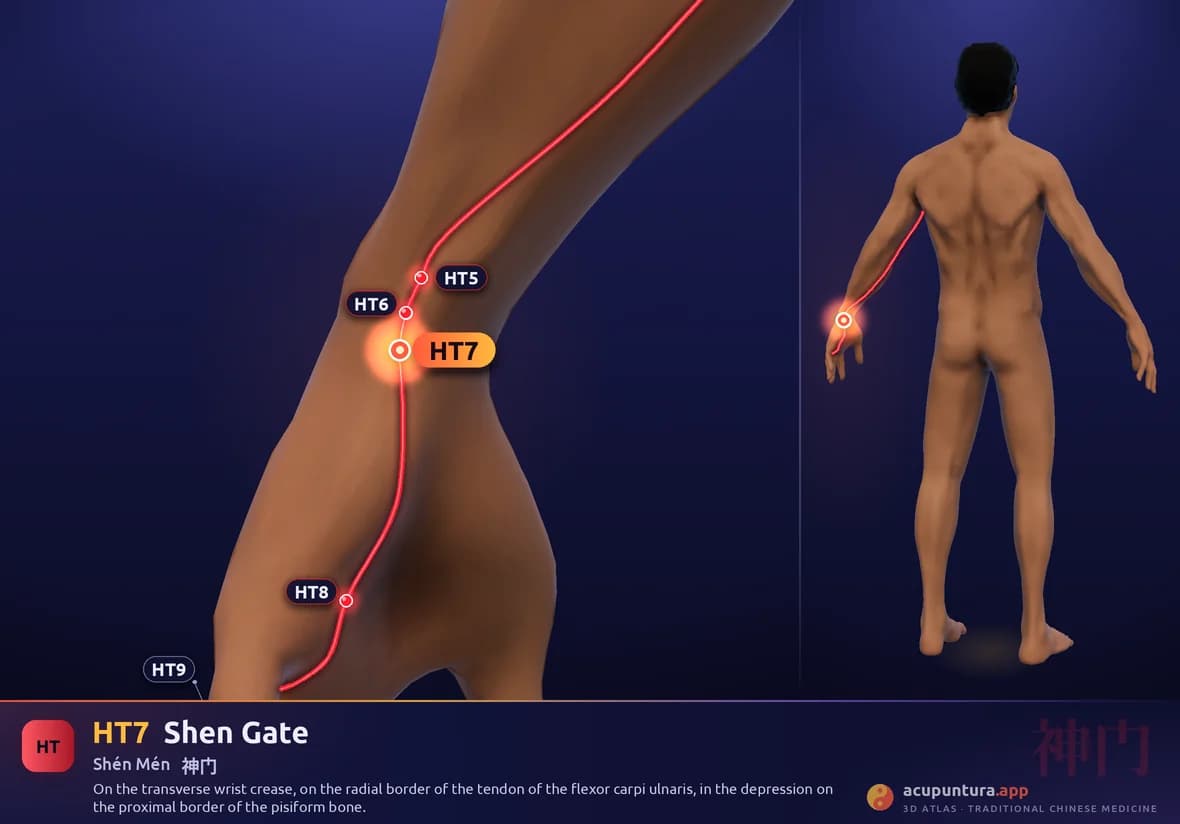
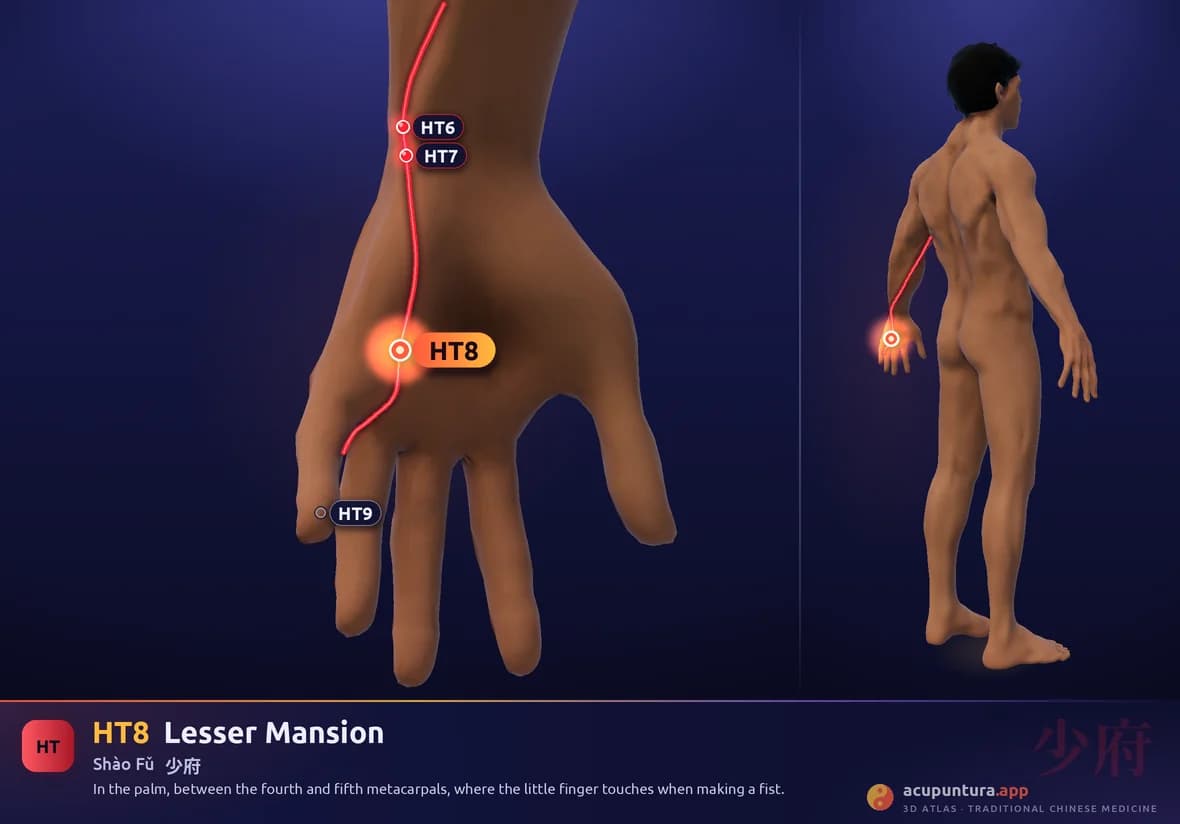
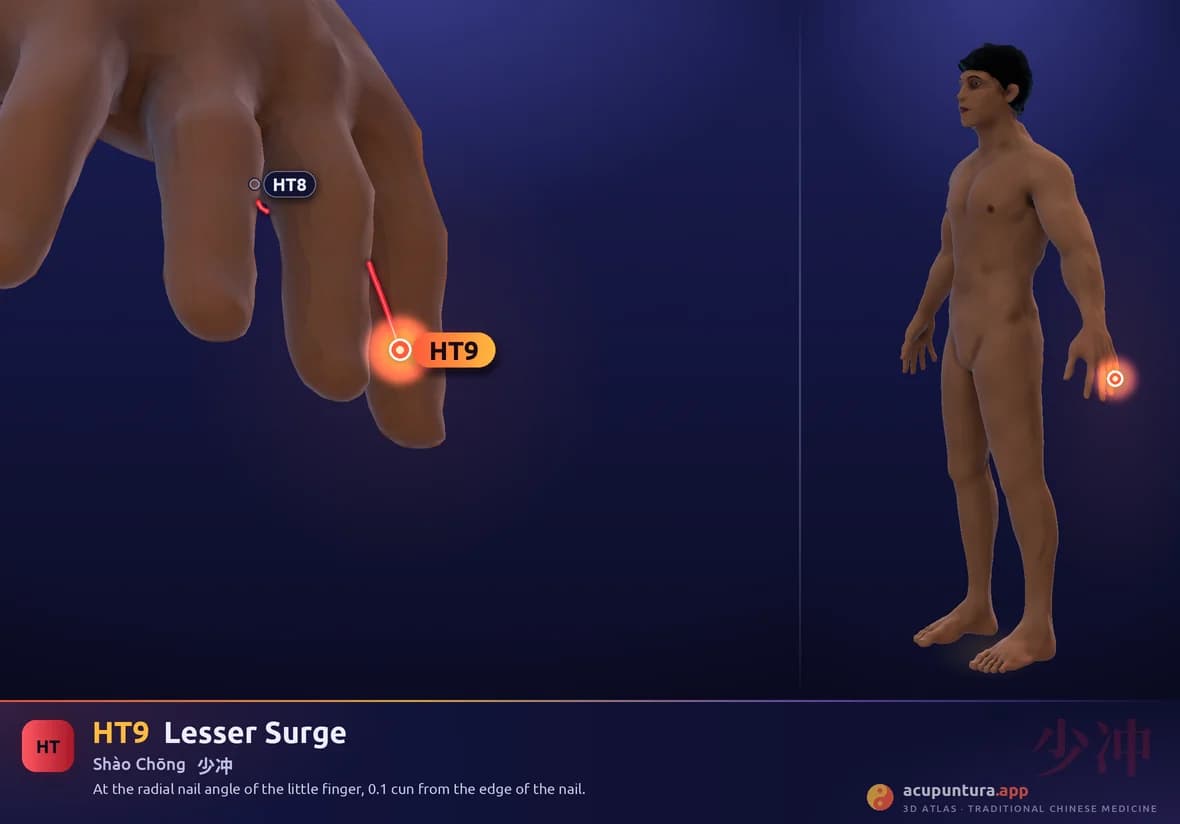
It begins at the center of the axilla (HT1), descends along the medial side of the arm, elbow, forearm, and wrist, and ends at the ulnar nail angle of the little finger (HT9).
The channel in the Lingshu
The Heart channel begins where no other does: inside the organ itself. “心手少陰之脈,起於心中,出屬心系”: it is born in the heart, exits through the system of vessels that holds it, and descends through the diaphragm to connect with the Small Intestine. One branch rises along the throat to the eye, “繫目系,” and binds to the eye system. The main line returns upward to the lung and emerges below the axilla, at HT1, to run along the posterior border of the inner arm, reach the pointed bone behind the palm, where HT7 is located, and end at the tip of the little finger, at HT9.
Its “是動” disorders are brief: “嗌乾,心痛,渴而欲飲,” dry throat, heart pain, thirst. Those of the organ itself include yellow eyes, flank pain, and painful heat in the palm.
The Lingshu (Spiritual Pivot) treats it with special reverence. In the Xie Ke chapter (邪客), it explains that the Heart, “五藏六府之大主也,” the great sovereign of the viscera, does not admit pathogens, and that is why its channel has no Shu points of its own: pathogens that reach it stay in its envelope, the Pericardium, and when it is necessary to act on the channel, this is done at the end of the bone behind the palm. Its collateral is “手少陰之別,名曰通里,” Tongli, HT5, one and a half cun from the wrist, which ascends along the channel and “繫舌本,” binds to the root of the tongue. At the tip of the little finger, the Qi passes to the hand Taiyang.