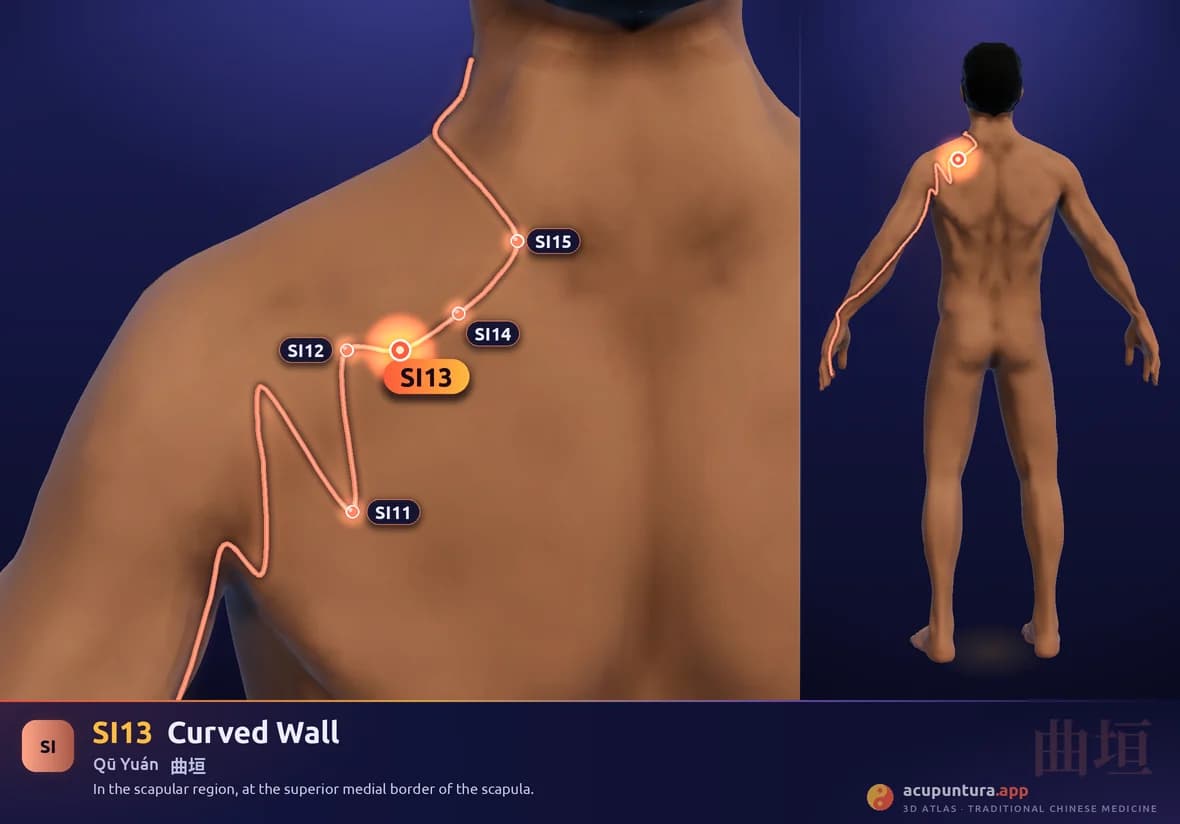
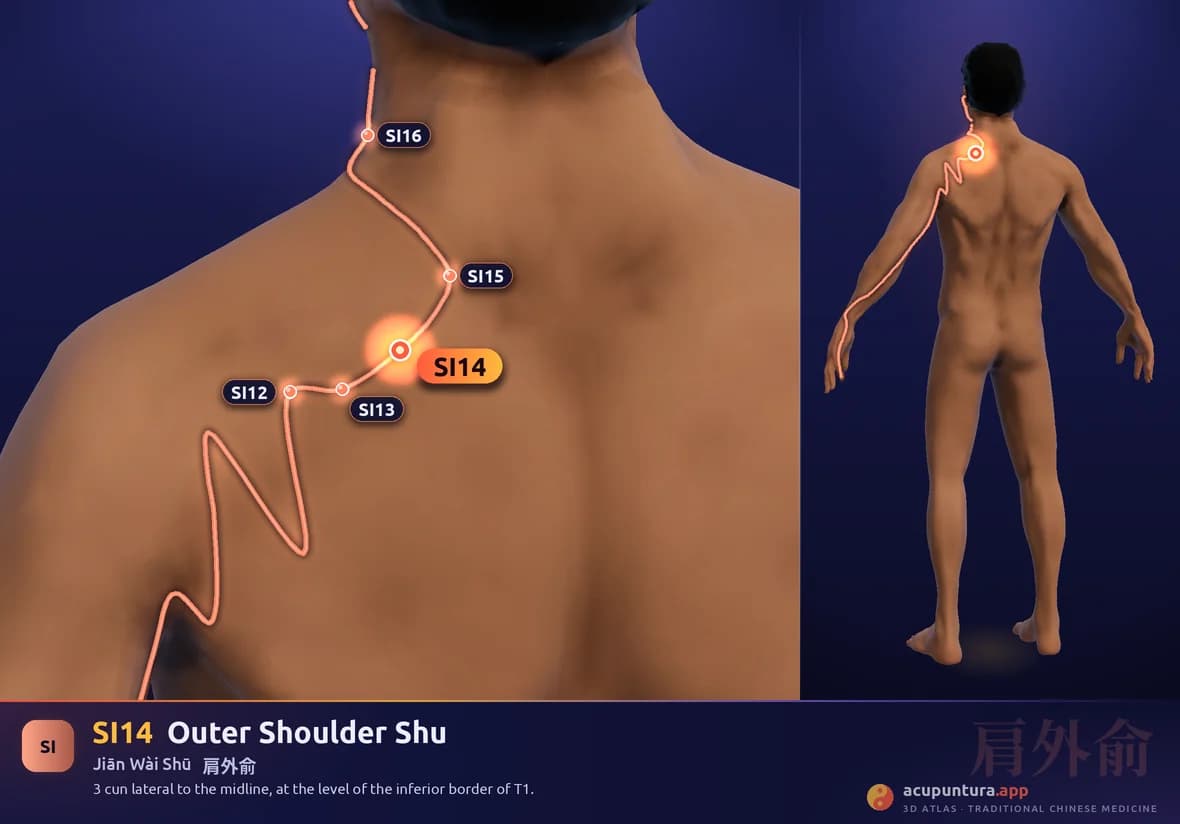
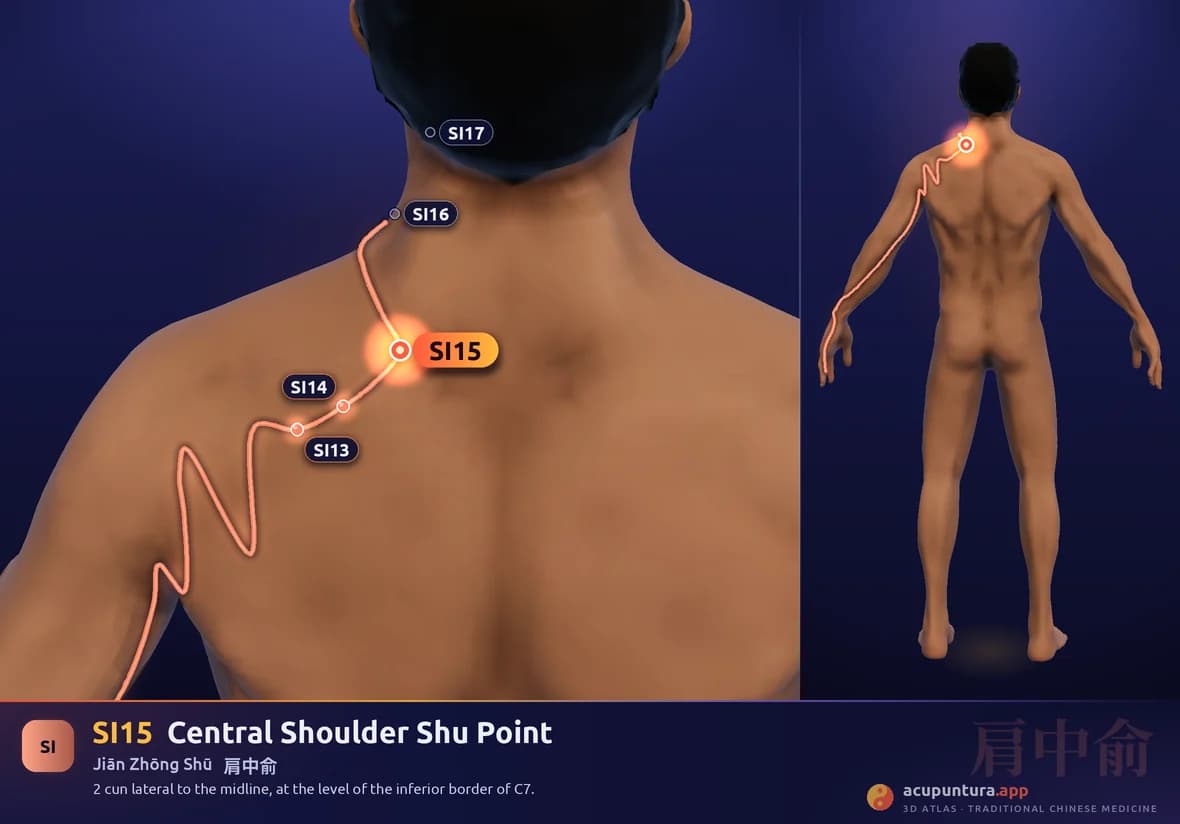
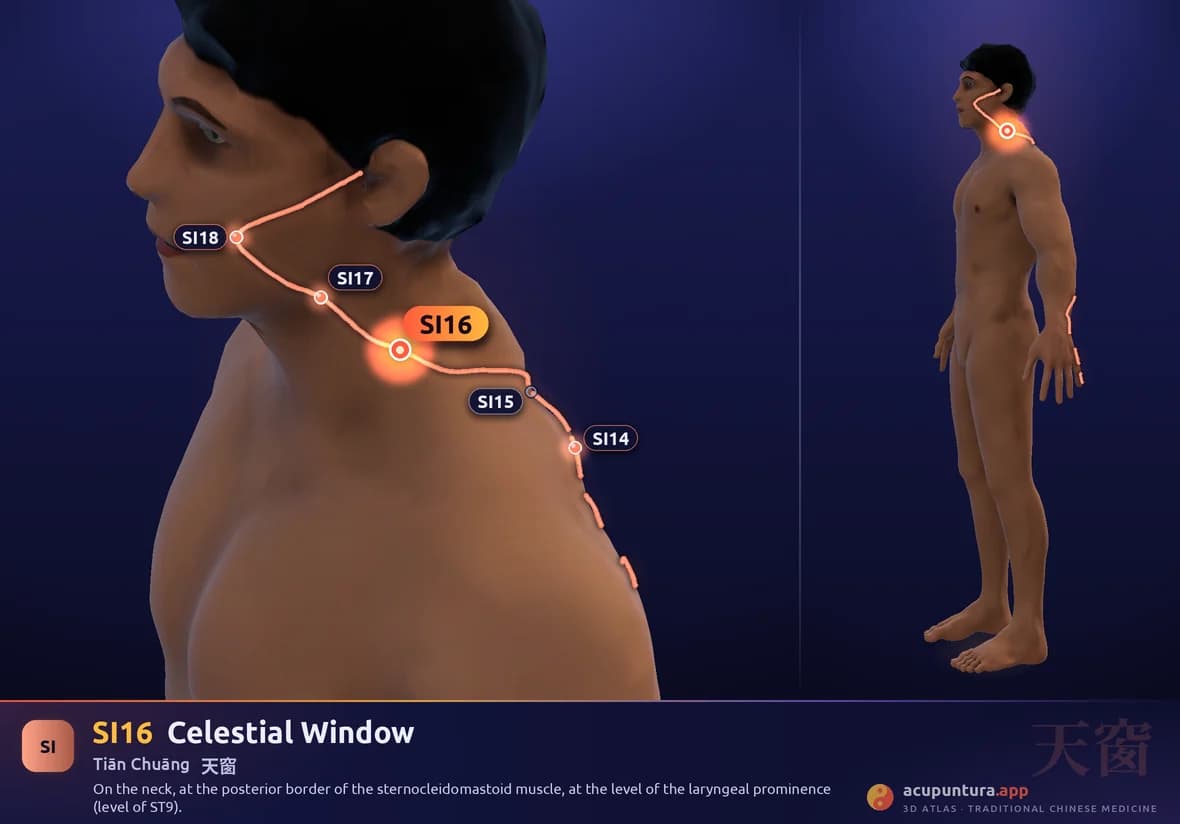
Traditional Chinese Medicine channel
Small Intestine Channel
手太阳小肠经Fire13:00 - 15:0019 pointsSI1 → SI19
Description
The Small Intestine channel governs the absorption of nutrients and the separation of the pure from the impure, both physically and emotionally. Known as the “Minister of Reception,” it discriminates between what is useful and what must be discarded. Imbalances can cause hearing problems, sore throat, pain in the arms and shoulders, and difficulty distinguishing the essential from the incidental. It is key to mental clarity, to making decisions with the heart, and to the ability to learn from lived experience.
Main functions
- Separates the pure from the impure
- Transforms food
- Opens into the ears
Pathway
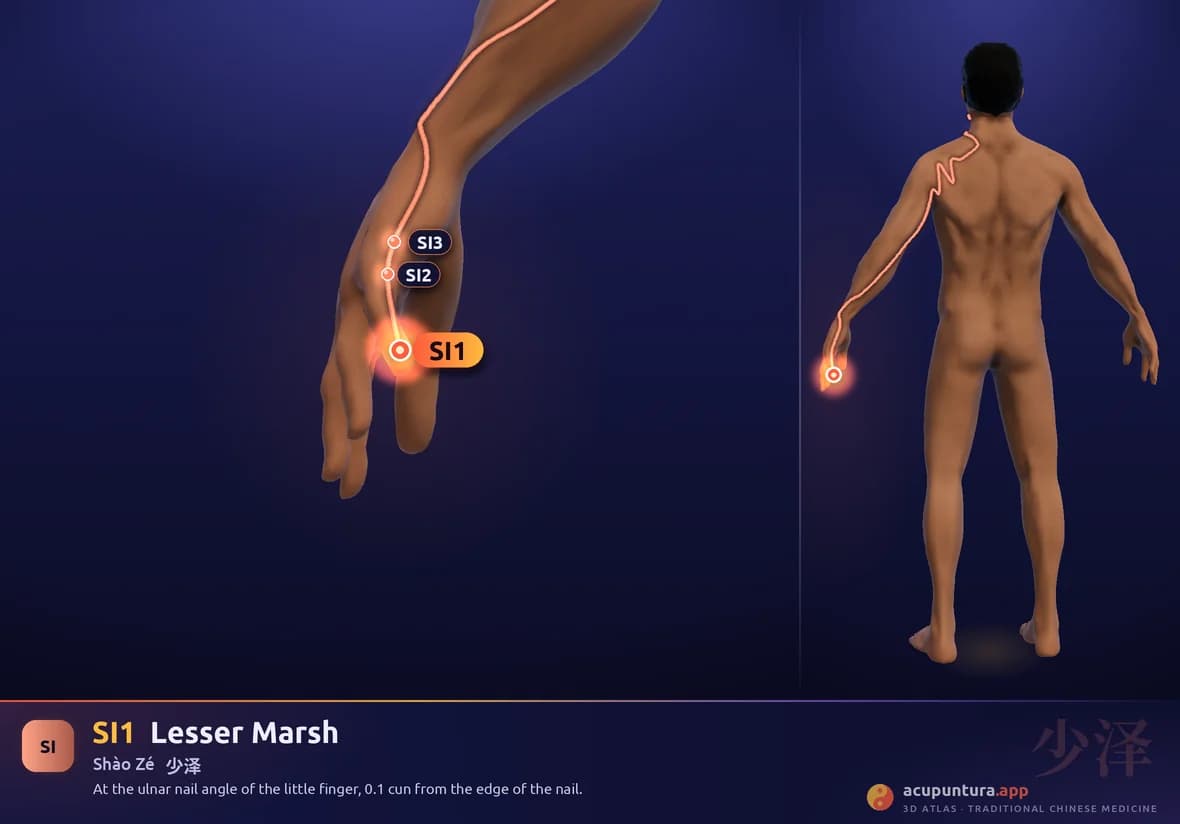
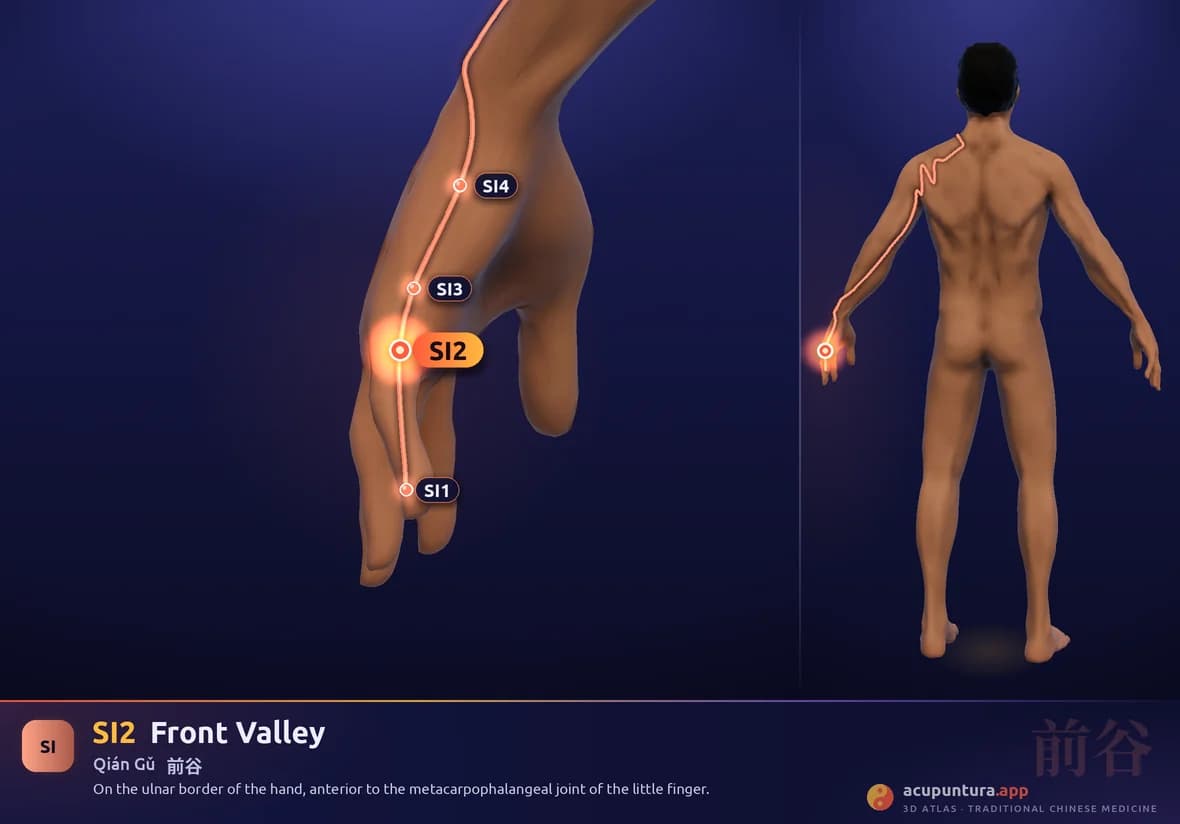
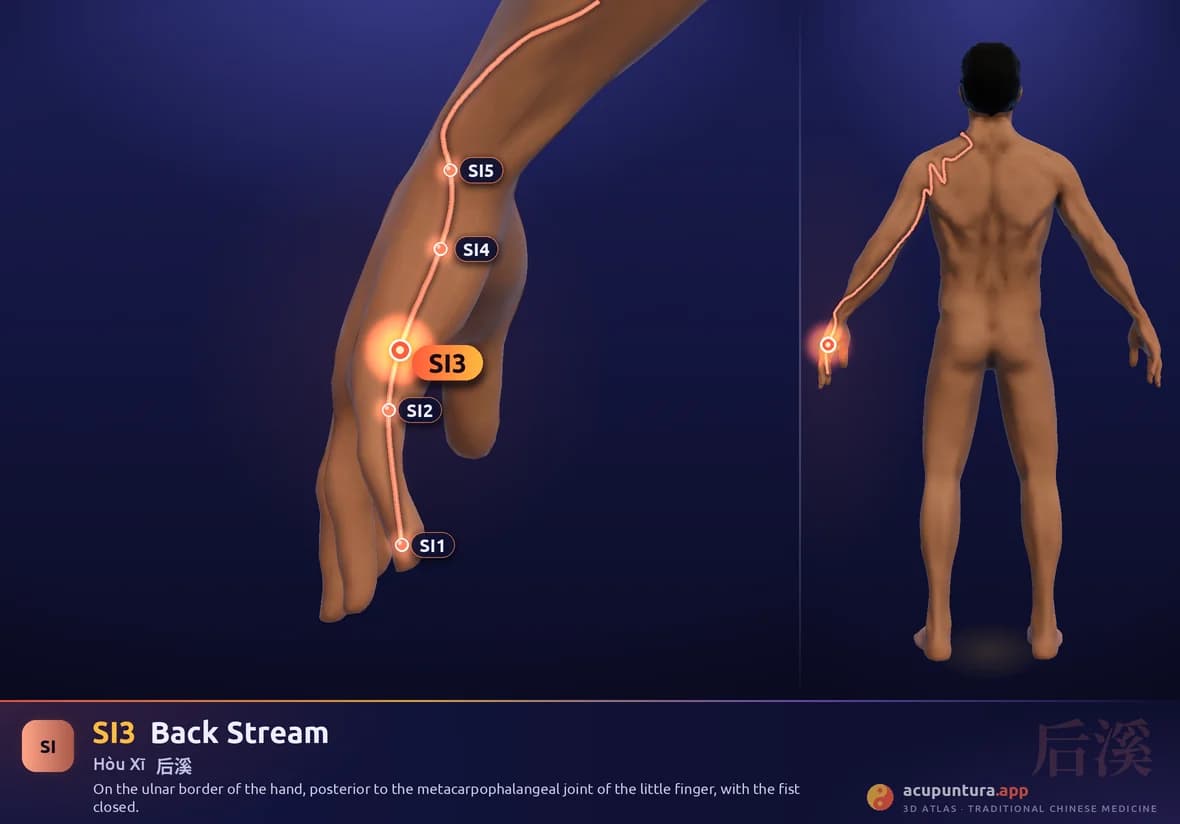
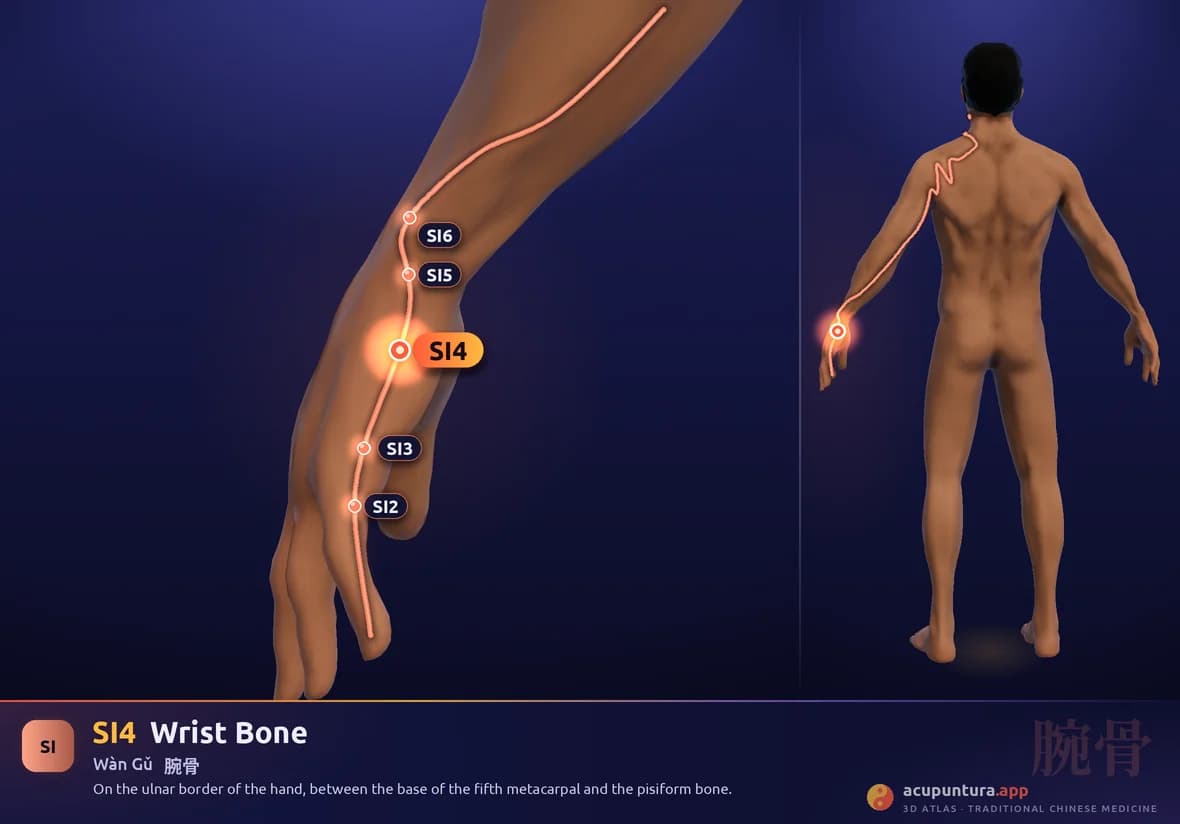
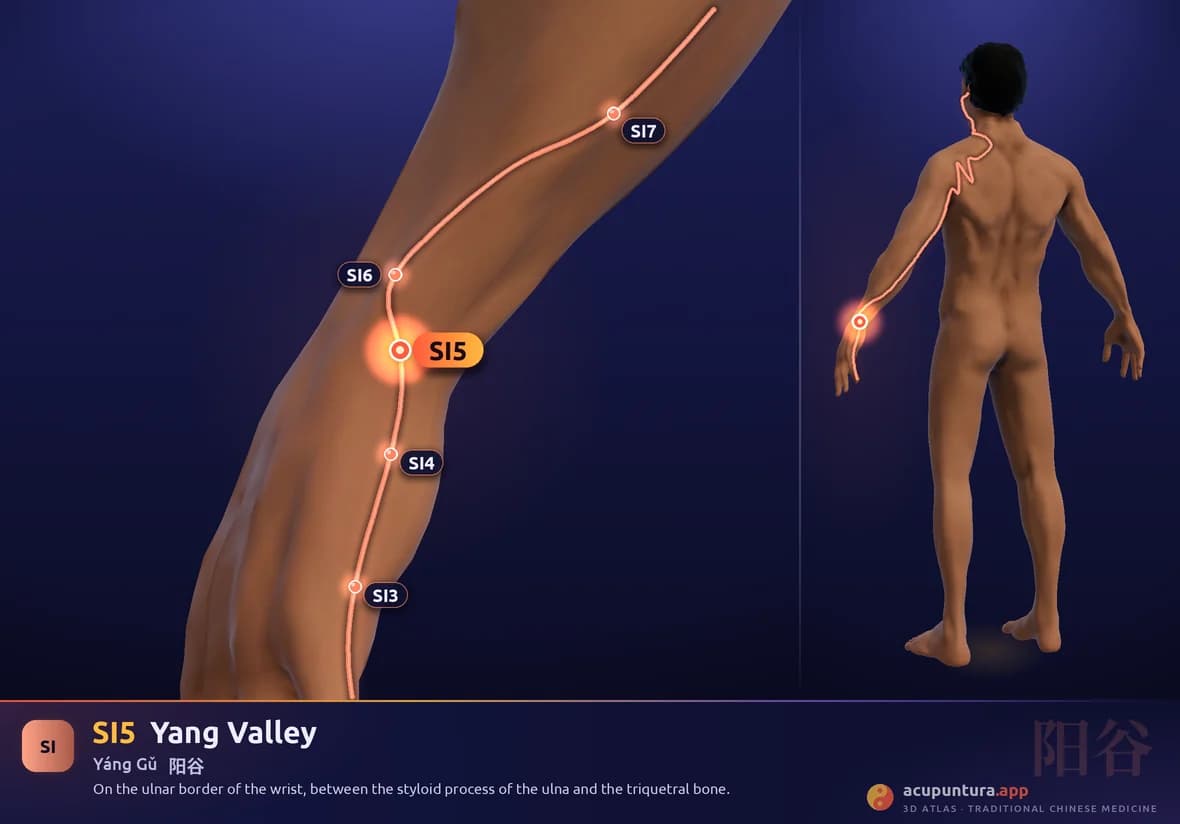
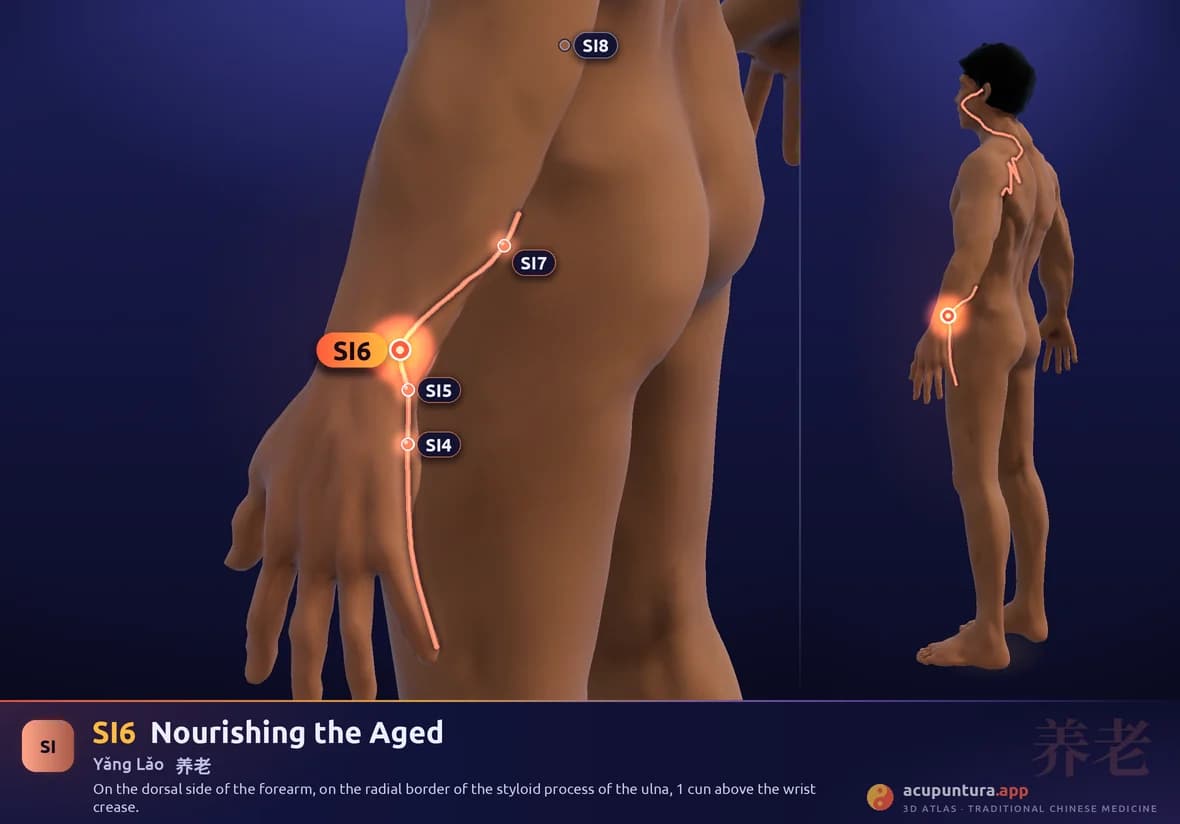
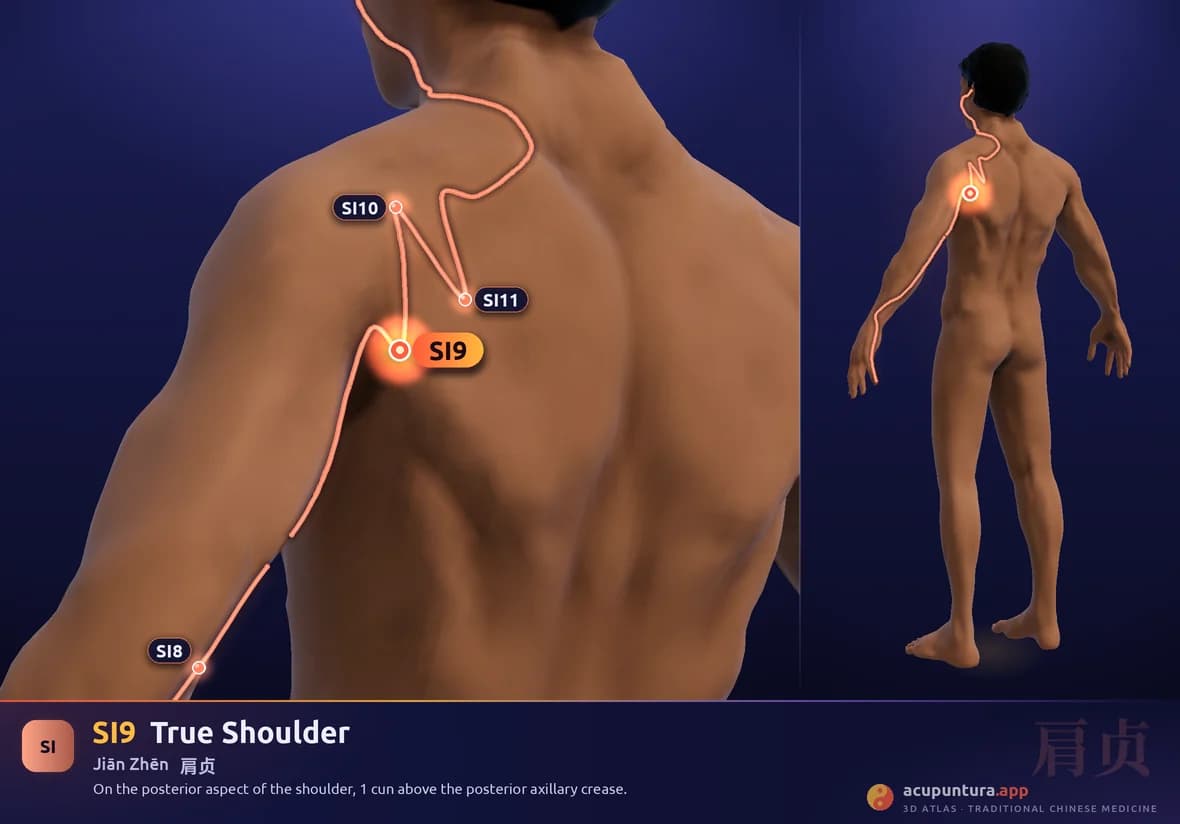
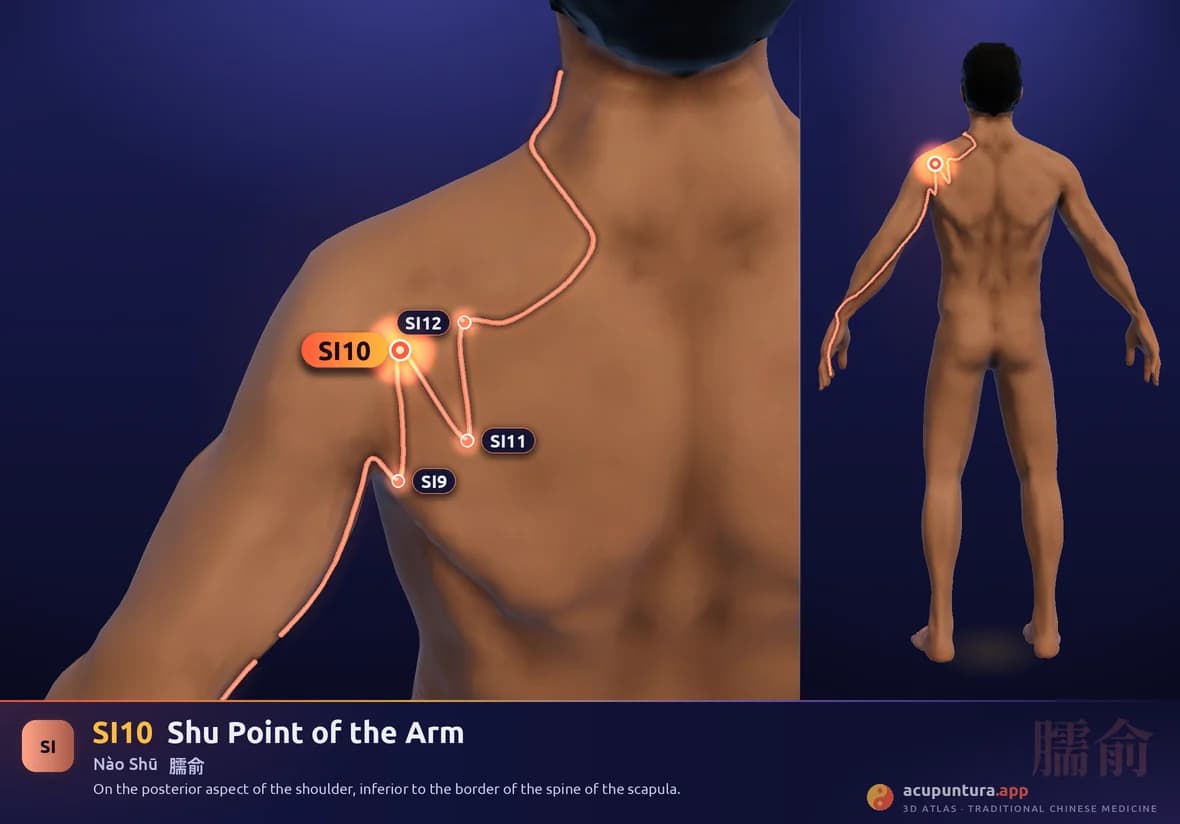
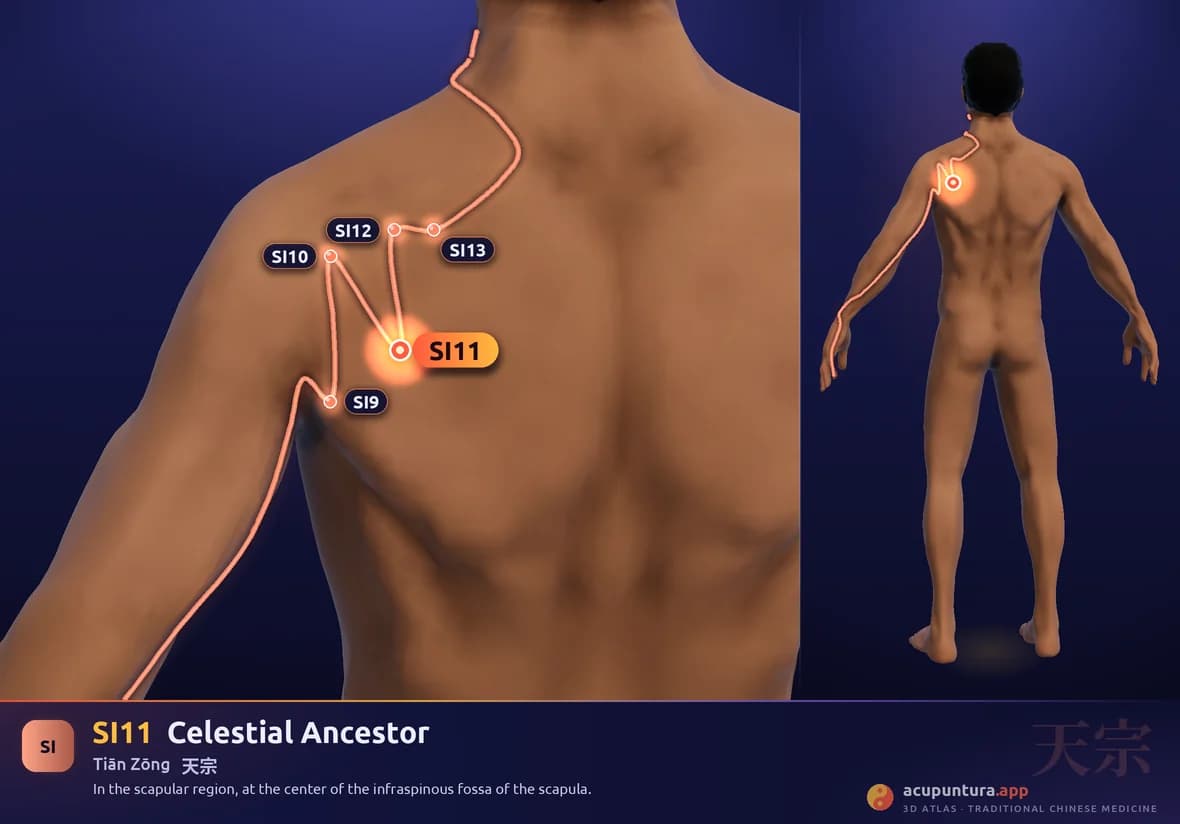
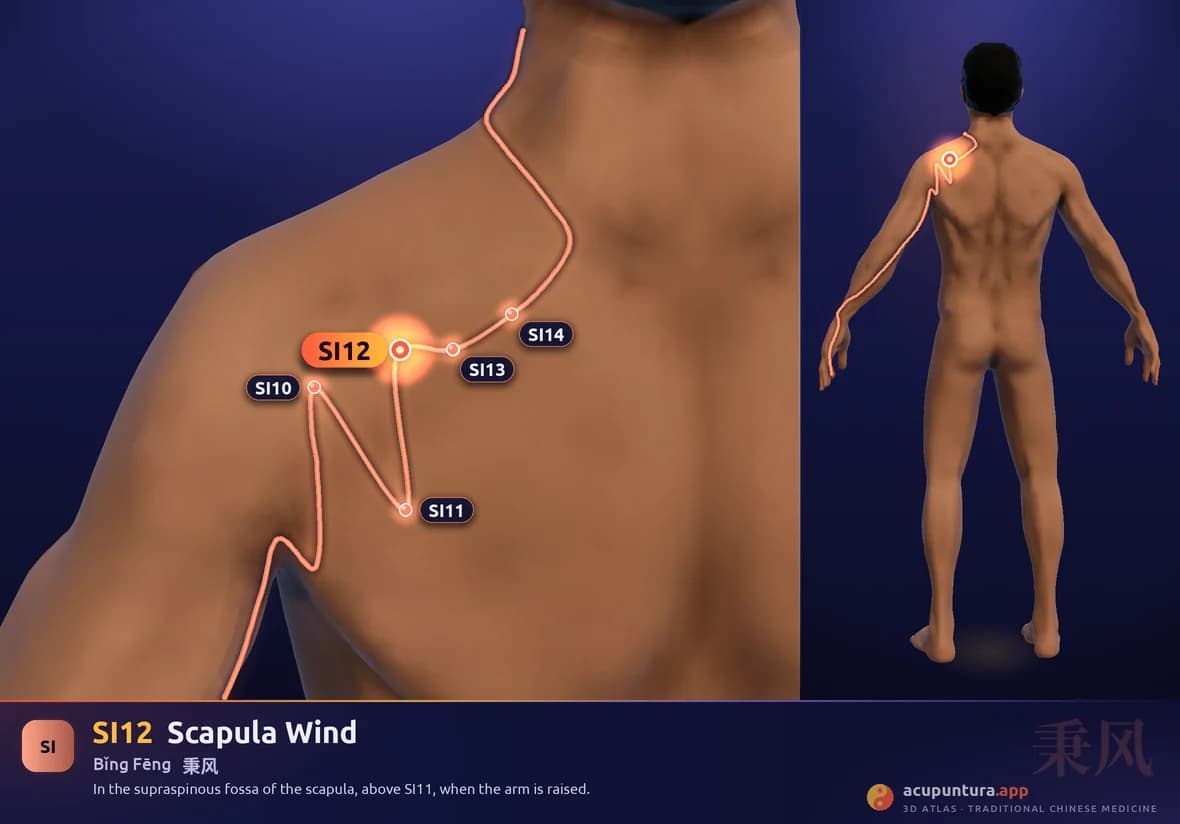
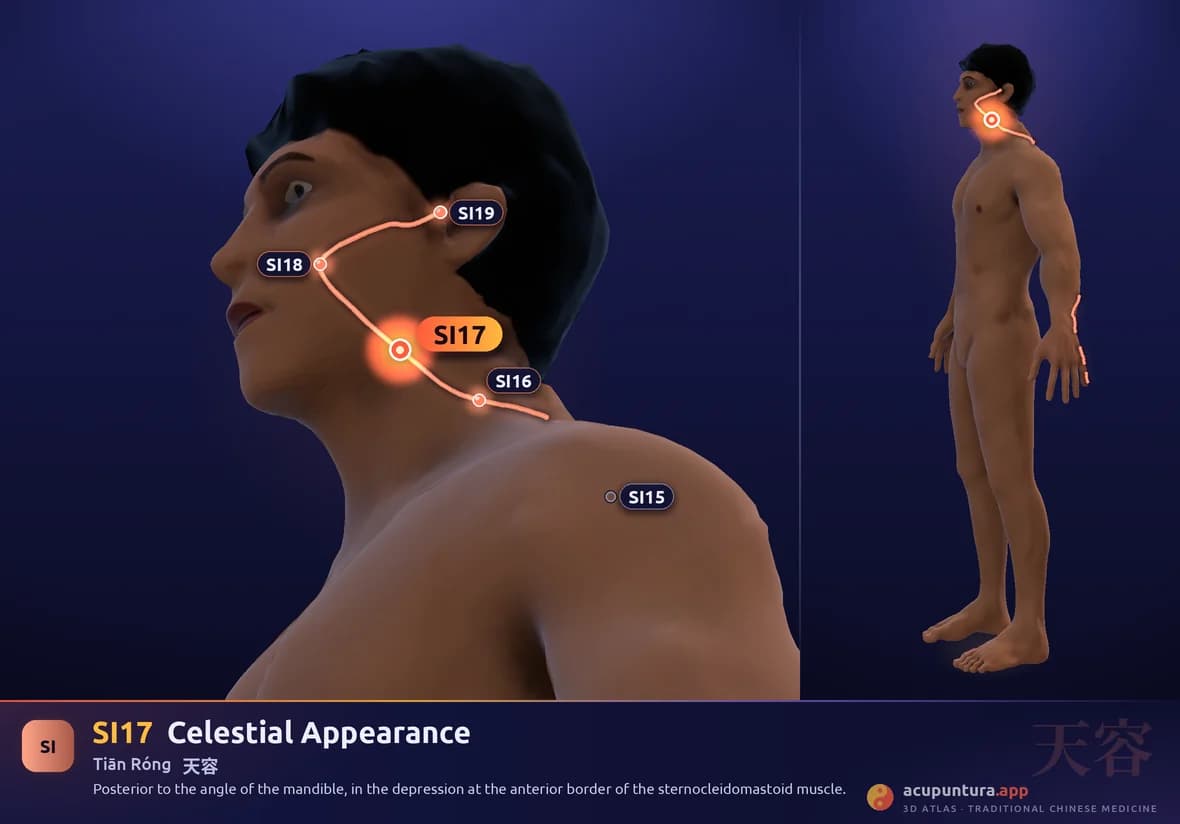
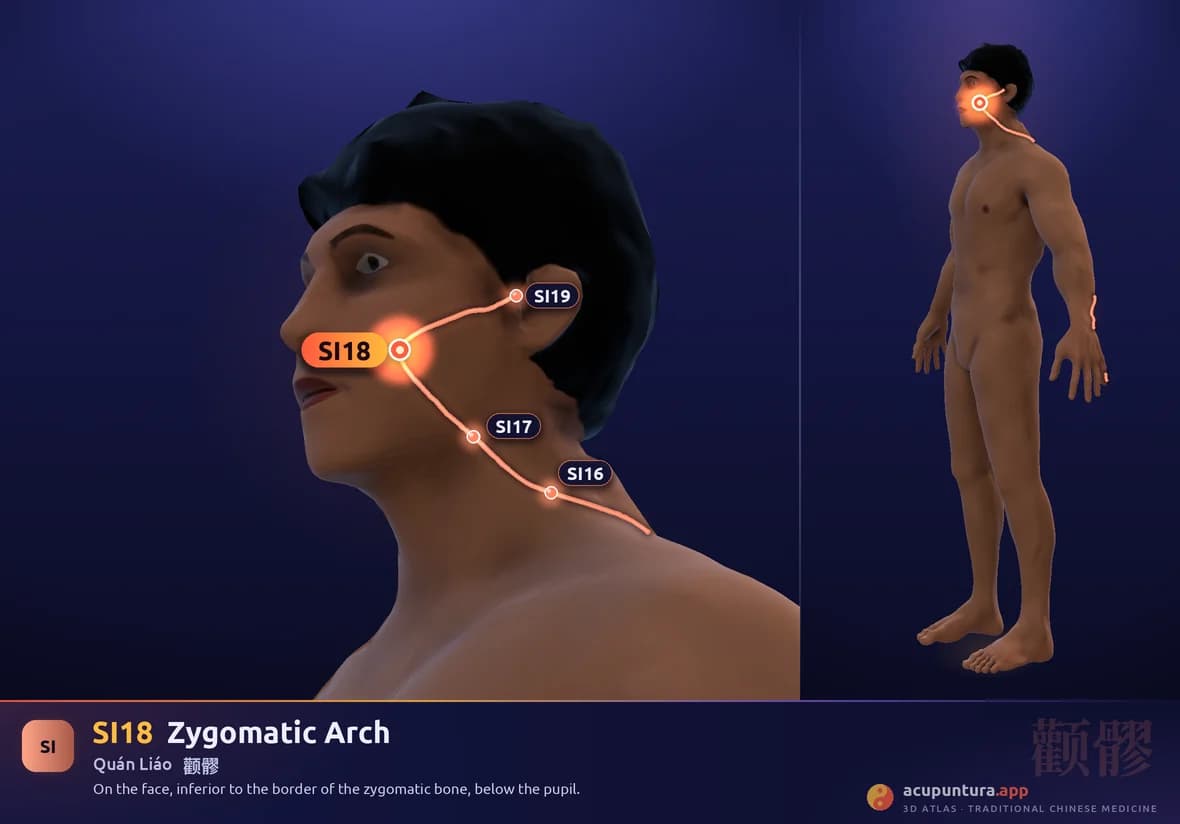
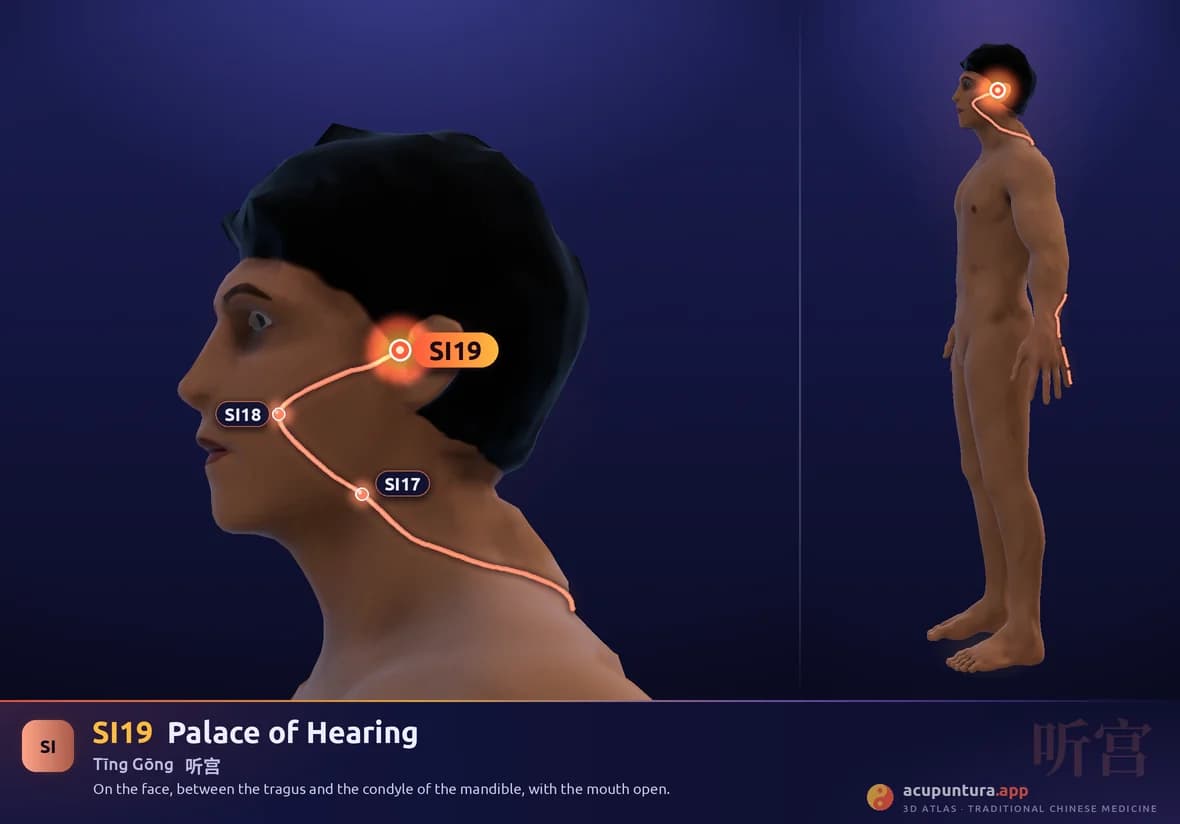
It starts at the ulnar nail angle of the little finger (SI1), ascends along the ulnar border of the hand, forearm, elbow, and arm, then runs to the shoulder, neck, and cheek, circles the ear, and ends in front of the ear (SI19).
The channel in the Lingshu
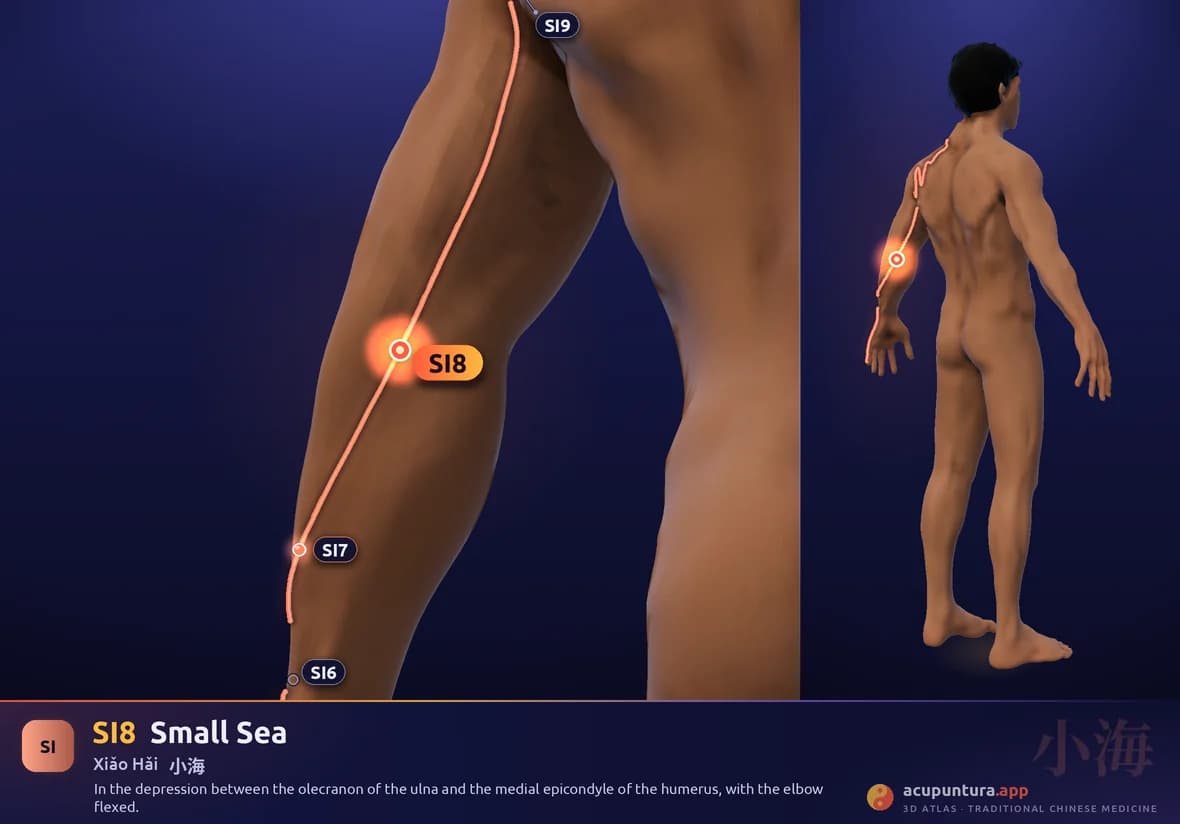
“小腸手太陽之脈,起於小指之端.” The Small Intestine channel starts at the tip of the little finger, at SI1, follows the outer edge of the hand, rises along the wrist and the ulnar border of the forearm, and emerges between two tendons on the inner side of the elbow, near SI8. At the shoulder, the Lingshu (Spiritual Pivot) describes its most visible feature: “出肩解,繞肩胛,交肩上,” it leaves through the shoulder joint, circles the shoulder blade, and crosses over the shoulder. It is the channel of the shoulder blade points, from SI9 to SI15. From the supraclavicular fossa it enters to connect with the Heart, descends along the esophagus, passes through the diaphragm, reaches the Stomach, and belongs to the Small Intestine.
Two branches rise to the face. One goes along the neck and cheek to the outer canthus of the eye and enters the ear, where SI19 lies; the other crosses the cheek toward the nose and the inner canthus of the eye, where the next channel, the Bladder, begins. The text describes its “是動” disorders with images: the neck that cannot turn, “肩似拔,臑似折,” the shoulder as if torn off and the arm as if broken. The domain the chapter assigns to it is that of fluids (是主液所生病者): deafness, yellow eyes, swollen cheek.
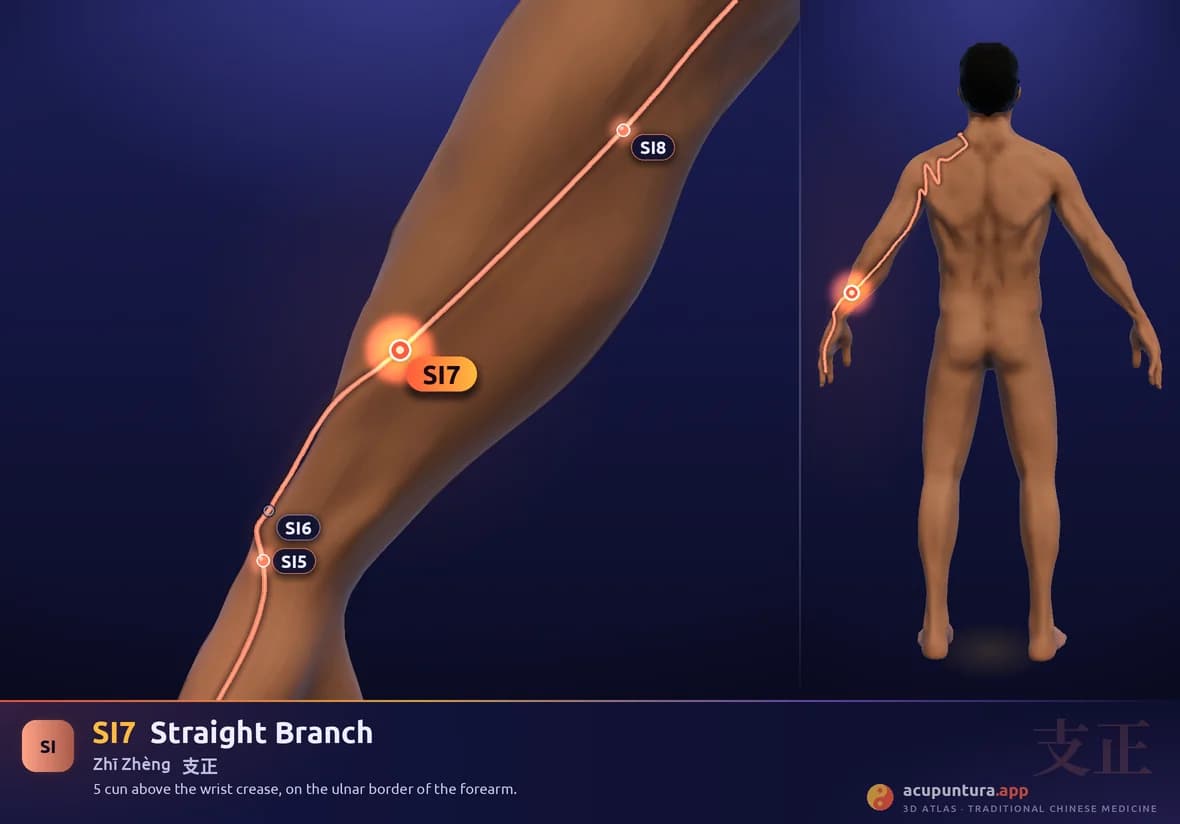
Its collateral is “手太陽之別,名曰支正,” Zhizheng, SI7, five cun above the wrist, which flows into the Shaoyin of the Heart.