Bladder Channel
Pericardium Shu
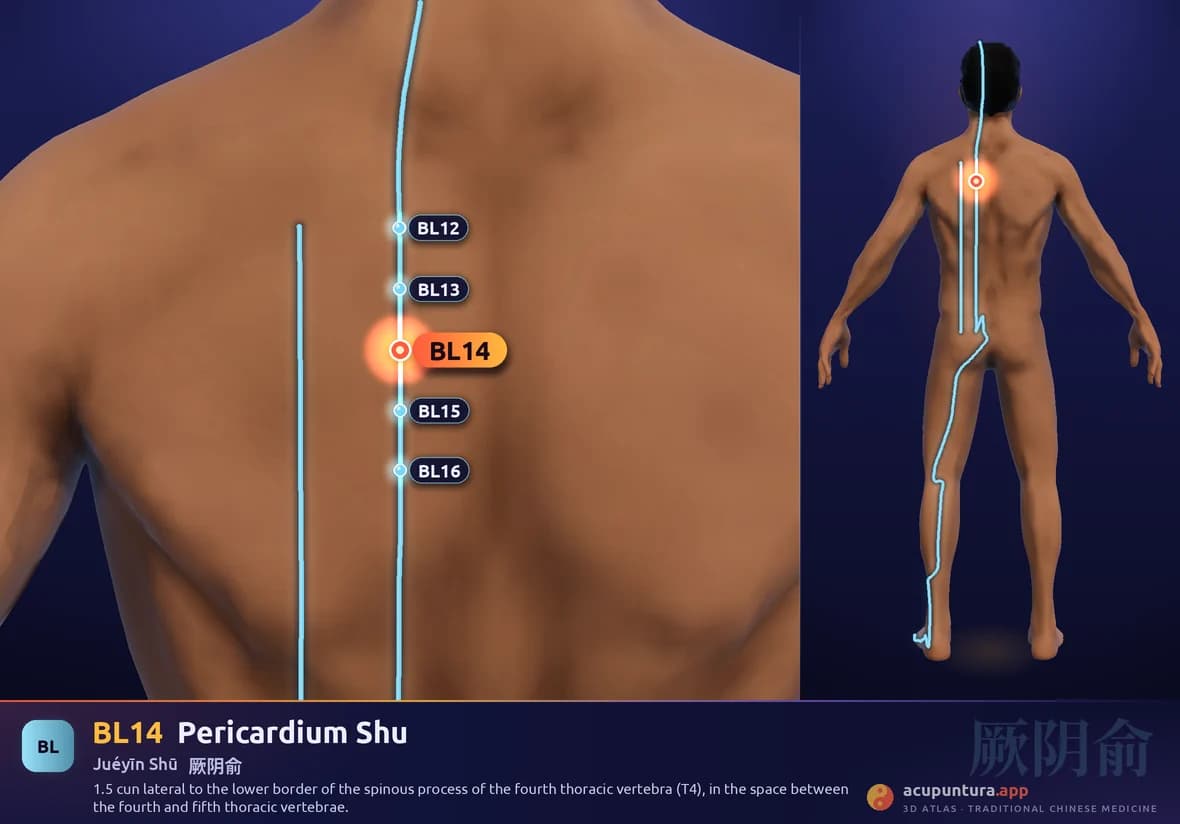
厥阴俞Juéyīn ShūAnatomical location
1.5 cun lateral to the lower border of the spinous process of the fourth thoracic vertebra (T4), in the space between the fourth and fifth thoracic vertebrae.
Main function
Regulates the Heart, calms the Shen (Spirit), relieves chest tightness, promotes the circulation of Qi and Blood, benefits the Pericardium.
- Back-Shu point of the Pericardium
Therapeutic indications
- Chest pain
- palpitations
- angina pectoris
- chest tightness
- cough
- asthma
- back pain
- shoulder pain
- vomiting
- nausea
- stomach pain
- mental disorders
- insomnia
- memory loss
- epilepsy
- chest pain
- anxiety
Name and classical tradition
Jueyinshu, 厥阴俞, is the transport point of the Jueyin, that is, of the Pericardium. 厥陰 is the name of the channel; 俞, the transport point. The Ming texts clarify this with a question and an answer, which the Zhenjiu Dacheng (Great Compendium of Acupuncture and Moxibustion) records: all the Zang and Fu organs have their Shu on the back, so why not the Pericardium? “厥陰俞即心包絡俞也”, Jueyinshu is the Shu of the Pericardium. The same book gives it the short name: “厥陰俞(一名厥俞)”.
Its history is one of those that show how the system of back Shu points was completed. The Bei Shu chapter of the Lingshu does not include it, and it does not appear under this name in the list of the Zhenjiu Jiayi Jing. Secondary sources attribute its first location to Sun Simiao, but the acupuncture chapters of the Qianjin Yaofang, which skip from the third vertebra to the fifth, do not record it, so its origin remains unclear. The Zhenjiu Dacheng places it “四椎下兩旁,相去脊各一寸五分”, below the fourth vertebra, one and a half cun from the spine. In any case, the twelve back Shu points taught today are not the original system but the result of successive contributions, and BL16, BL24, and BL26 also play a part in that history.