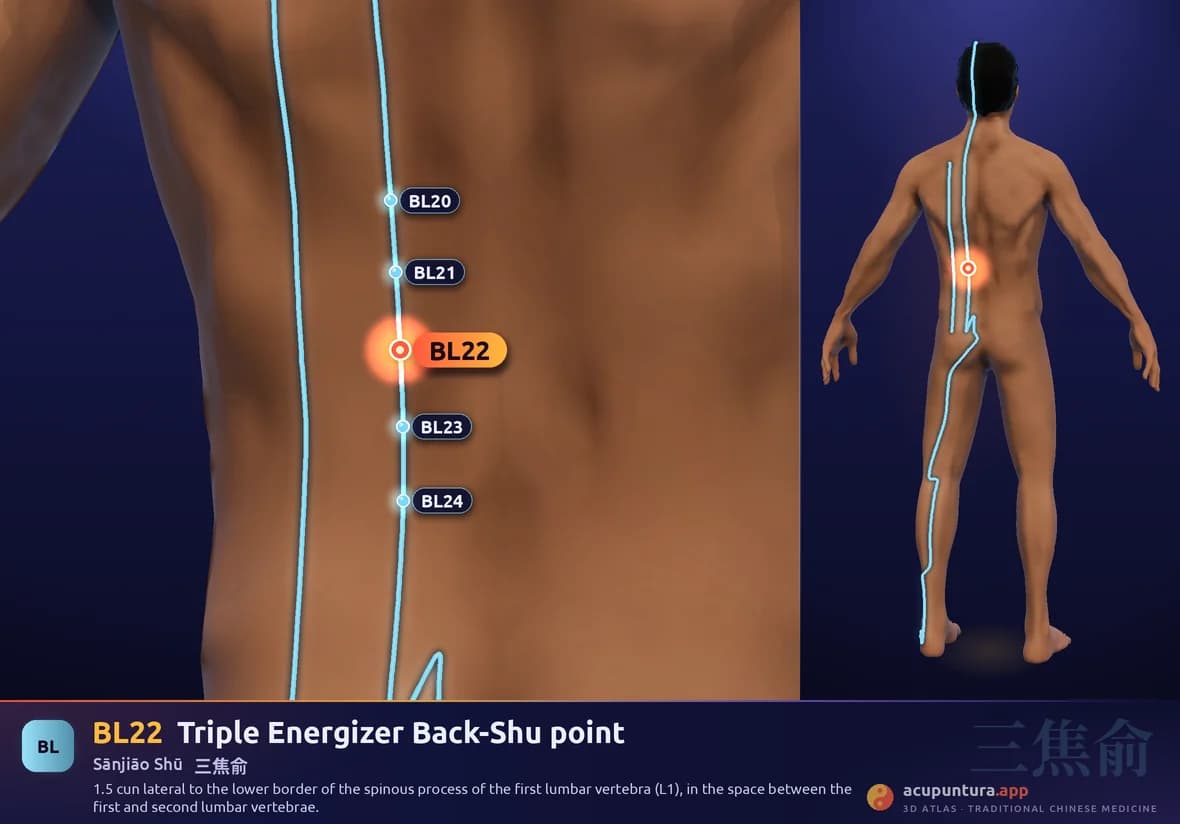
Bladder Channel
Triple Energizer Back-Shu point
三焦俞Sānjiāo ShūAnatomical location
1.5 cun lateral to the lower border of the spinous process of the first lumbar vertebra (L1), in the space between the first and second lumbar vertebrae.
Main function
Regulates the Triple Energizer, promotes the transformation and transportation of fluids, regulates the passage of water, strengthens the Spleen and Kidneys, benefits the bladder, relieves urinary retention, strengthens the lumbar region.
- Back-Shu point of the Triple Energizer
Therapeutic indications
- Edema
- urinary retention
- dysuria
- enuresis
- low back pain
- weak knees
- abdominal distension and pain
- vomiting
- diarrhea
- dysentery
- excessive thirst
- abdominal swelling
- ascites
- hypochondriac pain
- back pain
- general weakness
- fatigue
- Abdominal distension
- Borborygmi
- Low back pain
- Diabetes mellitus (Xiao Ke)
Name and classical tradition
Sanjiaoshu, 三焦俞, is the Back-Shu point of the Triple Energizer. 三焦, the three burners or three fires, is the formless Fu organ that Chinese medicine entrusts with the circulation of fluids and Qi through the three regions of the trunk; 俞 is the transport point. The Zhenjiu Jiayi Jing (Systematic Classic of Acupuncture and Moxibustion) places it one and a half cun to each side of the thirteenth vertebra, that is, the first lumbar.
No further historical data or ancient alternative names are known; the name 三焦背俞穴 that is sometimes found is descriptive and modern. Beside it, on the outer line, is BL51, Huangmen.