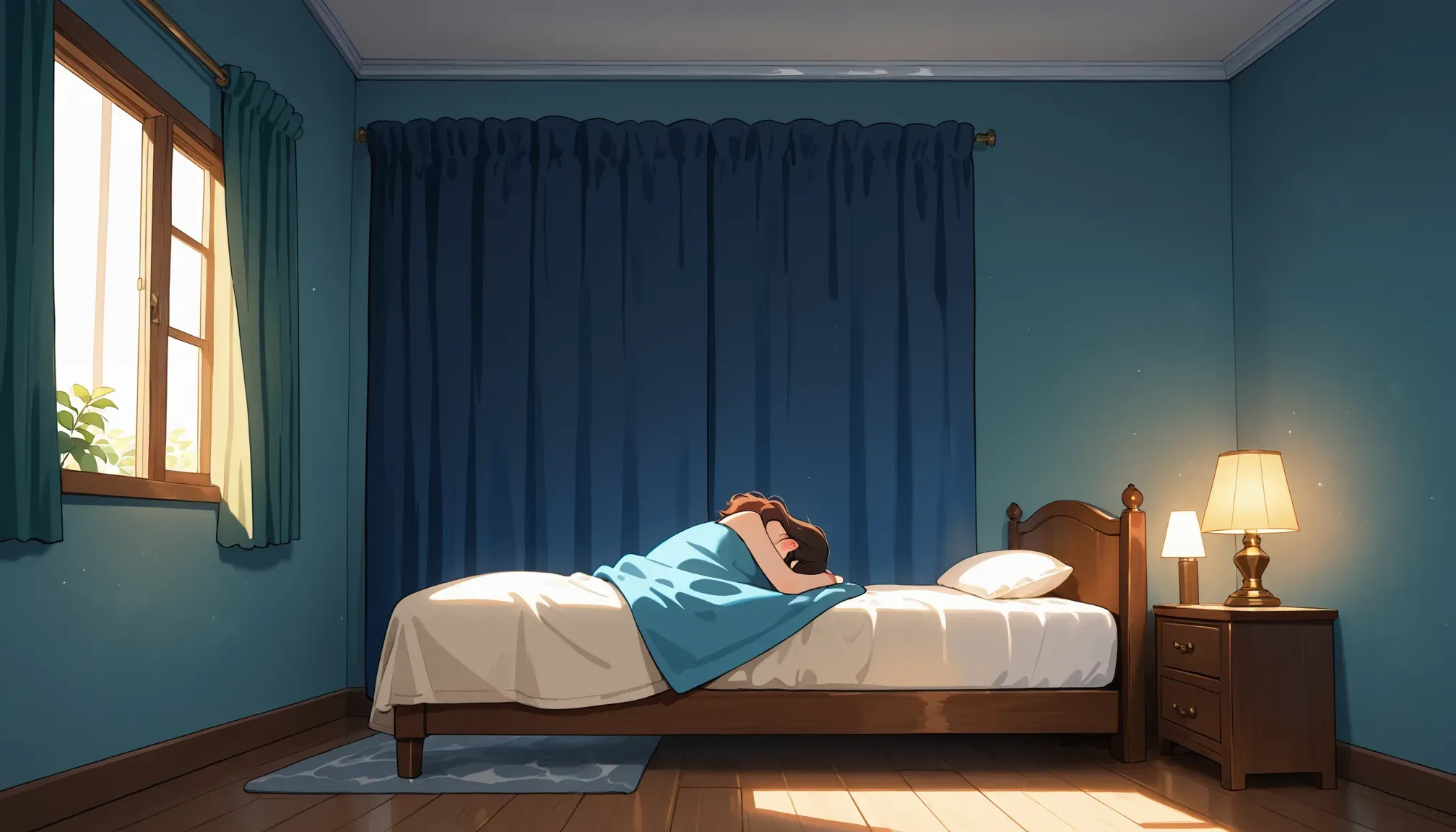
There are days when getting out of bed feels like an enormous effort, and the things you used to enjoy no longer stir anything. Depression isn't always visible sadness: often it is exhaustion, emptiness, a lack of motivation, and a heaviness that settles into both body and mind. If you're going through something like this, you've probably wondered whether anything could help you get your energy back, alongside the medical and psychological support you may already be receiving.
Acupuncture for depression is one of the options we get asked about most. In this article, we explain in plain language how traditional Chinese medicine understands it, what a session feels like, what current research says, and who it may help, so you can decide whether it fits into your own path to recovery.
What is depression, and why isn't "willpower" always enough?
Depression is much more than feeling sad for a few days. It is a persistent state that can last weeks or months, and it affects both mood and body: changes in sleep, appetite, concentration, and energy are very common. It isn't weakness, and it isn't something you can resolve simply by "cheering up": it is a real condition that deserves attention, just like any other health problem.
Conventional medicine understands it as a disturbance in the brain systems that regulate mood, and treatment usually combines psychotherapy and, in some cases, medication. Traditional Chinese medicine, by contrast, looks at depression from a different angle: not as an isolated malfunction of the mind, but as an imbalance in the body's vital energy.
How traditional Chinese medicine understands it
In traditional Chinese medicine, health is considered to depend on the harmonious flow of vital energy, known as Qi and pronounced "chee." Qi circulates throughout the body and sustains both our physical activity and our emotional life. When that flow becomes blocked, depleted, or unbalanced, symptoms appear, and not only in the body: in mood as well.
Chinese medicine holds a view that is very ancient and, at the same time, very current: body and emotions can't be separated. What we feel inside shows on the outside, and what happens in the body affects how we feel. When energy becomes "stuck," people often describe a feeling of tightness in the chest, a lump in the throat, heaviness in the limbs, or a sadness that seems to have a physical shape. These are exactly the kinds of experiences acupuncture tries to address.
The key concepts acupuncture works with in this context are simple to grasp:
The flow of energy: when it moves freely, there is vitality and motivation; when it stagnates, apathy, discomfort, and trapped emotions appear.
The balance between rest and activity: in depression, there tends to be an excess of stagnation and a lack of vital drive.
The root and the branches: instead of treating only the visible symptom (the sadness), the aim is to understand what lies behind it: accumulated exhaustion, unresolved grief, lack of rest.
Acupuncture doesn't diagnose "depression" the way psychiatry does; instead, it looks at the whole picture: how you sleep, how you eat, how you breathe. Everything provides information to personalize your treatment.
How can acupuncture help when you have depression?
Acupuncture for depression isn't meant to "replace" psychotherapy or any medication you may be taking. Its role is that of support: helping the body relax, regain energy, and feel a little lighter, session by session.
The benefits people most often mention are:
A sense of calm and rest during and after the session, sometimes with better sleep.
Less physical tension: the neck, shoulders, and chest relax, and with them the tightness that so often accompanies sadness.
More energy and desire to do things, gradually.
A space for taking care of yourself: during the session there is time to sit in silence, something many people need and don't allow themselves.
In the atlas you can look up the points most commonly used for depression; among them are Baihui (GV20), at the crown of the head, Yintang, between the eyebrows, and Neiguan (PC6), widely used when there is tightness in the chest.
It's important to keep realistic expectations: acupuncture doesn't erase the life problems that may have contributed to your distress, but it can give your body more resources to face them.
What about auricular therapy for depression?
Auricular therapy works on the ear, using fine needles or seeds that are left taped in place for a few days and that you can press at home when your mood dips. For sadness and low spirits, points such as Shenmen and the ear's Heart and Liver points are commonly chosen, which tradition associates with mood and calm. It also has its own scientific interest: a branch of the vagus nerve reaches the skin of the ear, and gentle electrical stimulation of that area is being investigated as a complementary treatment for depression, with promising preliminary results in small trials. Like the rest of acupuncture, it supports psychological or pharmacological treatment; it doesn't replace it.
What does an acupuncture session feel like?
If you've never been to an acupuncture appointment, this part is especially for you. The first visit is usually longer: the acupuncturist asks you many questions about your sleep, appetite, digestion, mood, health history, and daily life. They also observe details such as the color of your face, your tongue, and how you breathe. With all that information, they design a plan tailored to you.
During the session, you'll be asked to lie down comfortably, and very fine needles are inserted at various places on the body. It's common not to even feel them; most people describe the sensation as a slight tingling, warmth, or heaviness. Once the needles are in place, you rest for about 20-30 minutes, and many patients take the opportunity to fall asleep.
Afterward, it's common to feel a mix of relaxation and clarity. Some people notice improvement right away; others feel it more gradually, after several sessions. The usual approach is to start with weekly sessions and then adjust based on how you progress, always in dialogue with you and, if you feel it's necessary, with your doctor.
What does the scientific evidence say?
Research on acupuncture and depression is ongoing and the results are promising, though it's important to be honest: there are no definitive conclusions, and the studies have limitations. Scientific research suggests that acupuncture may help reduce depressive symptoms, especially when combined with psychotherapy or with the appropriate medical treatment, and studies are under way to better understand in which cases it works best.
What has been observed repeatedly is its good safety profile and its ability to improve sleep, relaxation, and overall well-being, areas that are often strongly affected in depression. For that reason, many health professionals see it as a reasonable complement within an integrated approach.
Our recommendation is clear: acupuncture should be considered a complement to the treatment prescribed by your doctor or psychologist, never a substitute. If you're taking medication, don't change it without talking to your doctor first.
Who it may help
Acupuncture for depression can be a good fit in several situations:
People who already receive medical or psychological follow-up and are looking for a complement that also looks after the body.
People with associated physical symptoms (tension, sleep problems, disrupted digestion) who want to address them in an integrated way.
People worn down by chronic stress or by difficult life circumstances, who need to recover their energy.
People who are sensitive to medications or who simply want to try a different approach, always within a supervised plan.
Precautions and contraindications
Acupuncture is a safe technique when practiced by a qualified professional using sterile, single-use needles. Even so, you should always tell your acupuncturist about your health status: for example, if you're pregnant, take anticoagulants, have a chronic illness, or have a pacemaker. And remember something essential: if you have thoughts of harming yourself, feel a deep sadness, or your symptoms don't go away, contact your doctor or a mental health service as soon as possible (in Spain, the 024 suicide prevention line is available 24 hours a day, and in an emergency, call 112). Acupuncture supports you, but depression requires appropriate medical care.
Frequently asked questions
Does acupuncture cure depression?
There is no evidence that acupuncture "cures" depression on its own. What it can do is ease some symptoms (tension, insomnia, lack of energy) and act as a complement to medical and psychological treatment.
How many sessions do I need to notice improvement?
It depends on the person and the severity of the symptoms. It's usual to notice some change within the first 4-6 sessions, starting with weekly sessions that are spaced out later. Your acupuncturist will guide you based on how you progress.
Can I get acupuncture if I'm taking antidepressants?
In general, yes, and it's important to tell both your doctor and your acupuncturist. Acupuncture doesn't replace or cancel out medication: never stop taking it without medical guidance.
Does acupuncture hurt?
You hardly feel it. The needles are much thinner than those used for injections, and the most common sensation is a slight tingling or local warmth. Many people fall asleep during the session.
Can I come in with mild symptoms only, like sadness or low spirits?
Yes. In fact, many people come in the early stages, when they notice their mood won't lift but don't have a diagnosis yet. That said, if symptoms persist or get worse, it's essential to see a health professional.
Do I need to believe in Chinese medicine for it to work?
No. You can come with an open mind and simply see how your body responds. Many people find value in the experience without subscribing to any particular theory.
Conclusion
Acupuncture for depression offers a warm, holistic approach: rather than focusing only on mood, it cares for the whole body and vital energy, helping you relax, sleep better, and gradually regain your motivation. It isn't a miracle solution or a substitute for medical or psychological treatment, but it can be a good complement within an integrated approach.
If you're interested in trying it, always look for a qualified, experienced professional, and be completely open about your situation and any treatments you're following. And if your symptoms persist, get worse, or you have thoughts of harming yourself, go to your doctor or a mental health service: asking for help is the most important step.