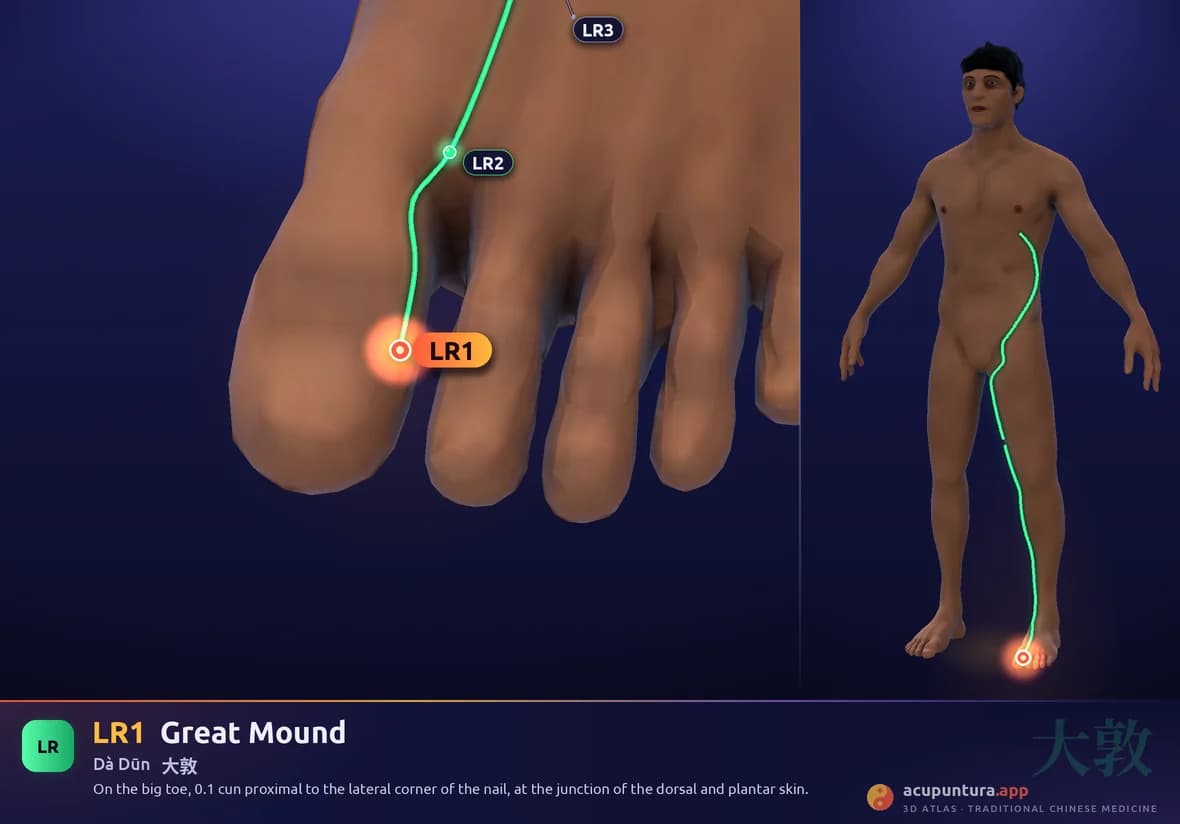
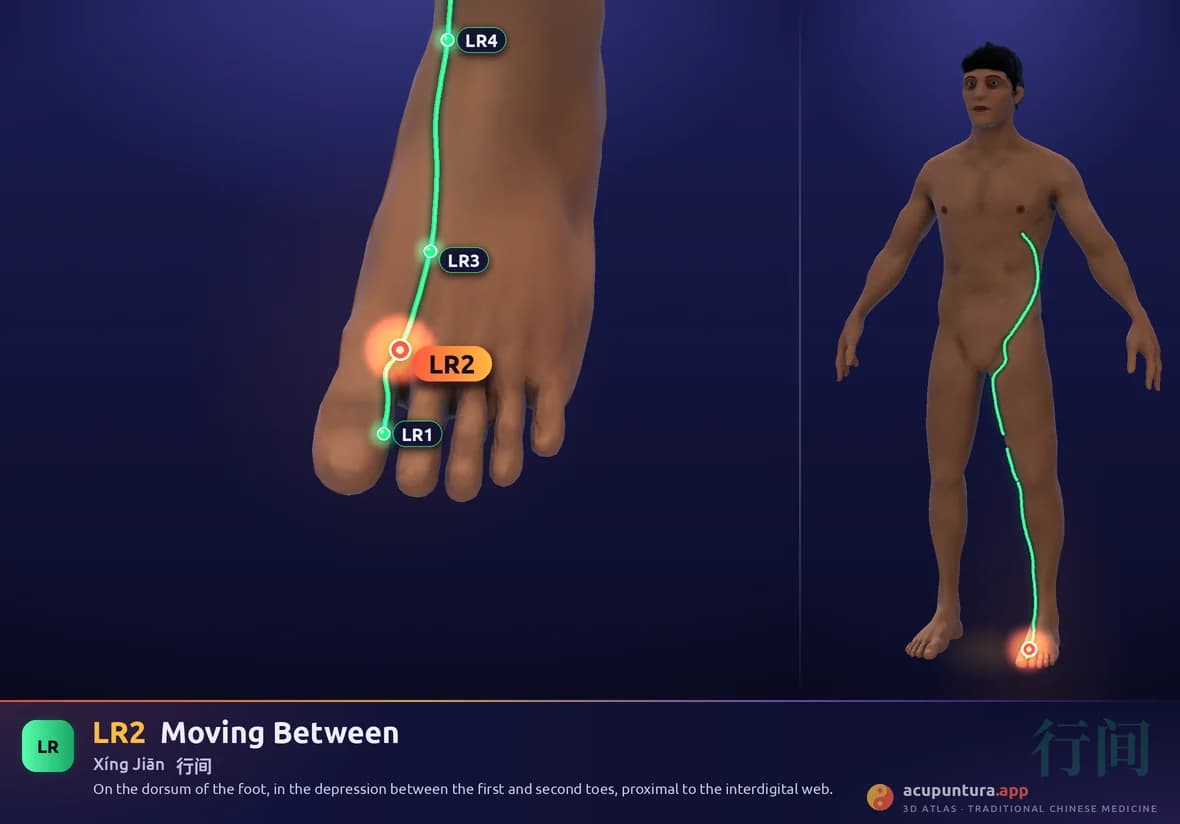
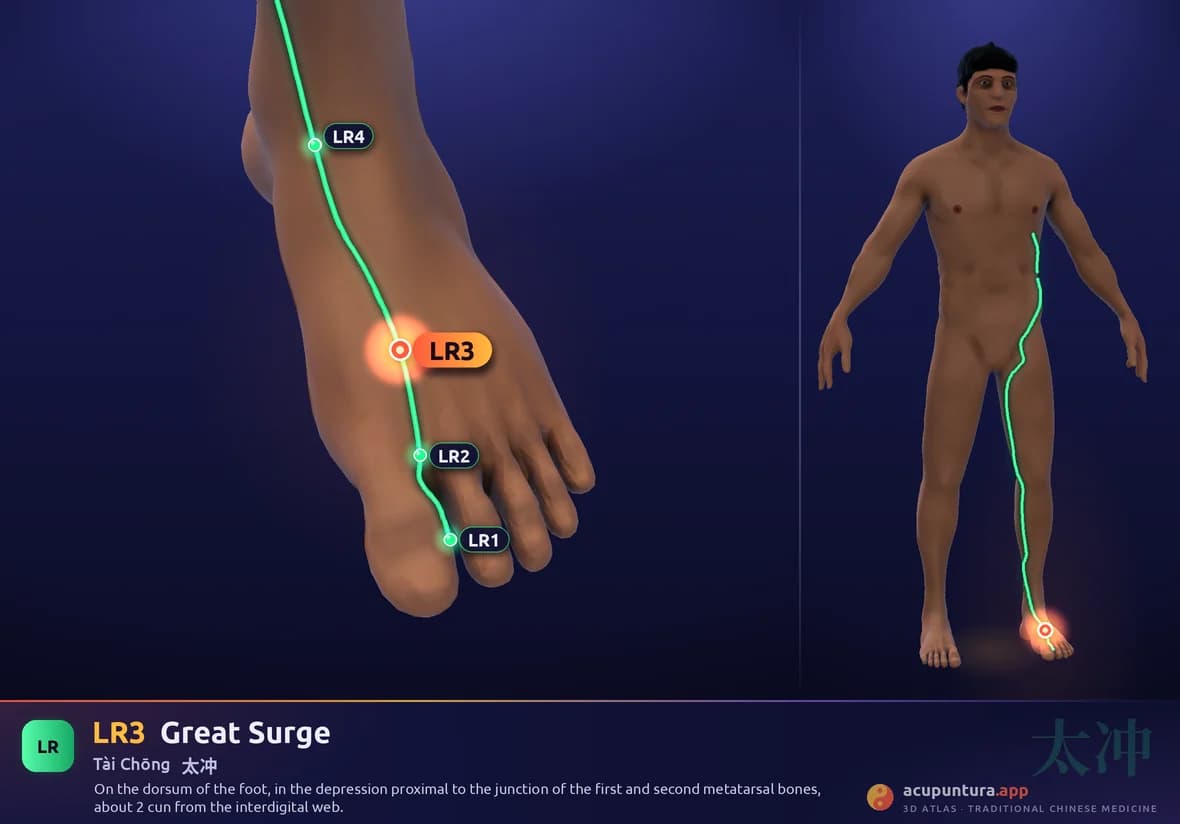
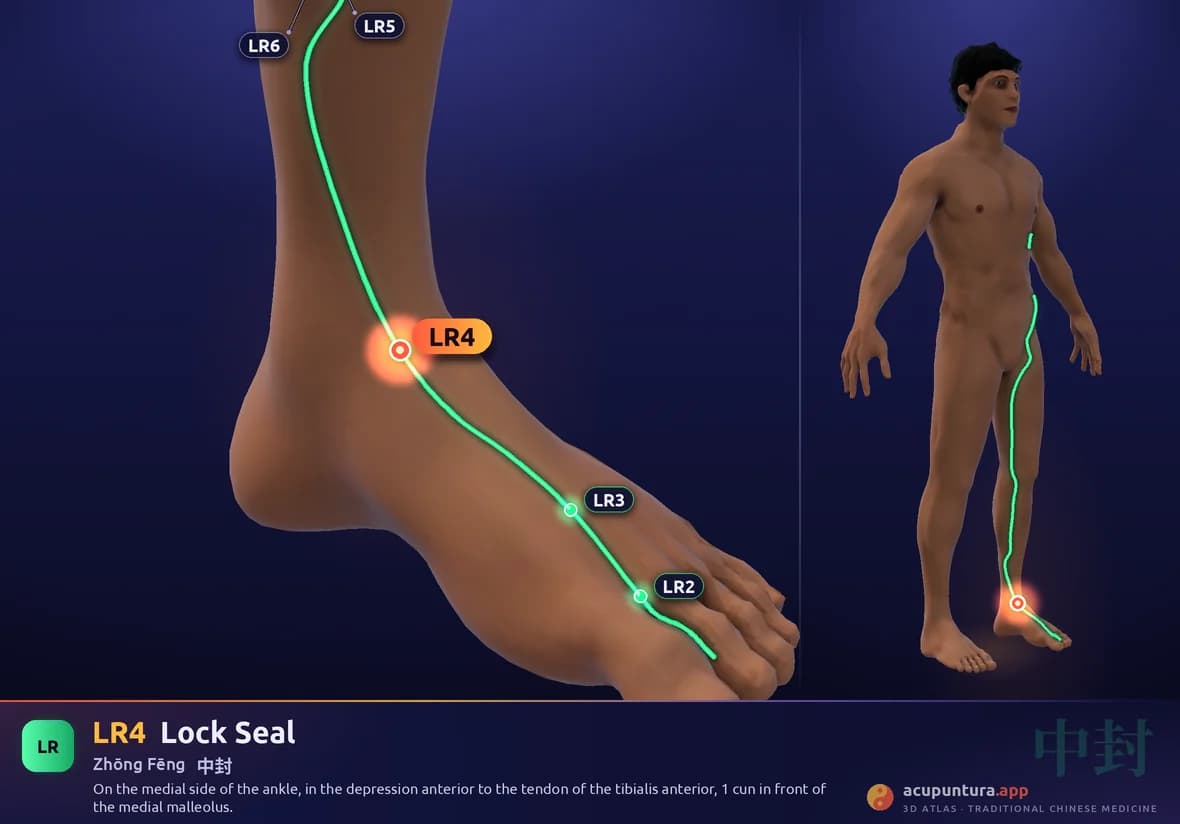
Traditional Chinese Medicine channel
Liver Channel
足厥阴肝经Wood01:00 - 03:0014 pointsLR1 → LR14
Description
The Liver channel stores and distributes the Blood, and governs the smooth flow of Qi throughout the body. It controls the tendons and ligaments, opens into the eyes, and regulates menstruation. A balanced Liver lets the emotions flow without stagnating; when Liver Qi is blocked, irritability, muscle tension, blurred vision, or irregular menstrual cycles appear.
Main functions
- Stores the Blood
- Regulates the flow of Qi
- Controls the tendons
- Benefits the eyes and vision
- Regulates the emotions (especially anger)
- Regulates menstruation and the reproductive system
- Harmonizes digestion
Pathway
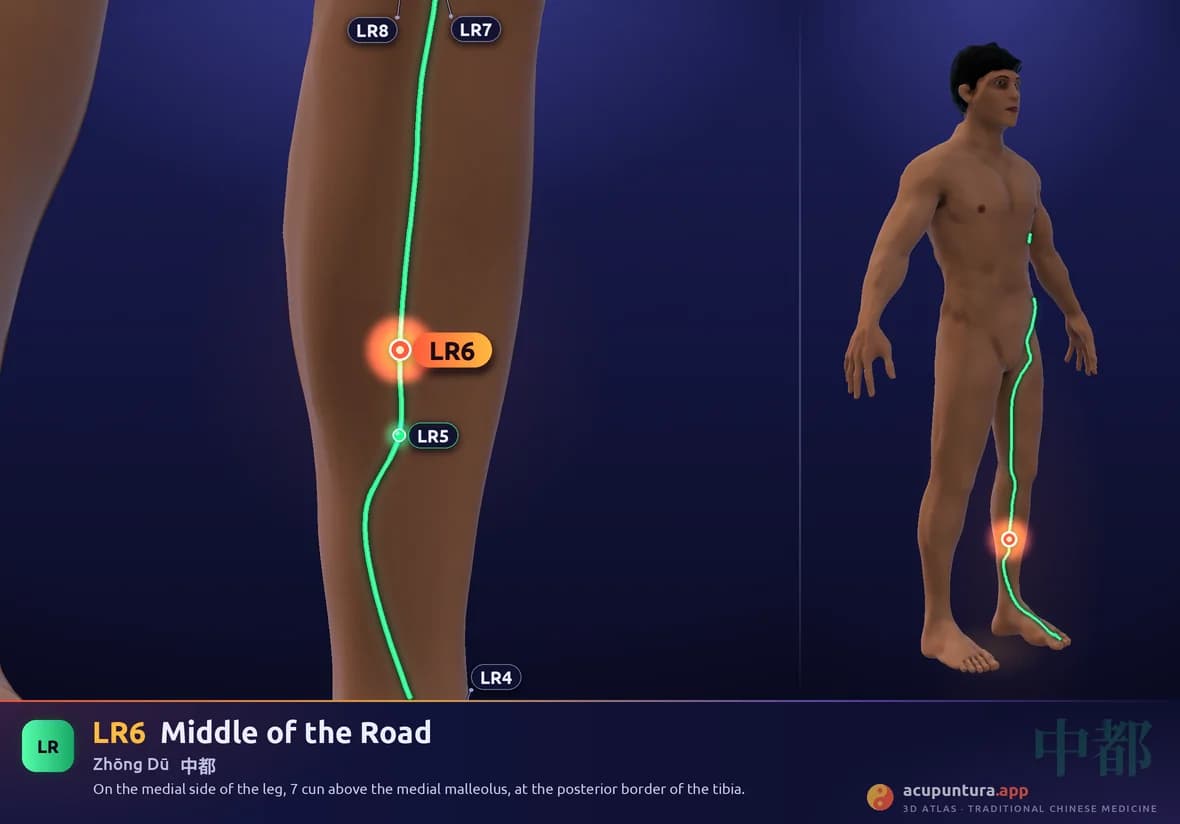
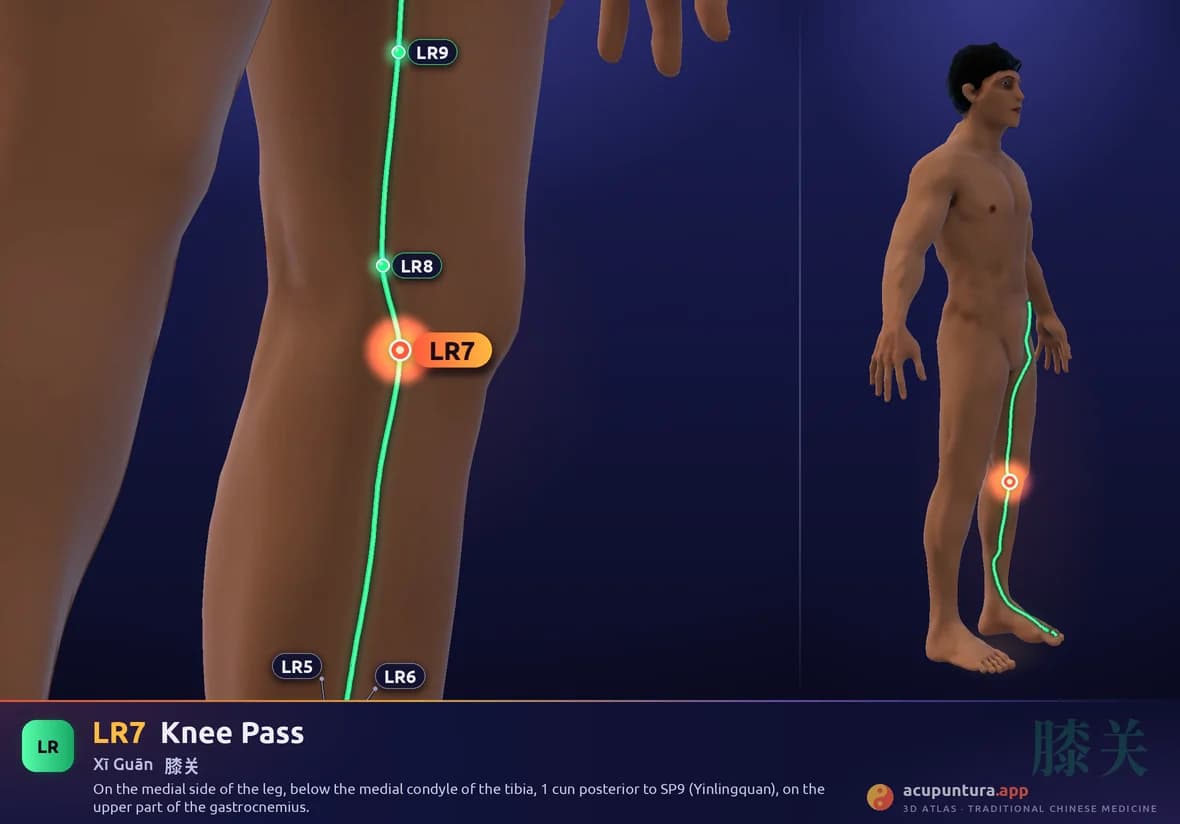
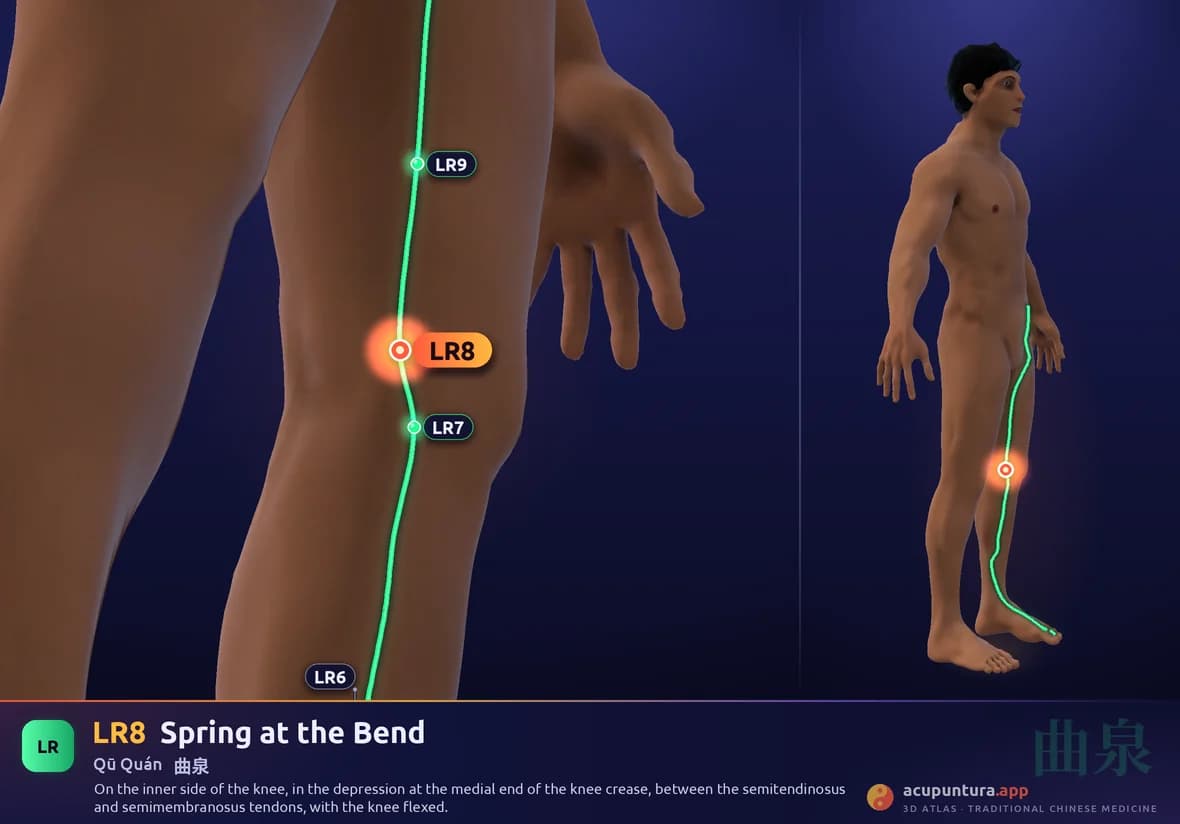
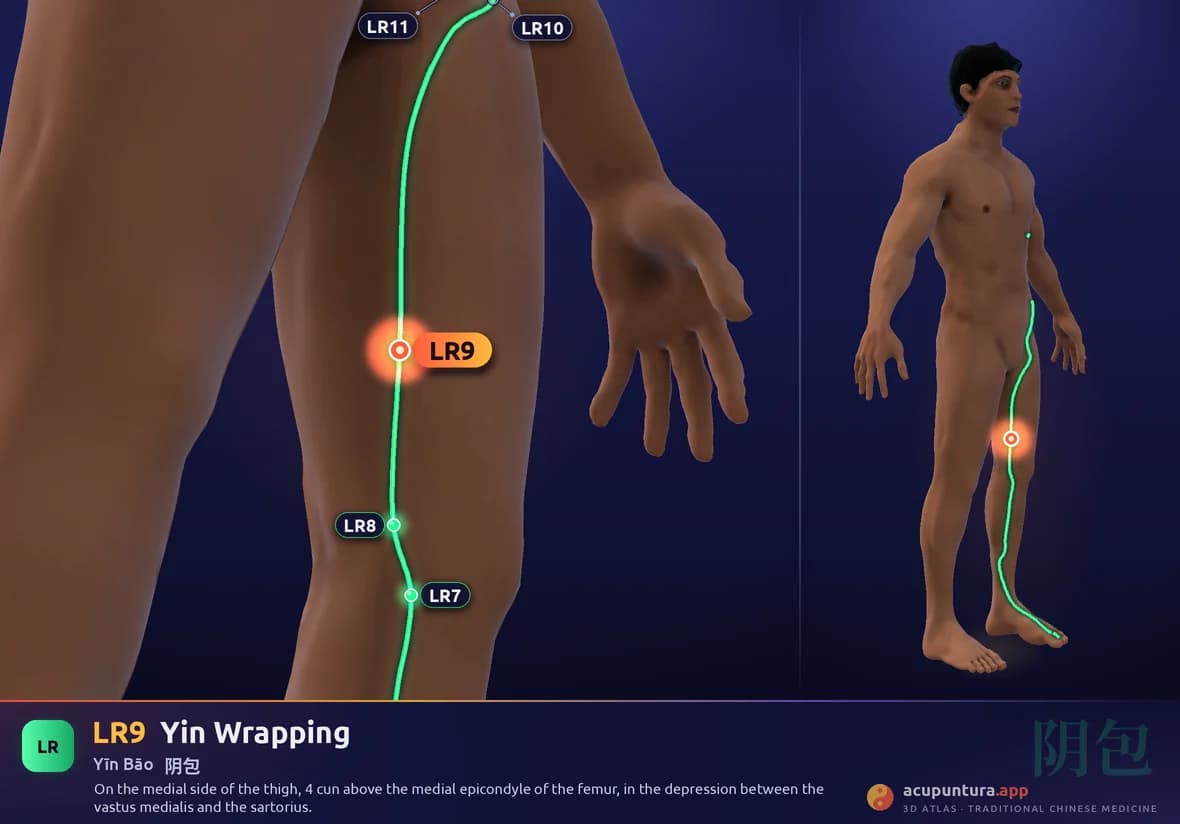
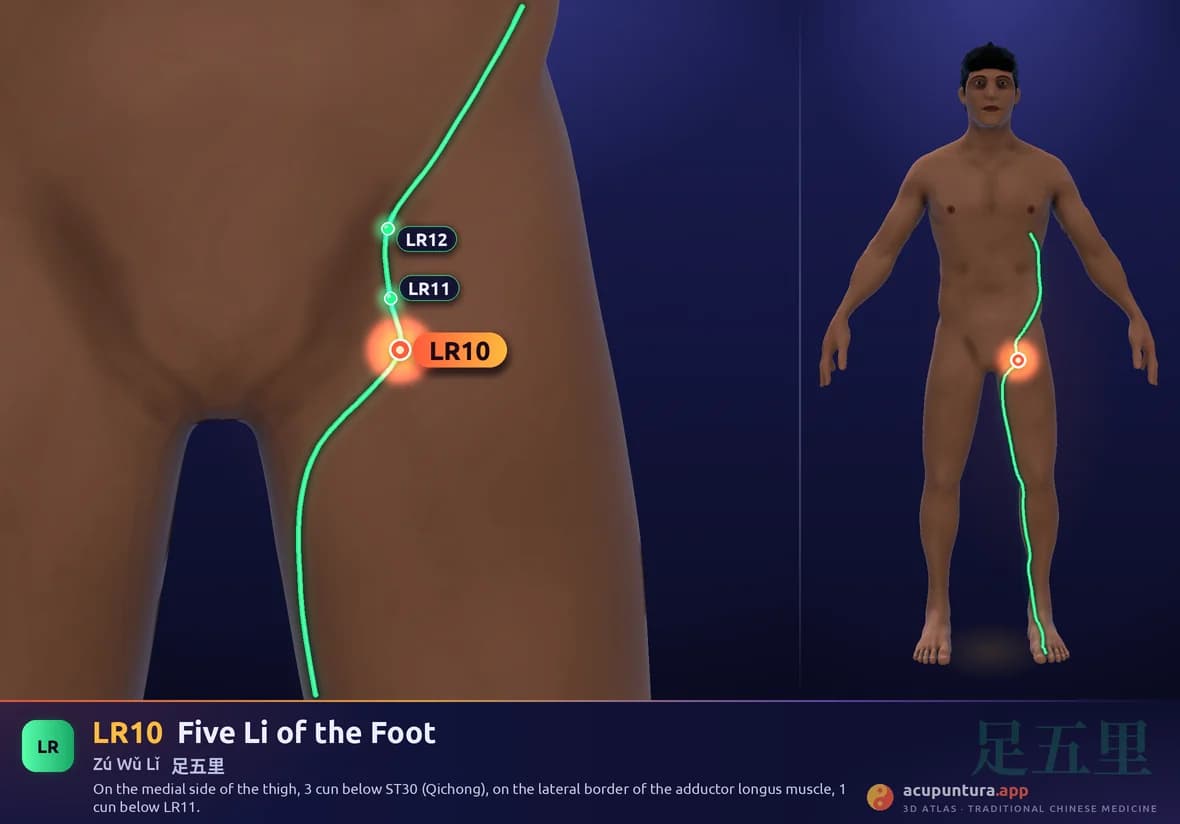
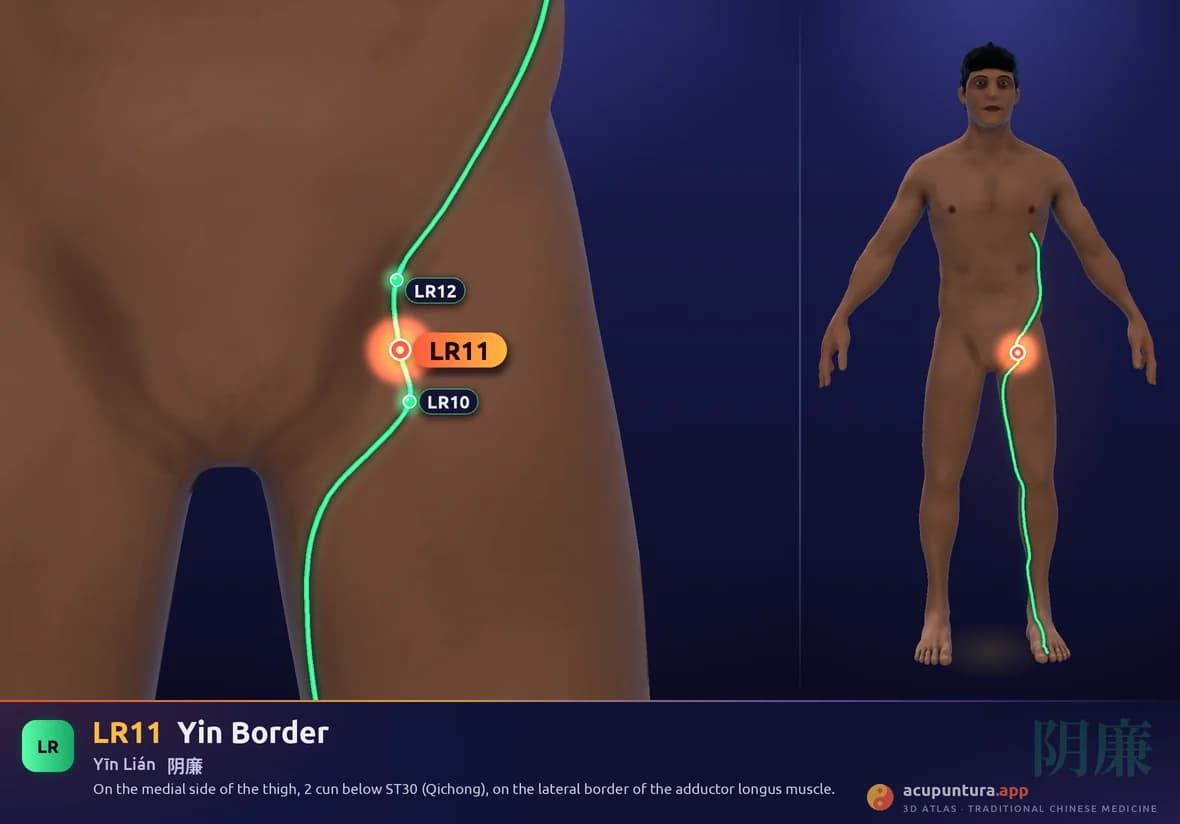
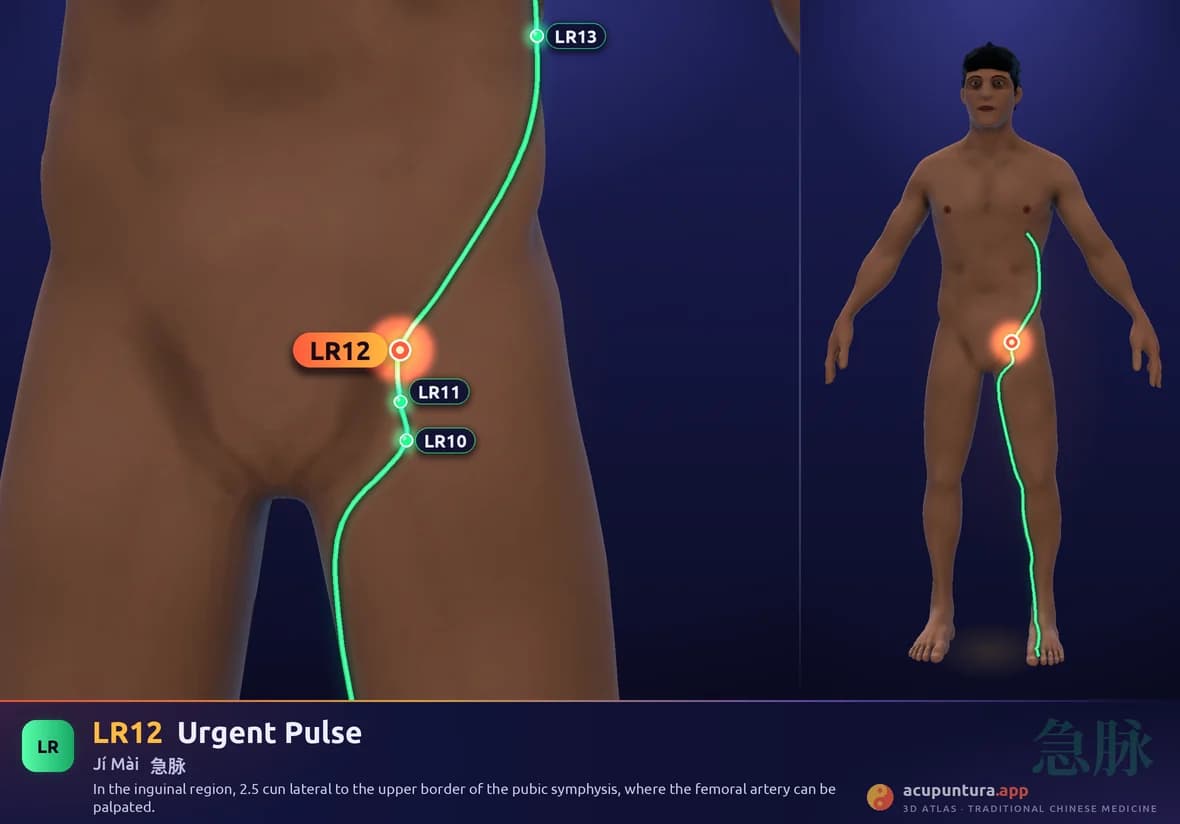
It begins at the big toe, ascends along the inner side of the foot and leg, passes through the inguinal region, encircles the external genitalia, ascends through the abdomen to the hypochondrium, and connects with the Liver and Gallbladder, ending in the chest.
The channel in the Lingshu
“肝足厥陰之脈,起於大指叢毛之際”. The Liver channel begins at the edge of the hair on the big toe, at LR1, rises over the dorsum of the foot, passes one cun in front of the medial malleolus, and, eight cun higher, crosses behind the Taiyin of the Spleen: the same crossing the chapter describes from the other side in the Spleen channel. It climbs the inner thigh and follows a course that only it has: “入毛中,過陰器,抵小腹”, it enters the pubic hair, encircles the genitals, and reaches the lower abdomen.
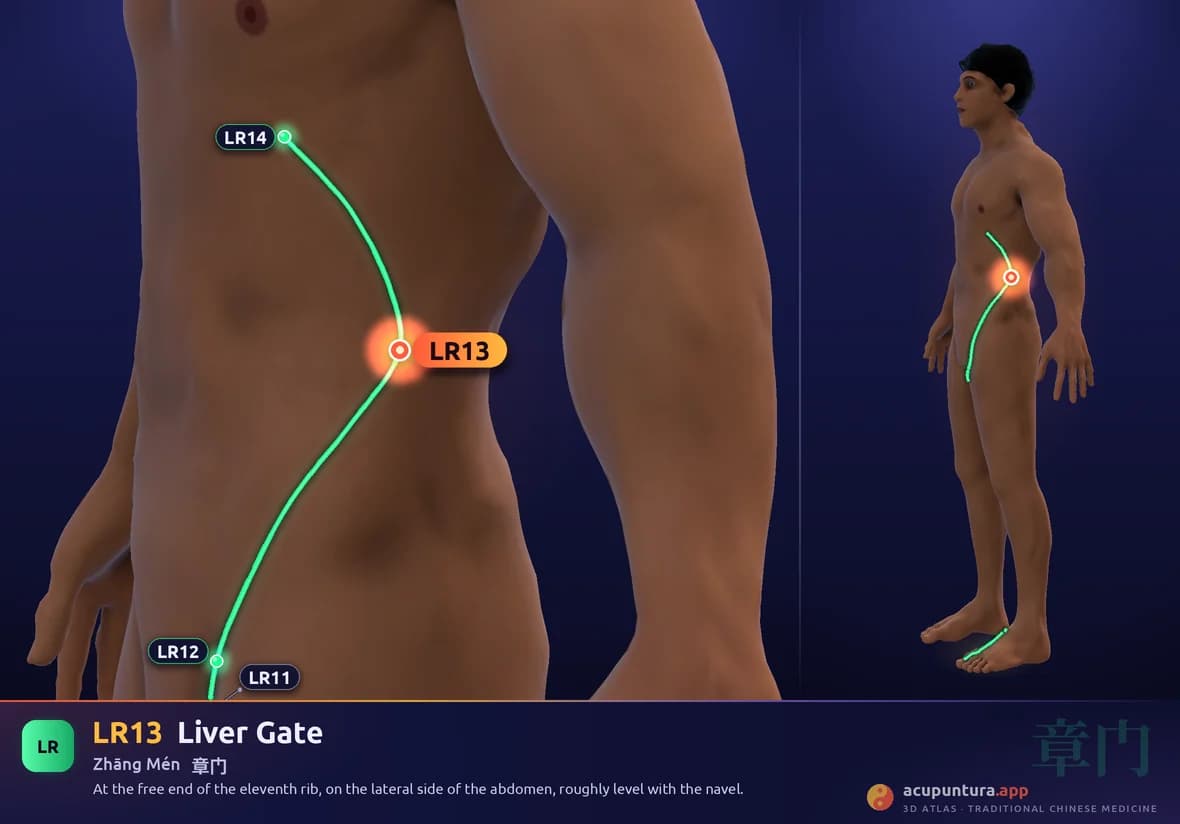
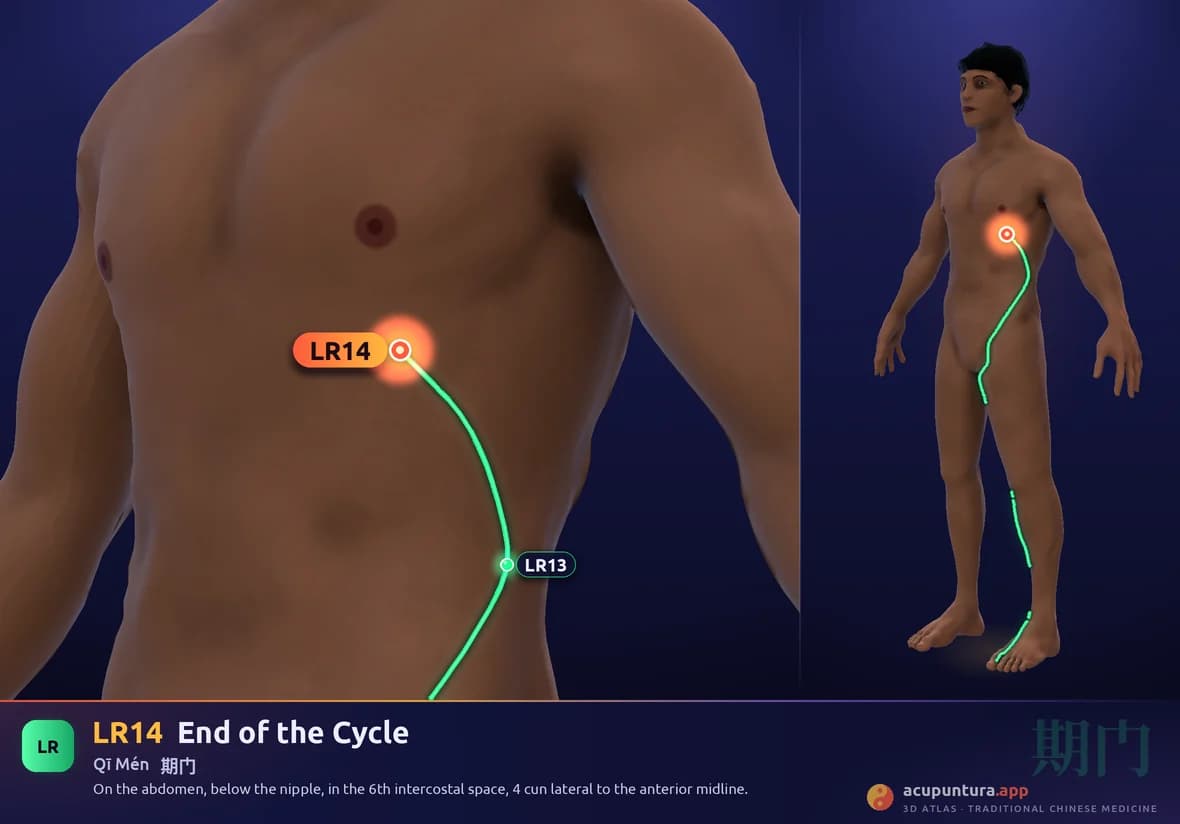
It then skirts the stomach, belongs to the Liver, connects with the Gallbladder, passes through the diaphragm, and spreads over the flanks, where LR13 and LR14 lie today. It continues behind the throat to the nasopharynx, ties into the eye system, exits through the forehead, and ends at the very top: “與督脈會於巔”, it meets the Du Mai at the vertex. One branch descends from the eye to encircle the inner surface of the lips, and another returns from the Liver to the lung, closing the circuit of the twelve channels.
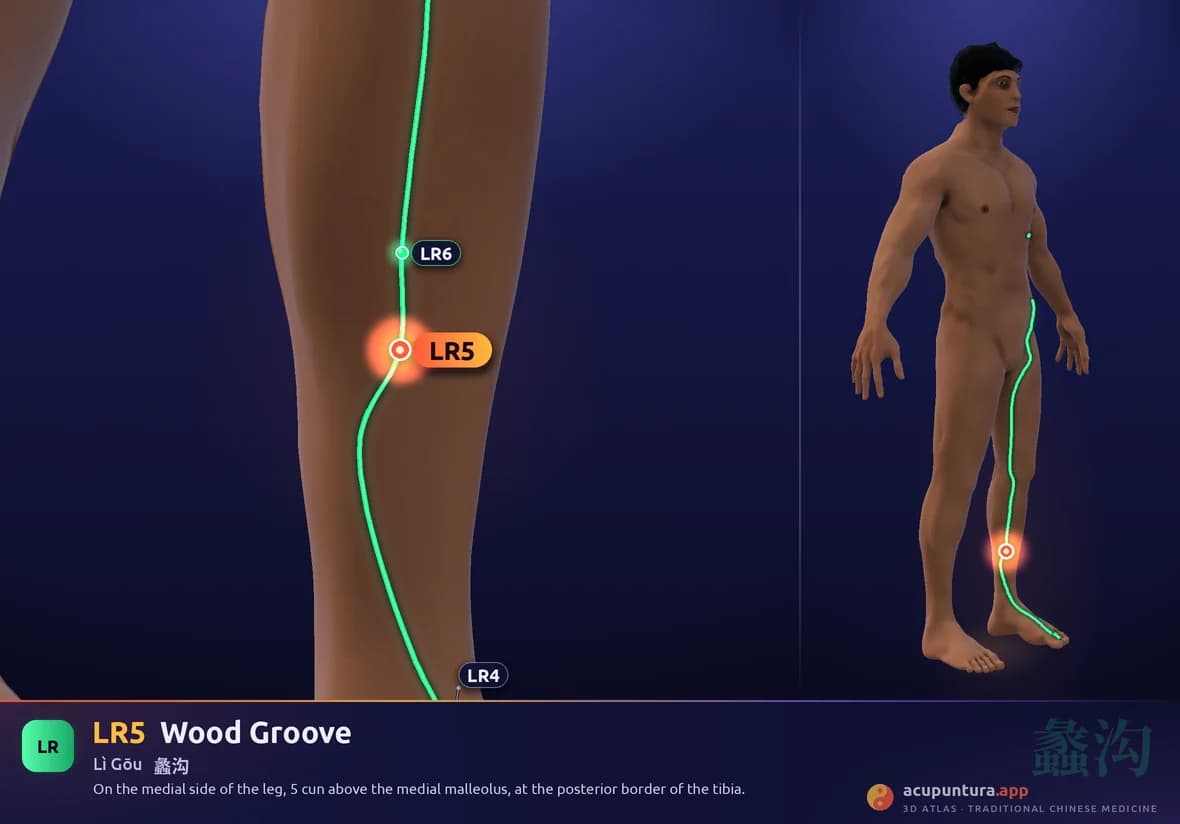
Its “是動” disorders begin with the lower back, which cannot bend forward, and continue in the lower abdomen: hernia in men and hypogastric pain in women. Those of its own domain include chest fullness with vomiting, diarrhea with undigested food, and retention or incontinence of urine. Its branch is “足厥陰之別,名曰蠡溝”, Ligou, LR5, five cun above the medial malleolus, which separates toward the Shaoyang.