The diagnosis always sounds more dramatic than it is: "you have a herniated disc." Many people picture something broken that only an operating room can fix, yet the reality is quite different: the vast majority of herniated discs improve with conservative treatment, with no need for surgery. Within that conservative care, acupuncture has become one of the options people look for most often when they live with low back pain or sciatica.
In this article we explain what a herniated disc really is, when acupuncture can help, what the scientific evidence says, and what to expect if you decide to try it. If you live with back pain that radiates down your leg, keep reading: this is for you.
What is a herniated disc?
Between each vertebra in the spine sit round "cushions" called intervertebral discs. They work as shock absorbers: they take up impact and let your back move flexibly. Each disc has a firm, fibrous outer layer and a gel-like inner core.
A herniated disc happens when the outer layer of the disc weakens or tears and the inner core bulges out into the spinal canal. If that bulge presses on a nerve root, the typical picture appears: intense low back pain that runs down the buttock and leg (the famous sciatica), sometimes with tingling, numbness, or loss of strength in the foot.
It's worth saying plainly from the start: the most common trigger is not a blow but years of accumulated strain (a sedentary routine interrupted by occasional bursts of effort, lifting weight with a rounded back, spending long hours sitting with poor support), together with factors such as smoking, excess weight, or sustained stress.
Types of herniated disc, causes, and pathophysiology
On an MRI report you'll see different terms depending on how far the disc has moved. A protrusion is when the disc bulges but its outer wall is still intact; an extrusion is when the core breaks through that wall and pokes out; and a sequestration is when a fragment breaks off and lies loose in the canal. Herniations are also classified by position (central, posterolateral, or foraminal, depending on which direction they push) and by region of the spine: lumbar, the most common, cervical, and, much more rarely, thoracic.
The pathophysiology of a herniated disc, meaning how the damage comes about, combines two mechanisms. One is mechanical: the disc presses on the nerve root and irritates it. The other is chemical: the material from the core, once it escapes, causes local inflammation that sensitizes the nerve. That's why a small herniation can hurt a great deal while a large one barely bothers you, and why the pain can ease as the inflammation goes down even though the disc still shows on the scan.
As for the etiology, the causes of a herniated disc tend to add up: natural aging of the disc, which loses water; a certain family predisposition; jobs involving heavy loads or vibration; sustained postures; smoking, excess weight, and weak supporting muscles.
What a herniated disc feels like and how it's diagnosed
What it feels like
Not all herniations feel the same, and some aren't felt at all: there are people with herniated discs on their MRI who have no pain whatsoever. When they do cause symptoms, the most common one is pain in the low back that, instead of staying put, runs down the buttock and along the back or outer side of the leg, sometimes all the way to the foot. Many people describe it as an electric current, a lash, or a burning sensation, rather than the ordinary ache of a muscle.
Some details help point the way: the pain tends to get worse when you cough, sneeze, or strain, when you sit for a long time or bend forward, and it often eases a little when you walk slowly or lie down with your legs bent. Tingling and a "dead leg" feeling are also common, and in the more severe cases, weakness when rising onto your toes or lifting the front of your foot.
How a herniated disc shows up on tests
Diagnosing a herniated disc always starts at the doctor's office: the story of your pain and a physical exam (strength, reflexes, sensation, maneuvers such as raising the straightened leg) are usually enough to raise suspicion. Imaging tests are ordered when symptoms don't improve within a few weeks, when there are neurological signs, or when surgery is being considered.
It helps to know what each test shows. A herniated disc on an X-ray, that is, a plain radiograph, can't be seen: X-rays show bone well, but not the disc or the nerves. What may be visible is a narrowing of the space between two vertebrae or signs of wear, which raise suspicion but don't confirm anything. The test that really lets you see the herniation is the magnetic resonance imaging (MRI) scan: on it, the disc appears as a pad between the vertebrae, and the herniation as a bulge that has moved out of place and sometimes touches or squashes the nerve root. One important detail: the size on the image doesn't always match the pain you feel, which is why your doctor weighs both together.
The good news: most cases resolve without surgery
It's one of the best-established facts in medicine: between 80% and 90% of symptomatic herniated discs improve significantly within a few months with conservative treatment. The body has its own mechanisms for reabsorbing herniated material, and over time the inflammation around the nerve subsides.
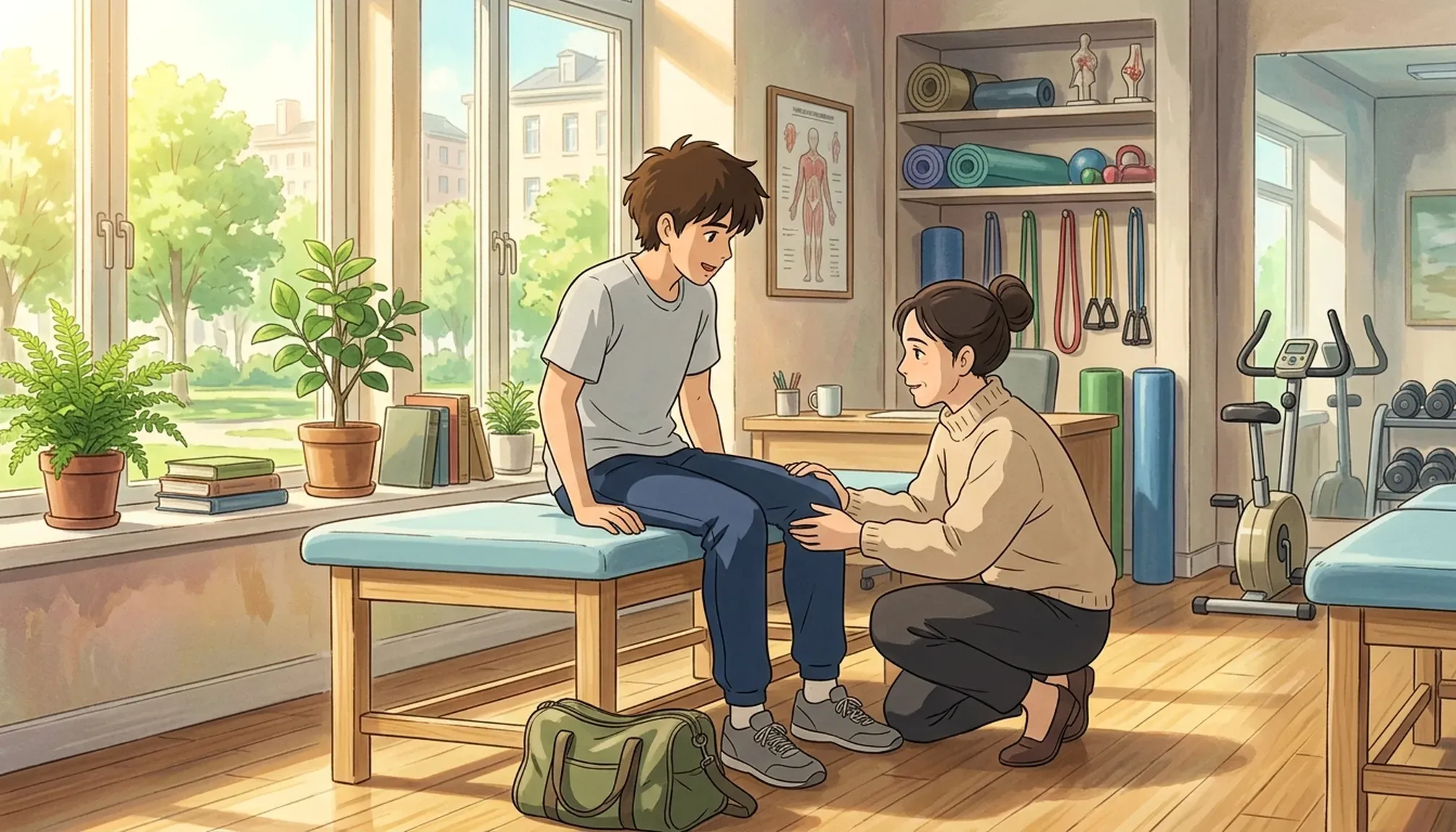
That doesn't mean you have to resign yourself to suffering in the meantime. Conservative treatment includes pain medication when your doctor prescribes it, physical therapy, progressive therapeutic exercise, posture education, and, increasingly, complementary therapies such as acupuncture for pain control.
Can a herniated disc be cured? How it's treated in practice
When someone asks how a herniated disc is cured, the honest answer is that, in many cases, the body does a good part of the work itself: the protruding material tends to shrink over time and the nerve calms down. The goal of treatment is less to "remove" the herniation than to control the pain, keep you moving, and protect your back while that process runs its course. That's why treating a herniated disc usually follows an order: first relieve the pain without immobilizing yourself, then regain mobility with guided exercise, and finally strengthen the muscles and habits to prevent relapses. If the pain goes away and you get back to your normal life, to the person that amounts to a cure, even if the image of the disc never goes back to what it was.
There are cases, though, that require urgent surgical evaluation: loss of bladder or bowel control, marked and progressive weakness in the leg, or pain that can't be managed despite treatment. With any of these signs, the way to go is a neurosurgeon or an orthopedic surgeon, not the acupuncture room.
Herniated disc surgery and recovery after the operation
When surgery is indicated, the most common procedure is a microdiscectomy, in which only the fragment compressing the nerve is removed. Recovery from herniated disc surgery follows a pace set by the surgeon, but it usually follows a similar logic: get up and walk early, avoid heavy loads, sudden twisting, and long periods of sitting at first, and then start a physical therapy program to regain strength and confidence. It's common for the leg pain to improve before the tingling, which takes longer to go away. Acupuncture can also accompany this phase, for residual pain or muscle tension, always once the wound has healed well and with the approval of the medical team.
What does the science say about acupuncture and herniated discs?
The evidence on chronic low back pain in general is some of the strongest in acupuncture research: systematic reviews conclude that acupuncture provides moderate but real pain relief compared with no treatment and, in many studies, compared with basic conventional treatments, with a very low rate of side effects.
In the specific case of herniated discs and sciatic pain:
Clinical studies and reviews show that acupuncture can reduce pain intensity and improve function (walking, sitting, sleeping) in people with a lumbar herniated disc, both as a complement to physical therapy and on its own compared with basic treatments.
The analgesic effect of acupuncture has a fair amount of research behind it: inserting needles releases endorphins and modulates how the nervous system responds to pain, which is especially relevant for the neuropathic pain of a compressed nerve.
Compared with pain medication, acupuncture has far fewer side effects, which makes it attractive for treatment that is sustained over time.
The honest takeaway: acupuncture doesn't "reabsorb" the herniation, but it can reduce pain, improve mobility, and help you get through the recovery process with a better quality of life, often with less reliance on medication.
How Traditional Chinese Medicine views a herniated disc
In the Chinese tradition, radiating low back pain is understood as a combination of blockage and weakening. On one hand, the circulation of Qi and Blood in the area is obstructed (by Cold, by muscle tension, by a sustained posture), and where circulation is blocked, pain appears. On the other, the "roots" of the lumbar region may be weakened by chronic fatigue, overwork, pregnancies, age, or poor diet, so that the back is less protected against the strains of daily life.
Cold deserves a special mention: in this view, exposing the low back to cold and dampness (drafts, short tops, sitting on cold surfaces) hinders local circulation and is a classic aggravating factor. It's no coincidence that many people notice their back feeling much worse in fall and winter.
Acupuncture works on both fronts: it moves the circulation in the blocked area and tonifies the system when there is an underlying weakness, adapting the strategy to each person.
What will you notice after a session?
The first visit is usually longer: the practitioner will ask about your diagnosis (ideally with your MRI on hand), the path and characteristics of your pain, your habits, your job, and your history. From there they'll design a plan, usually with 1 or 2 sessions a week at the start, spacing them out as you improve.
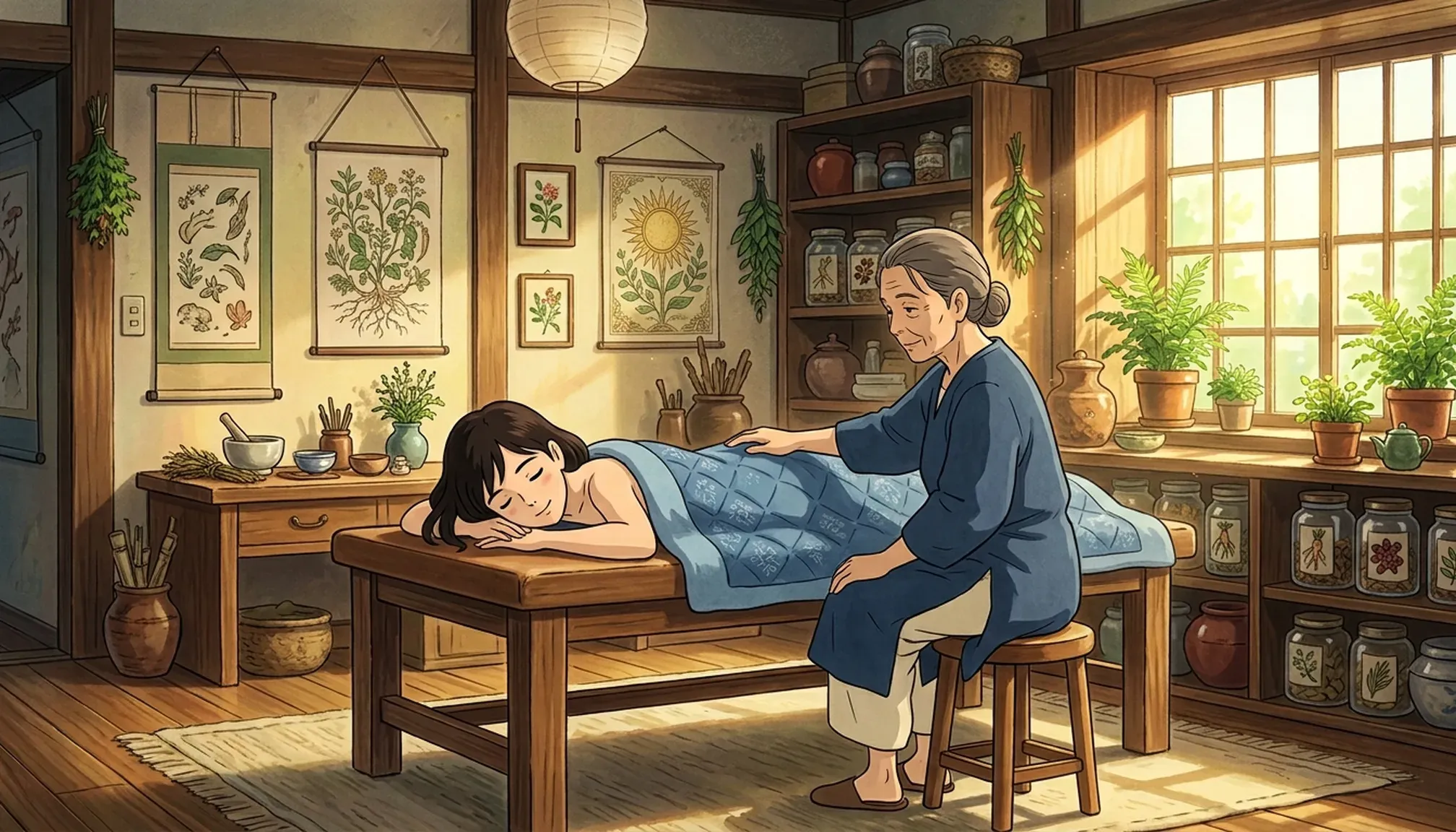
During the session, which lasts 45 to 60 minutes, needles are placed both in the low back and in other areas of the body related to the path of the pain (the legs, for example), because acupuncture works on the whole nervous system, not just the spot where it hurts. Commonly used points include Jiaji (Huatuojiaji), on both sides of the affected vertebrae, Dachangshu (BL25), in the lumbar area, and Weizhong (BL40), behind the knee; you'll find the full list in the Atlas entry for lumbar herniated disc.
After the first few sessions, the most common result is a gradual reduction in pain intensity, better sleep (sciatic pain at night is among the worst), and more ability to move with confidence. It's not usually an instant, permanent relief after a single visit: think of it as a process lasting several weeks, like physical therapy.
It's also common for your acupuncturist to give you lifestyle recommendations: how to lift weight, which postures to avoid, how to look after your back at work and, in some cases, suggestions for gentle exercises to strengthen the area.
Physical therapy and acupuncture: better together than apart
A common mistake is to frame it as "physical therapy or acupuncture." In practice, combining both is usually the most effective approach: physical therapy works on muscle strengthening, mobility, and postural retraining; acupuncture helps control pain and inflammation, which in turn makes it easier to move and do the exercises. Less pain means more physical therapy is possible, and more physical therapy means better recovery. It's a virtuous circle.
Tips for living with a herniated disc while you recover
Don't stay in bed. Prolonged complete bed rest worsens the outlook. Walking, within what your pain allows, supports recovery.
Learn to lift properly: knees bent, back neutral, weight close to your body. Never twist your back while carrying a load.
Watch your sitting posture: the lumbar disc is under more strain when you sit than when you stand. Get up and move every 30–45 minutes.
Local heat at home: an electric blanket or a heat pack on the low back relaxes the muscles (avoid it if there is very recent acute inflammation; in that case, local cold usually works better for the first few days).
Sleep on your side with a pillow between your knees, or on your back with a cushion under your knees, to take the load off your low back.
Stick with your therapeutic exercise: in the long run, it's the intervention that does the most to prevent relapses.
Exercises for a herniated disc: which ones help and which to avoid
Exercises for a herniated disc should be prescribed by your physical therapist or doctor, because not all herniations respond the same way: some people get relief from gently arching the back backward, while others do better bending it forward. Even so, some movements tend to be well tolerated in most cases:
Walking daily, gradually increasing the time.
Trunk control exercises, such as keeping your back neutral lying face up while you gently engage your abdomen.
Gentle variations of the plank and the "bird dog" (on all fours, extending one arm and the opposite leg at the same time).
Swimming or walking in water, which takes the load off the spine.
Exercises to avoid with a herniated disc (especially during the painful phase)
Rather than forbidden forever, these are exercises it's best to avoid while the nerve is irritated and to resume only under supervision: classic crunches that curl the trunk, deadlifts or squats with heavy loads, sudden twisting of the trunk with weight, jumping and impact sports, and forced stretches reaching for your toes with straight legs. The practical rule is simple: if an exercise makes the pain travel farther down your leg, that's a signal to stop.
Maneuvers for a herniated disc: what's worth knowing
There are two kinds of maneuvers. The examination ones, such as raising the straightened leg, are used by the doctor to diagnose. Spinal manipulations that promise to "put the disc back in place" deserve caution: a disc isn't repositioned with a crack, and when there are neurological signs they shouldn't be done without a medical evaluation.
Important precautions
- See your doctor if the pain comes with loss of strength in the leg, changes in bladder or bowel control, fever, or unexplained weight loss. These are warning signs that require urgent evaluation.
- Tell your acupuncturist if you take anticoagulants or have any condition that affects the nerves.
- If the pain doesn't improve after a course of sessions or gets worse, reconsider the approach with your doctor: acupuncture is a complement, not a mandatory step.
- Choose practitioners with accredited training and sterile, single-use materials.
Frequently asked questions
Does acupuncture cure a herniated disc?
It doesn't "cure" the herniation in the sense of making the disc protrusion disappear, though most treatments don't either. What it can do is greatly reduce pain and inflammation of the nerve, improving your quality of life while the body completes its natural recovery process.
How many sessions do I need for a herniated disc?
It depends on how long you've had the pain and how intense it is. As a guideline, courses of 8 to 12 sessions with a reassessment are usually proposed. Acute cases tend to respond faster; chronic ones require more persistence.
Does acupuncture on the back hurt?
The usual sensation is gentle pressure, local warmth, or a slight tingling. The needles are much thinner than those used for injections, and any discomfort, when it appears, is minimal.
Can I have acupuncture if I'm taking anti-inflammatories?
Yes, there is no incompatibility. In fact, it's very common to combine both at the start and then reduce the medication as the pain improves, always in coordination with your doctor.
Does acupuncture help you avoid herniated disc surgery?
It can't be promised: every case is different. What does often happen is that, by controlling the pain and regaining mobility, many people who feared surgery end up resolving their problem conservatively. The decision about surgery, when it comes, should be made with your orthopedic surgeon or neurosurgeon.
Why does a herniated disc happen?
There is almost never a single cause. With the years, the disc loses water and elasticity, and its outer wall becomes more fragile. If repeated strain, long hours of sitting, lifting weight with poor technique, or a lack of muscle to support the spine are added to that natural wear, sometimes an ordinary movement is enough for the disc's core to finally push out.
What test is done to confirm a herniated disc?
The reference test for a herniated disc is magnetic resonance imaging, which shows the disc and the nerve. An X-ray doesn't show the disc, although it's sometimes ordered to rule out other problems, and an electromyogram is used to find out how much the nerve is suffering when there is tingling or weakness. Often, in the first few weeks, a medical examination is enough.
How long does recovery take after herniated disc surgery?
It depends on the type of surgery, each person's job, and the condition of the nerve before the operation, so the timeline is set by the surgeon. Typically you walk from the first few days and gradually return to activity, with physical therapy. Keeping up strength exercises afterward is what helps most to prevent the herniation from coming back.
Does cupping help a herniated disc?
Cupping, which creates a vacuum over the skin to relax the muscles and boost local circulation, is often used on the low back alongside acupuncture. It can help relieve the muscle tightness that accompanies a herniation, but it doesn't act on the disc. In very acute phases or over inflamed areas, it's best to have a professional apply it who can judge whether it's appropriate.
Does acupuncture help with a cervical herniated disc (in the neck)?
It's used there too, with similar logic: pain relief, reducing the associated muscle tension, and improving mobility. For cervical herniations, we work on the Jiaji points at the sides of the neck vertebrae, Fengchi (GB20) at the base of the skull, Jianjing (GB21) on top of the shoulder and, if the pain runs down the arm, points along its path to the hand, such as Houxi (SI3) or Hegu (LI4). If you have tingling in your arms or hands, tell both your doctor and your acupuncturist. And if you notice clumsiness in your hands (you drop things, you have trouble buttoning a shirt) or unsteadiness when walking, seek care urgently: it may mean the herniation is compressing the spinal cord, which is not treated with acupuncture.
Conclusion
A herniated disc is not a sentence to surgery or to living with pain: it's a common diagnosis that, in most cases, improves with a good conservative plan. Acupuncture can be a valuable piece of that plan (controlling pain, making movement easier, and supporting recovery) alongside physical therapy, exercise, and sensible postural habits.
If your back is asking for it, see a qualified professional and, above all, keep up your medical follow-up. The combination of medical judgment and good complementary therapies is, almost always, the best way back to a life without pain.