Back pain is one of the most common complaints of our time: we spend long hours sitting, we move less than we should, and we carry tension almost constantly. If you're looking for information about acupuncture for back pain, chances are you've already tried a few things and want to know what this ancient technique can realistically offer. In this article we explain, in plain language and without miracle promises, why the back hurts, how acupuncture approaches this kind of pain, what you can expect from a treatment, and which posture and movement habits can help you day to day.
Why does our back hurt? Common causes of low back and mid-back pain
Before talking about treatments, it helps to understand the problem. When we talk about back pain, we usually mean two broad areas:
Lumbago or low back pain: affects the lower part of the back, above the hips. It is the most common form and the one that leads to the most doctor visits.
Dorsalgia or mid-back pain: sits in the middle area, between the shoulder blades and the base of the neck. It is often closely tied to muscle tension and to working in front of screens.
In the vast majority of cases, back pain doesn't have a serious cause but a mechanical or functional origin. The most common causes are:
Posture and a sedentary lifestyle
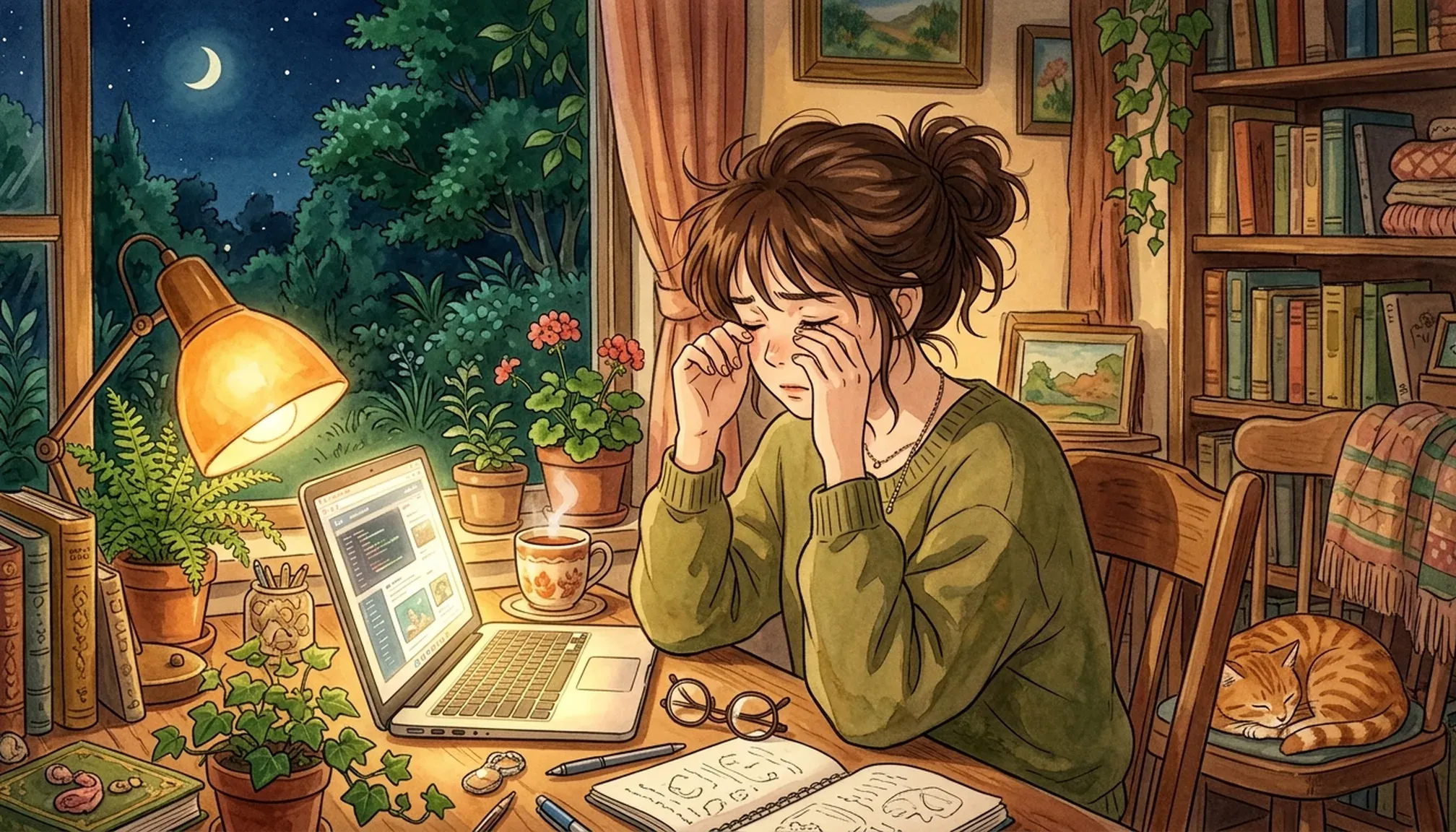
Spending many hours sitting, especially with poor posture, overloads the back muscles. The body isn't designed to stay still: the muscles that support the spine get fatigued, shorten, or weaken, and over time knots and discomfort appear. Office work, prolonged phone use with the head tilted down, and long hours behind the wheel are very common scenarios.
Sudden strain and overload
Lifting a weight abruptly, doing a repetitive movement, training without proper technique, or going back to sports all at once after months of inactivity can trigger an acute episode of pain. A lack of muscle tone also plays a part: if the abdominal and back muscles aren't prepared, the spine bears loads it doesn't have enough support for.
Stress and accumulated tension
Although it's sometimes forgotten, our emotional state has a direct effect on the body. Ongoing stress makes many people unconsciously tense their shoulders, neck, and back, which ends up as stiffness and pain. Sleeping poorly or having unrefreshing rest also worsens how pain is perceived.
Other causes to keep in mind
There are less frequent but more serious causes, such as herniated discs, joint problems, or illnesses unrelated to the muscles. That is why, if you have intense or persistent pain, or pain accompanied by other symptoms (loss of strength, numbness, fever), you should see a doctor first to rule out any problem that needs specific care.
Types of back pain, medical names, and symptoms
Besides the location, doctors classify back pain by how long it lasts. Pain is called acute when it has lasted a few days or weeks, subacute when it goes on somewhat longer, and chronic when it lasts more than about three months or keeps coming back. The medical name depends on where it hurts: cervicalgia in the neck, dorsalgia in the middle area, and lumbago in the lower part. If low back pain travels down the leg, it is called lumbosciatica or sciatica, because the sciatic nerve is involved.
Traditional Chinese medicine adds its own way of telling types of back pain apart. It classifies them less by location than by the character of the pain:
Pain that improves with heat and worsens with cold or dampness: it is associated with Cold and Dampness invading the channels of the back.
Stabbing, fixed pain that appears after a blow or an effort: it is understood as stagnation of qi and Blood in the area.
Dull pain with fatigue and weak knees that gets worse at the end of the day: it is associated with weakness of the Kidney, the organ that in this tradition supports the lower back.
As for the most common symptoms of back pain, a person with back pain usually notices stiffness on getting up, difficulty turning or bending down, a feeling of a "knot" or muscular heaviness, pain that gets worse after sitting or standing for a long time and, at times, discomfort that radiates toward the buttocks or shoulders.
How acupuncture understands back pain
Acupuncture is part of Traditional Chinese Medicine, a health system with thousands of years of history that the World Health Organization recognizes as a traditional practice. Its view of pain differs from the Western one, although in practice the two can complement each other well.
From this perspective, the body is crossed by a network of channels through which vital energy circulates. When that circulation is smooth and balanced, the body works in harmony; when it becomes blocked or unbalanced—for example, after an effort, from exposure to cold, from accumulated fatigue, or from emotional tension—discomfort such as stiffness or pain appears.
In the case of back pain, acupuncture understands that there are areas where this circulation has been disrupted. The aim of treatment is to help restore the flow, relax tense muscles, and help the body regain its balance. It isn't just a matter of "needling where it hurts": the practitioner assesses the whole person, their lifestyle, their sleep, and their habits, because everything influences how the pain shows up.
From the standpoint of modern medicine, inserting the needles is thought to stimulate the body's own mechanisms related to pain modulation and muscle relaxation. Research is ongoing into its effects on low back and neck pain, and many patients use it as a complement to their usual treatment.
What can you expect from acupuncture treatment for back pain?
If you've never been to a session, it's normal to have questions. Here is what usually happens in practice.
The first visit: a complete assessment
At the first visit, the practitioner will ask you a series of questions: exactly where it hurts, since when, what makes it better or worse, what your day is like, how you sleep, and which treatments you've tried. They may also observe your posture and the way you move. With all that information, a personalized treatment strategy is drawn up, because two people with low back pain may need different approaches.
The session: what it's like and what it feels like
Acupuncture needles are extremely thin, much thinner than those used for an injection, and they are single-use. Insertion is usually barely noticeable; most often you feel a slight sensation of pressure, warmth, tingling, or heaviness in the area, which many people describe as pleasant. The needles stay in place for twenty to thirty minutes while you rest lying down, and it isn't unusual for patients to relax deeply or even fall asleep.
Depending on the case, treatment may be complemented with other traditional techniques, such as heat applied to certain areas or cupping, always at the practitioner's discretion.
Number of sessions and progress
There is no single answer, because everyone responds differently. With recent acute pain, improvement is sometimes noticed after a few sessions; with long-standing pain, a more gradual process is usually needed. A reasonable approach is for the practitioner to explain the goals from the start and review your progress with you from time to time. It's important to have realistic expectations: acupuncture can help reduce pain, improve mobility, and promote relaxation, but it is not an instant remedy and does not replace medical diagnosis and follow-up.
Posture and movement tips to look after your back
Treatment works best when it comes with changes in daily habits. These simple guidelines can make a big difference:
Move often. If you work sitting down, get up and walk for a few minutes every hour. Movement is your back's best ally.
Set up your workstation well. Screen at eye level, back resting against the chair, feet on the floor, and forearms supported. Small adjustments prevent big overloads.
Learn to lift. Bend your knees, keep your back straight, and hold the load close to your body. Avoid sudden twisting while carrying something heavy.
Strengthen your supporting muscles. Gentle, regular exercise for the abdomen, lower back, and glutes (such as walking, swimming, or adapted Pilates or yoga) helps the spine work less.
Apply heat when there is muscle tension. An electric blanket or a hot water bottle over the tight area usually eases stiffness.
Take care of your rest. A mattress in good condition and a suitable sleeping position help your back recover overnight.
Manage stress. Slow breathing, gentle stretching, and active breaks reduce the tension that builds up in the neck, shoulders, and back.
If an exercise causes you pain, stop and talk to a professional before continuing.
How to relieve back pain during a flare-up
There is no way to cure back pain quickly, but there are things that usually make the first few days more bearable. We now know that complete bed rest doesn't help: it's best to stay active within what the pain allows, walk in short stretches, and avoid the positions that set it off. Local heat also helps relax tight muscles.
As for what to take for back pain, that decision belongs to your doctor or pharmacist. They will assess whether a pain reliever, an anti-inflammatory, or a muscle relaxant is appropriate, and for how long, taking into account your stomach, your blood pressure, and any other medications you take. Prolonged self-medication with anti-inflammatories is not harmless.
Severe back pain: what to take and when to see a physical therapist
When you have a lot of back pain, the first thing is to work out whether it is a muscle knot or something that deserves a checkup. Strong back pain that appears after exertion and changes with movement is usually muscular; pain that doesn't ease even at rest, wakes you up at night, or comes with fever, loss of strength, or tingling in the legs calls for medical attention right away.
Anti-inflammatories and muscle relaxants for back pain
Anti-inflammatories for back pain can reduce pain during flare-ups, but they affect the stomach, the kidneys, and blood pressure, and not everyone can take them. A back pain relaxant, that is, a muscle relaxant, usually causes drowsiness and is prescribed for only a few days. That is why the choice of what to take, the dose, and the duration belong to your doctor or pharmacist, who know the rest of your medication.
Physical therapy for back pain
Physical therapy for back pain works with therapeutic exercise, manual therapy, and education on how to move without fear. It is especially useful when the pain keeps coming back or has become chronic. Acupuncture can be added as a complement: many people report that, with their muscles more relaxed after a session, exercises feel easier.
What back pain means in Chinese medicine
From the Western viewpoint, back pain almost always means muscle or joint overload. Chinese medicine also reads it as a sign of how the whole body is doing: pain that improves with heat points to Cold and Dampness; pain that becomes fixed after a blow, to stagnation; dull pain with fatigue, to a weakened Kidney. It is not a medical diagnosis, but a way of guiding treatment.
Back pain from anxiety
Back pain from anxiety is more common than it seems. When we live under tension, we breathe shallowly, raise our shoulders, and tighten the mid-back muscles without realizing it, and that sustained effort ends in pain. In Chinese medicine it is linked to stagnation of Liver qi, the organ that in this tradition is responsible for keeping energy flowing smoothly and that suffers with stress and frustration.
In the treatment room, besides the points on the back, the acupuncturist may work with Tài Chōng (LR3), on the top of the foot between the first and second toes, and with Shén Mén (HT7), on the wrist crease on the little-finger side, two points the tradition uses to calm anxiety. At home you can press them gently for a couple of minutes while breathing slowly. If the anxiety is intense or constant, it's also worth having a mental health professional assess it.
Back pain in children
In children and teenagers, back pain is usually due to heavy backpacks, long hours in front of screens, or sports. Even so, a pediatrician should always see it, especially if it lasts more than a few days, wakes the child at night, comes with fever, or makes them limp. Acupuncture in children should only be given by a practitioner with pediatric experience, who often prefers massage or acupressure to needles.
How long can back pain last, and when does it go away?
It's one of the most common questions, and the answer is reassuring: most episodes of muscular back pain get better on their own within a few days or a few weeks, especially if you stay active and don't spend the day in bed. Typically the pain eases gradually, with better and worse days, rather than disappearing all at once. When it goes on for more than about six weeks, it's worth having a doctor look at it, and if it goes beyond three months it is considered chronic, which doesn't mean it won't improve, but that it calls for a more complete approach, with exercise, physical therapy and, if you wish, acupuncture as a complement.
Whether back pain goes away doesn't depend on time alone. Rest, stress level, physical fitness, and fear of moving all play a role: people who avoid any movement for fear of making it worse tend to take longer to recover. If the pain keeps returning, it's worth looking for what triggers it in your daily life.
Back pain from stress and its emotional meaning
Beyond anxiety, background stress, the kind that drags on for weeks, shows up strongly in the back. In Chinese medicine, each area has a rough emotional reading: the upper back and shoulders are related to tension and the burden of responsibilities, which stagnate Liver qi, and the lower back to the Kidney, which is said to hold the body's energy reserve and which suffers with exhaustion and fear. It is a way of understanding the body, not a diagnosis, and it doesn't mean the pain is "imaginary": the pain is real, and emotional tension keeps it going. That is why in the treatment room we pay as much attention to rest and calm as to the back.
Back pain from gas
Sometimes what you feel in your back comes from the abdomen. Gas and abdominal bloating can create a sensation of pressure that spreads toward the lower back or the lower ribs, and it usually eases when the gas passes or after a short walk. Chinese medicine relates it to a Spleen and Stomach that digest with difficulty, and the acupuncturist may work with points such as Zhōng Wǎn (CV12), on the midline of the abdomen, halfway between the navel and the breastbone, or Zú Sān Lǐ (ST36), below the knee. If abdominal or back pain is intense, doesn't let up, or comes with fever, vomiting, or discomfort when urinating, see your doctor: the kidney or the gallbladder can also cause pain in the back.
Back pain and dizziness
When upper back pain and neck pain come together, some people also feel unsteady or dizzy, often linked to tension in the neck muscles. Even so, dizziness along with back pain should always be assessed by a doctor before it is put down to a muscle knot, and if it appears suddenly with chest pain, shortness of breath, double vision, or difficulty speaking, call emergency services. Once other causes have been ruled out, the acupuncturist may add points such as Nèi Guān (PC6), on the inner side of the forearm, which the tradition uses for nausea and dizziness.
Home remedies for back pain
Besides any medication you are prescribed, there are back pain remedies you can use at home without risk, as long as the pain is muscular and there are no warning signs. Local heat, a hot shower over the tense area, short walks several times a day, and gentle stretching, without bouncing or pain, are the foundation. Sleeping on your side with a pillow between your knees, or on your back with a cushion under them, takes the load off the lower back overnight.
How to sit to avoid back pain
The perfect sitting posture doesn't exist; what helps most is not staying still in any one. Even so, there is a way of sitting that spreads the load better:
Rest your whole back against the backrest, with your lower back supported; a small cushion or a rolled-up towel works if the chair has no lumbar support.
Keep your feet flat on the floor and your knees at hip height or a little lower.
Bring the chair close to the desk so you don't lean forward, with your shoulders relaxed and your elbows close to your body.
Change position often and get up at least once an hour.
Massage for back pain
Massage is one of the resources that brings the most relief when the back is tight: it relaxes the muscles, eases the feeling of stiffness, and helps you rest. Chinese medicine has its own form of therapeutic massage, tuina, which works on the same channels and points as acupuncture and which the practitioner can combine with needles, cupping, or moxibustion. At home, a gentle massage with your hands, or with a ball against the wall, over the tight muscles, never over the vertebrae, can be a good complement. If massage increases the pain, or if there is tingling or the pain travels down the leg, don't keep at it, and seek advice.
Acupressure for the back: points you can try at home
Between sessions, or while you decide whether to see a professional, acupressure—pressing with a finger, without needles—on a few classic points can provide gentle relief:
Shenshu (BL23), "Kidney Shu": on both sides of the spine, at waist level, two finger-widths out from the vertebra. A point widely used for low back pain and a "tired" back.
Weizhong (BL40), "Middle of the Crook": right in the central crease behind the knee. The tradition describes it as the reference point for low back pain, even though it is far from the painful area.
Press with gentle firmness, for one or two minutes on each point, breathing slowly. For the mid-back area (between the shoulder blades), local heat and the gentle stretches in this same guide usually work better than acupressure on specific points, which is better suited to the lower back. If the pain travels down the leg, is intense, or doesn't improve, acupressure isn't enough: it's time for a medical assessment.
Upper back pain: causes and what to do when it hurts between the shoulder blades
Upper back pain, the kind you feel between the shoulder blades, at the base of the neck, or across the tops of the shoulders, has somewhat different causes from low back pain. Most often it comes from spending hours with the shoulders rolled forward in front of a screen, from breathing shallowly when we're tense, or from sleeping in an awkward position. The muscle that connects the neck to the shoulders, the trapezius, gets overloaded and ends up forming those "knots" that bother so much at the end of the day.
Chinese medicine reads it differently. It links this pain to the cold and wind that slip in through the nape and shoulders when we're chilled, and above all to the stagnation of qi—the vital energy that, according to this tradition, travels through the body—caused by stress and sustained emotional tension. That is why the acupuncturist doesn't look only at the painful area: they also ask how you sleep, how you handle pressure, and whether the pain gets worse with cold.
In the treatment room we often work with points such as Jianjing (GB21), on top of the shoulder, widely used for trapezius tightness (it is not stimulated during pregnancy), or Gaohuang (BL43), next to the inner edge of the shoulder blade. At home you can try acupressure at Houxi (SI3): make a fist and find, on the outer edge of the hand, the end of the crease that forms below the little finger. The tradition uses it for stiffness in the neck and back, and it is pressed for one or two minutes on each hand.
An important warning: if upper back pain appears suddenly together with chest tightness, shortness of breath, cold sweat, or pain that spreads to the arm or jaw, it is not a muscle knot. Call emergency services.
Acupuncture for back and neck pain
It is very common for back pain and neck pain to go together: tension that starts in the nape moves down to the shoulders and the mid-back, and vice versa. In these cases the acupuncturist usually treats both areas in the same session. Besides the shoulder points, they often work with Fēng Chí (GB20), "Wind Pool", in the hollow beneath the base of the skull, and with Tiān Zhù (BL10), "Celestial Pillar", on both sides of the nape, two points the tradition uses for neck stiffness. They may also add Dà Zhuī (GV14), "Great Hammer", below the vertebra that sticks out most when you tilt your head forward, when the pain spreads across the shoulders and back. If neck pain comes with dizziness, tingling in the arms, or loss of strength in the hands, see your doctor first.
Acupuncture for pain and other Chinese medicine techniques
Acupuncture for pain is rarely used alone. Chinese medicine has several techniques that the practitioner combines according to what they find during the assessment, and it's worth knowing what they involve before your first session.
Moxibustion and cupping
Moxibustion consists of applying heat near the skin by burning dried mugwort, in the form of a stick or on top of the needle. It is reserved for pain that gets worse with cold and dampness, so typical of the lower back. Cupping uses small cups that create a slight vacuum on the skin; they are placed over the tight muscles of the back to mobilize them and usually leave round marks that disappear within a few days. They are not applied over damaged skin or to people who take anticoagulants without checking first.
Moxibustion for back pain: when it is used
Moxibustion for back pain makes the most sense when the pain is dull, gets worse with cold, and clearly improves with heat, or when it comes with fatigue and a feeling of weakness in the lower back. The practitioner usually applies it on points such as Shenshu (BL23) or Mingmen (GV4), on the midline of the back at waist level, which the tradition associates with the warmth and strength of the lower back. It is not used, however, when the area is inflamed, hot, or red. If you want to try it at home, ask to be shown how first: heat applied badly can burn the skin, and particular care is needed for people with reduced skin sensitivity and during pregnancy.
Auricular therapy
On the ear there are points that, according to this tradition, correspond to different areas of the body, including the spine. The acupuncturist can stimulate them with very small needles or with seeds stuck on that you press yourself between sessions, extending the work at home.
Tai chi and qigong
These are practices of slow movement, breathing, and attention that are part of Chinese medicine. For a back that often hurts, they are very suitable, because they mobilize the spine without impact, improve balance, and help release accumulated tension. Practicing them regularly is one of the best ways to improve back pain in the long term.
When to see an acupuncturist and when to see a doctor
Acupuncture can be a good complementary option for back pain of muscular or postural origin, both in acute phases and for discomfort that comes back often. Many people combine it with physical therapy, therapeutic exercise, or the treatment prescribed by their doctor, with good results for their quality of life.
However, some signs call for a medical assessment first: very intense pain that appears suddenly, pain that travels down the leg with numbness or tingling, loss of strength, pain that doesn't improve with rest or comes with fever or weight loss. If you have any of these symptoms, see your doctor first. Acupuncture is a valuable complement, but never a substitute for medical care.
Which specialist treats back pain?
The first step is your primary care doctor, who assesses the pain, rules out serious causes, and decides whether tests are needed. If the pain persists or there is a specific injury, they may refer you to an orthopedic surgeon, to a rheumatologist if an inflammatory joint disease is suspected, to a physiatrist (rehabilitation doctor), or to a pain clinic in the hardest chronic cases. The physical therapist handles therapeutic exercise and manual therapy, and the acupuncturist can join in as a complement, ideally in coordination with the rest of the team.
Frequently asked questions
Does acupuncture for back pain hurt?
Most people barely notice the needles going in, which are much thinner than those of a syringe. It's common to feel slight pressure, warmth, or tingling in the area, sensations that are usually tolerable and even relaxing.
How many acupuncture sessions are needed for low back pain?
It depends on each case: how long the pain has lasted, its cause, and how each person responds. Acute episodes usually need fewer sessions than chronic pain. The practitioner will assess your progress and adjust the treatment plan.
Can I combine acupuncture with physical therapy or medication?
Yes. Acupuncture is considered a complementary therapy and can be combined with other treatments. That said, always tell your doctor and your acupuncturist about all the treatments you are following so they can work in a coordinated way.
Does acupuncture work for chronic back pain?
It can help manage long-term pain, improve mobility, and reduce muscle tension, always as a complement to medical follow-up. Research is ongoing into its role in chronic low back pain, and each person responds differently.
What is back pain called depending on the area?
If the neck hurts, it is called cervicalgia; if the middle area between the shoulder blades hurts, dorsalgia; and if the lower part hurts, lumbago. When the pain travels down the leg along the sciatic nerve, it is called sciatica.
What pills do you take for back pain?
Pain relievers, anti-inflammatories, or muscle relaxants should be prescribed by your doctor or pharmacist, based on your health and other treatments. Acupuncture can go alongside them, and it's best for both professionals to know what you are taking.
How can I prevent back pain?
The best prevention is to move every day, strengthen your abdomen, lower back, and glutes, change position often if you work sitting down, and lift weights by bending your knees. Sleeping well and managing stress also count, because accumulated tension shows up in the back. Gentle practices such as tai chi, qigong, Pilates, or swimming help keep the spine mobile and stable.
How can I relieve back pain quickly?
What usually helps most in the first few days is staying active without overdoing it, applying heat to the tense area, and avoiding prolonged bed rest. If you need medication, have your doctor or pharmacist prescribe it. If the pain is very intense, travels down the leg, or comes with fever or loss of strength, seek care without waiting.
What home remedies work for back pain?
The most useful are local heat, short walks, gentle stretching without forcing, and rest with your back well supported. A gentle massage over the tight muscles and acupressure on points such as Shenshu (BL23) can also bring relief. If there is no improvement within a few days, or the pain travels down the leg, see a doctor.
Is massage good for back pain?
Yes, when the pain is muscular, massage usually eases the knot and the stiffness. It's best done by a professional, especially if the pain is intense or recent, and it should be avoided over an inflamed area or if there is tingling in the leg.
Can anxiety cause back pain?
Yes. Sustained tension makes you raise your shoulders and tighten the mid-back muscles without noticing, and that ends up hurting. Slow breathing, gentle movement, and acupuncture as a complement can help release that tension.
What should I do if I have severe back pain?
Stay active without overdoing it, apply heat, and ask your doctor or pharmacist what to take. If the pain is very intense, travels down the leg, or comes with fever or loss of strength, go to the emergency room.
How long can muscular back pain last?
Most muscular back pain improves within a few days or a few weeks if you stay active, apply heat, and avoid prolonged rest. If after about six weeks there is no clear improvement, or if the pain keeps coming back, have a doctor look at it. After three months it is called chronic pain, which usually needs exercise, physical therapy, and more complete follow-up.
Can stress cause back pain?
Yes. Ongoing stress makes you tense your shoulders, neck, and mid-back without realizing it, and sleep worse, which increases how pain is perceived. Moving daily, breathing slowly, practicing tai chi or qigong, and using acupuncture as a complement can help release that tension.
Does it have side effects?
When performed by a qualified professional using sterile, single-use materials, acupuncture is a safe technique. Occasionally small bruises or mild discomfort at the insertion site can appear, and they go away in a short time.
Take the first step toward a healthier back
Back pain doesn't have to become your travel companion. Acupuncture, together with healthy movement and posture habits, can be a useful tool for regaining your well-being. If you're considering trying acupuncture for back pain, always go to a qualified, experienced professional: a good initial assessment is the foundation of any responsible and effective treatment.