Triple Energizer Channel
Branch Ditch
支沟Zhī GōuAnatomical location
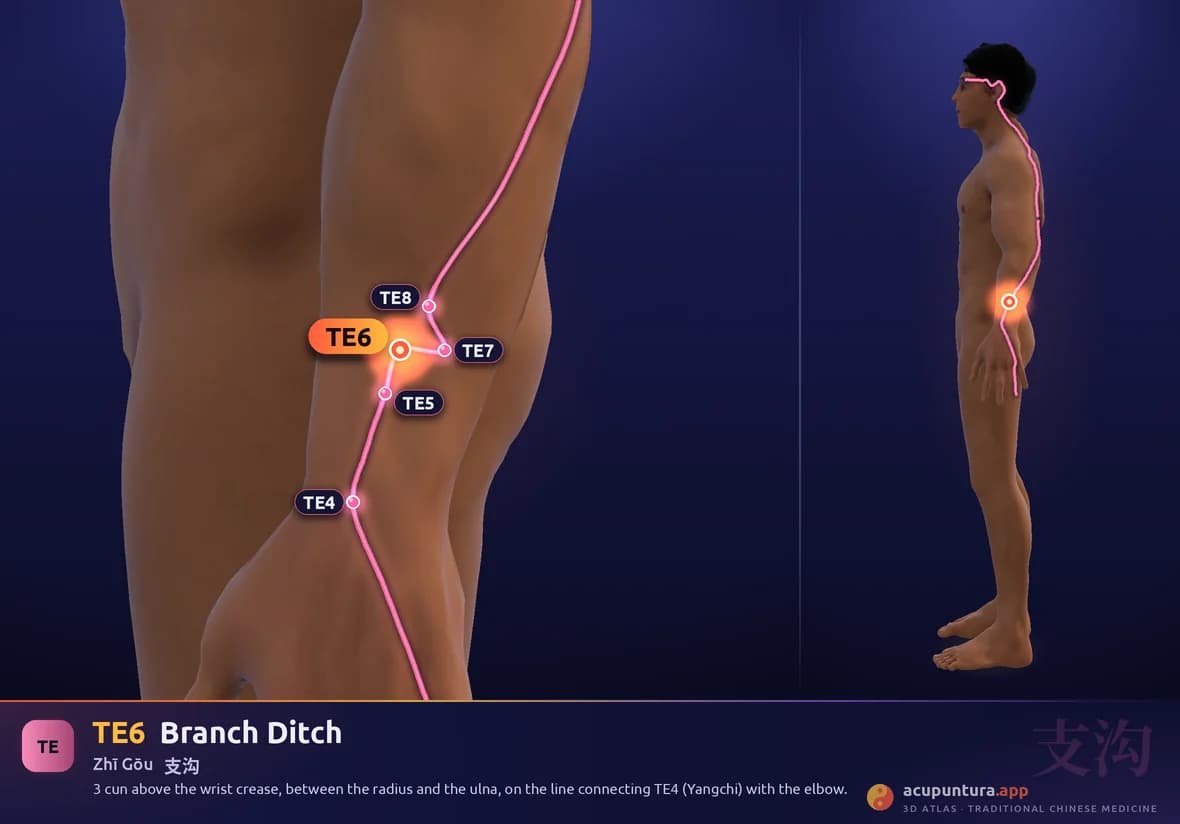
3 cun above the wrist crease, between the radius and the ulna, on the line connecting TE4 (Yangchi) with the elbow.
Main function
Jing-River point (Fire), sedation point, regulates Qi, benefits the intestines, relieves constipation.
- Jing-River point (Fire)
Therapeutic indications
- Constipation
- abdominal pain
- arm pain
- sore throat
- ear pain
- deafness
- headache
- Rib-side pain
- Herpes zoster
- Sudden aphonia
- Vomiting
- Shoulder and arm pain
- Scrofula
- Fever
- Herpes zoster and postherpetic neuralgia
Name and classical tradition
Zhigou, 支沟, is the «branching ditch». 支 is the branch, the fork; 沟 (溝), the ditch, the irrigation channel. The modern gloss explains that the channel's Qi spreads out here like water running through a ditch with branches. The point is on the back of the forearm, between the radius and the ulna.
The Lingshu (Spiritual Pivot), in the Ben Shu chapter (本輸), places it «上腕三寸,兩骨之間陷者中也», three cun above the wrist, in the depression between the two bones. It is the Jing-River point (經穴) of the channel, which in the yang channels corresponds to Fire. In clinical practice it has been a widely used point for constipation and pain in the side of the body.
The repertories give it two alternative names, 飛虎, «flying tiger», and 飛處. The gloss on the first relates the tiger to Wind, following the correspondences of the earthly branches, but neither the alias nor its explanation has been located in an ancient work.