Traditional Chinese Medicine channel
Large Intestine Channel
手阳明大肠经Metal05:00 - 07:0020 pointsLI1 → LI20
Description
The Large Intestine channel governs the elimination of waste and the capacity to let go of what no longer serves, both physically and emotionally. It is responsible for the excretion of waste and the absorption of fluids. Imbalances can show up as constipation, diarrhea, skin problems, arm and shoulder pain, and difficulty letting go of old patterns. It is essential for maintaining discernment and setting healthy boundaries in life.
Main functions
- Governs the elimination of waste
- Regulates fluids
- Strengthens Wei Qi (Defensive Qi)
Pathway
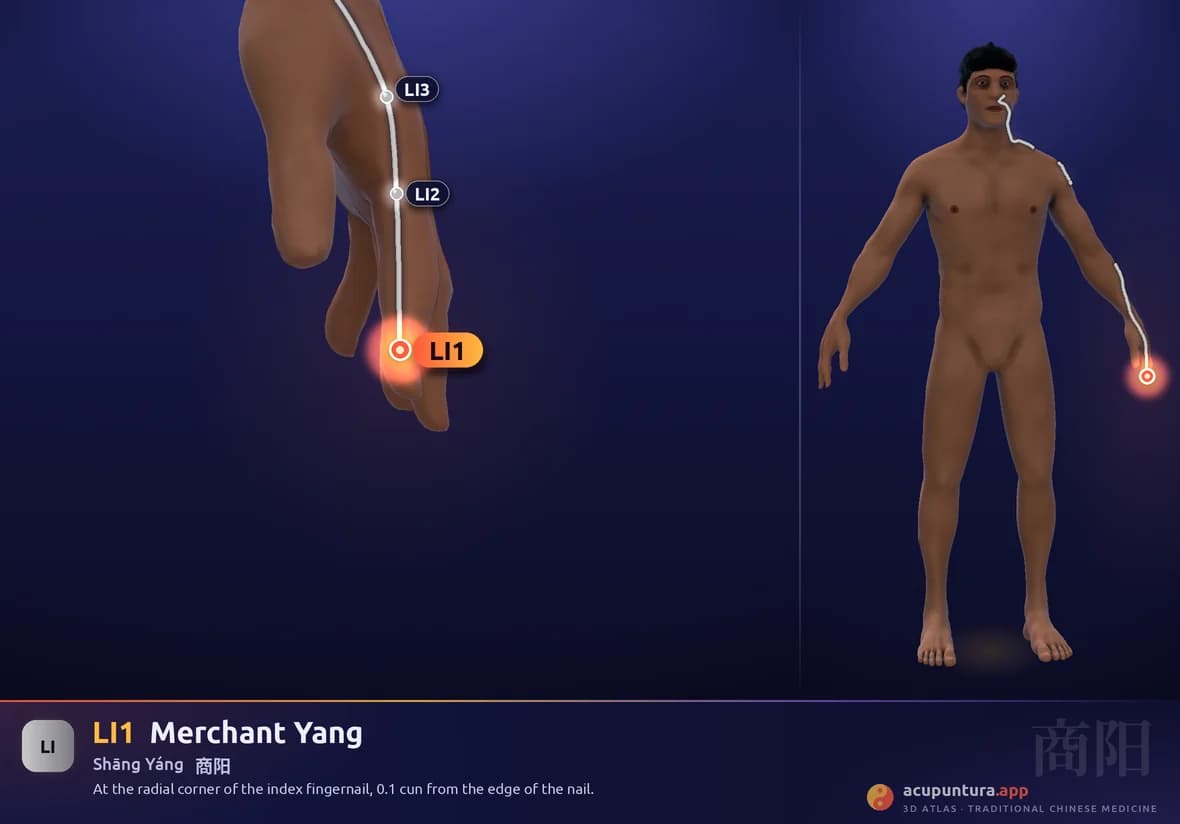
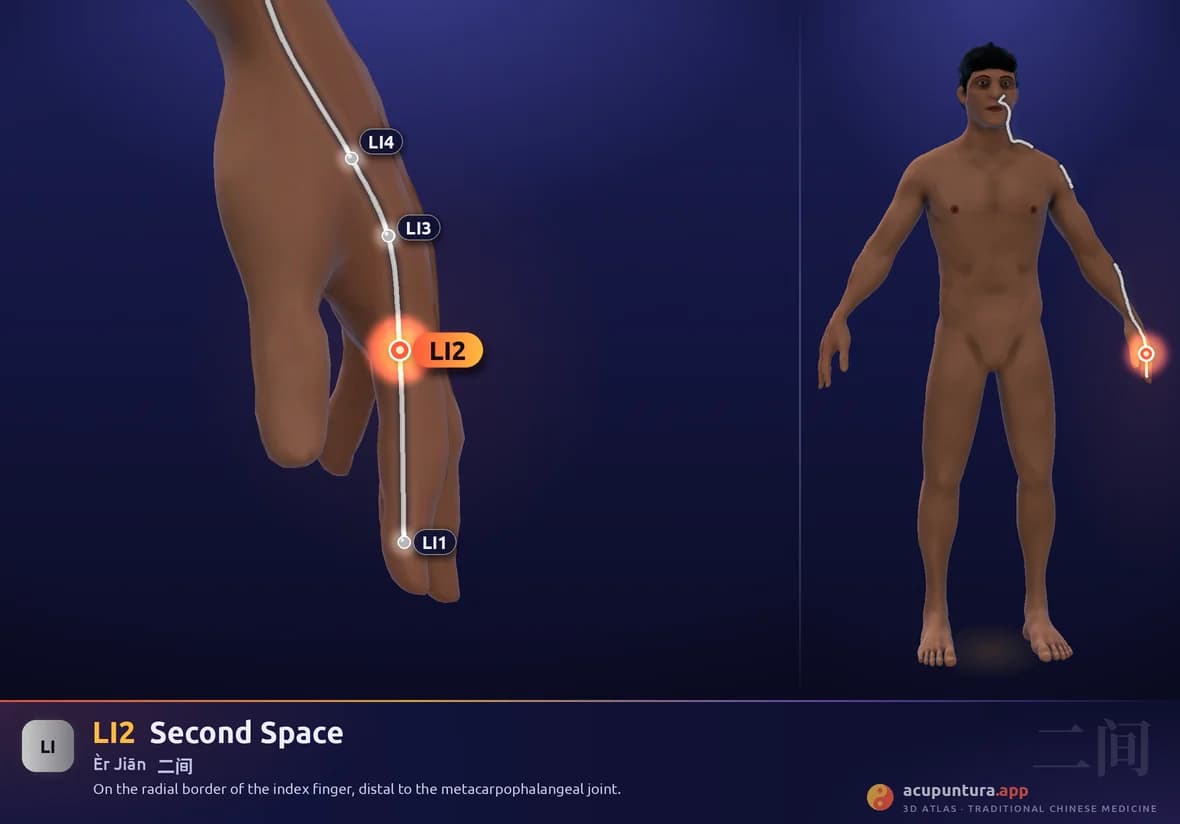
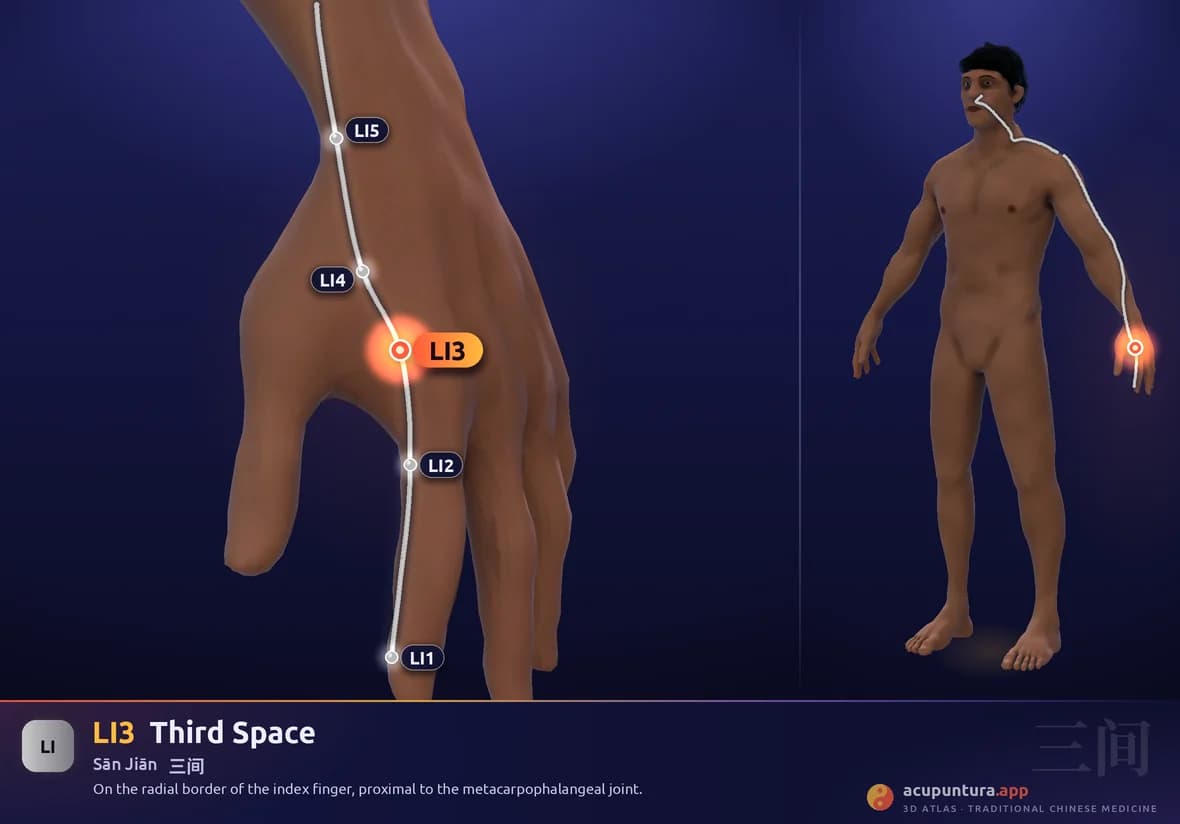
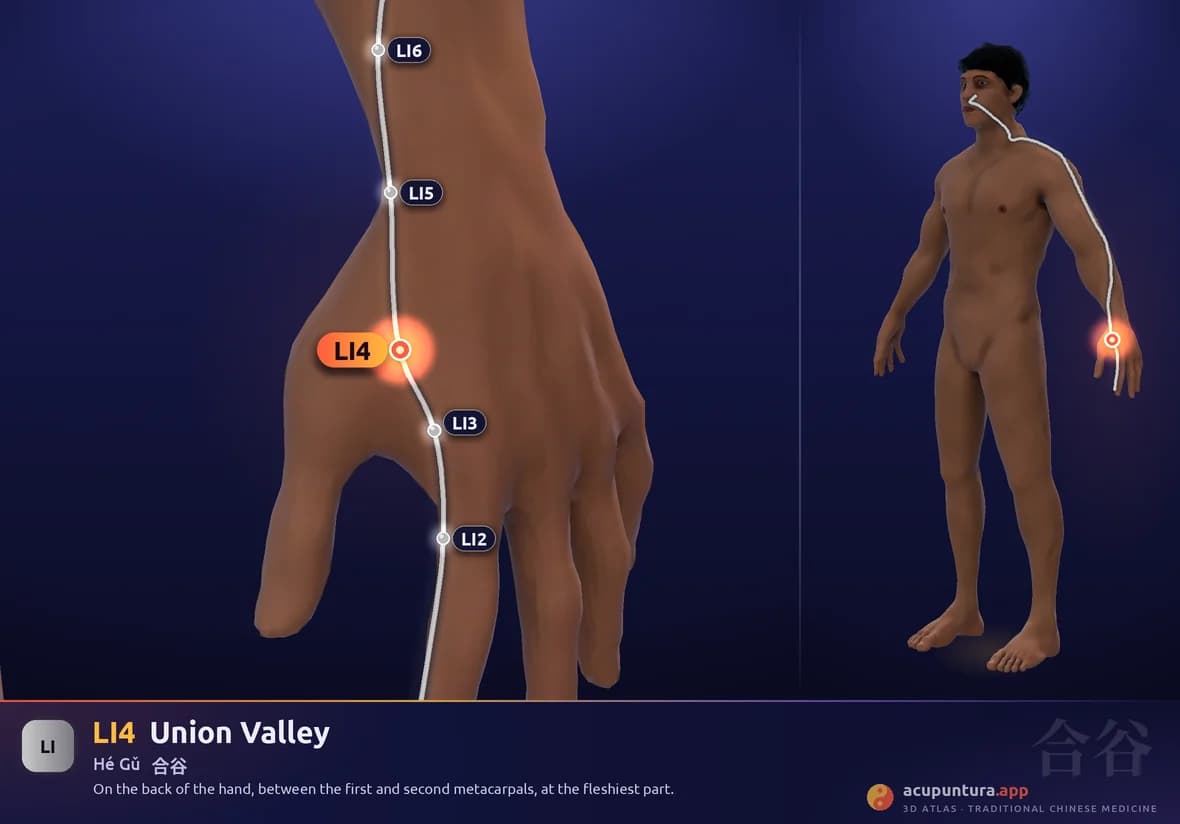
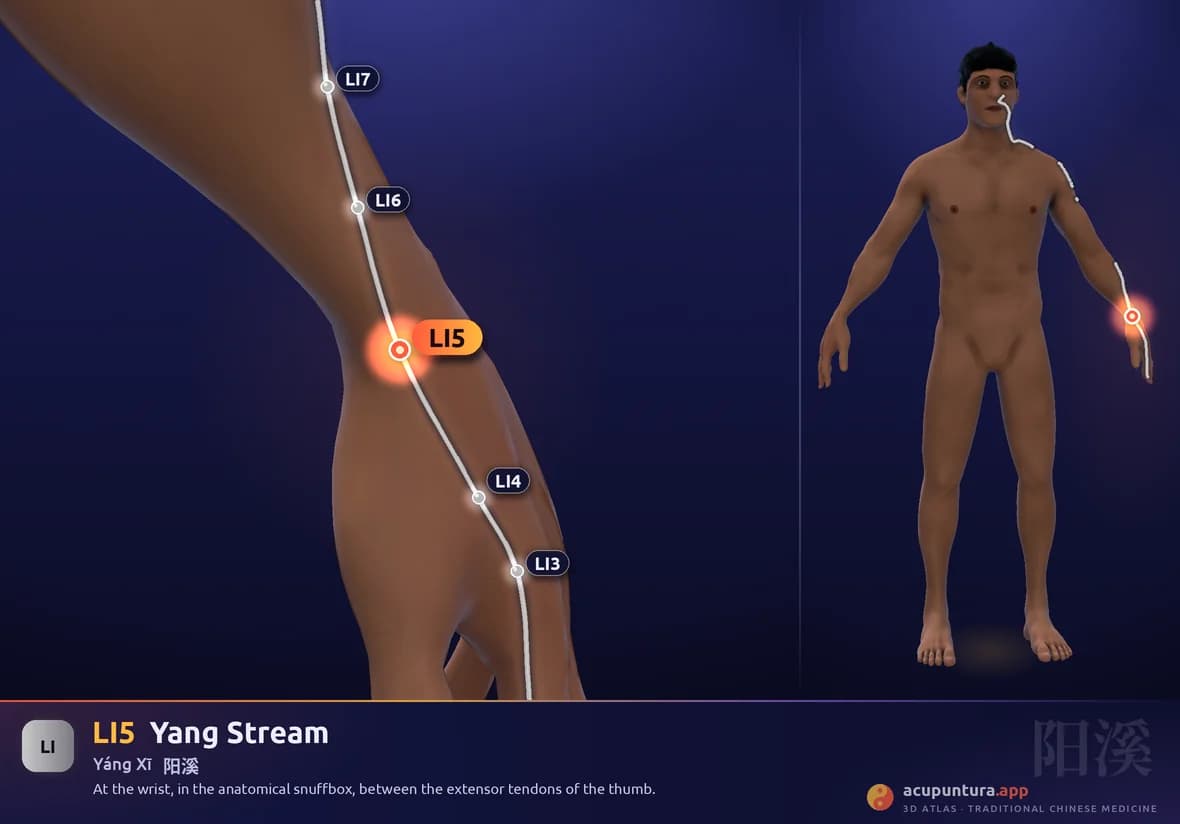
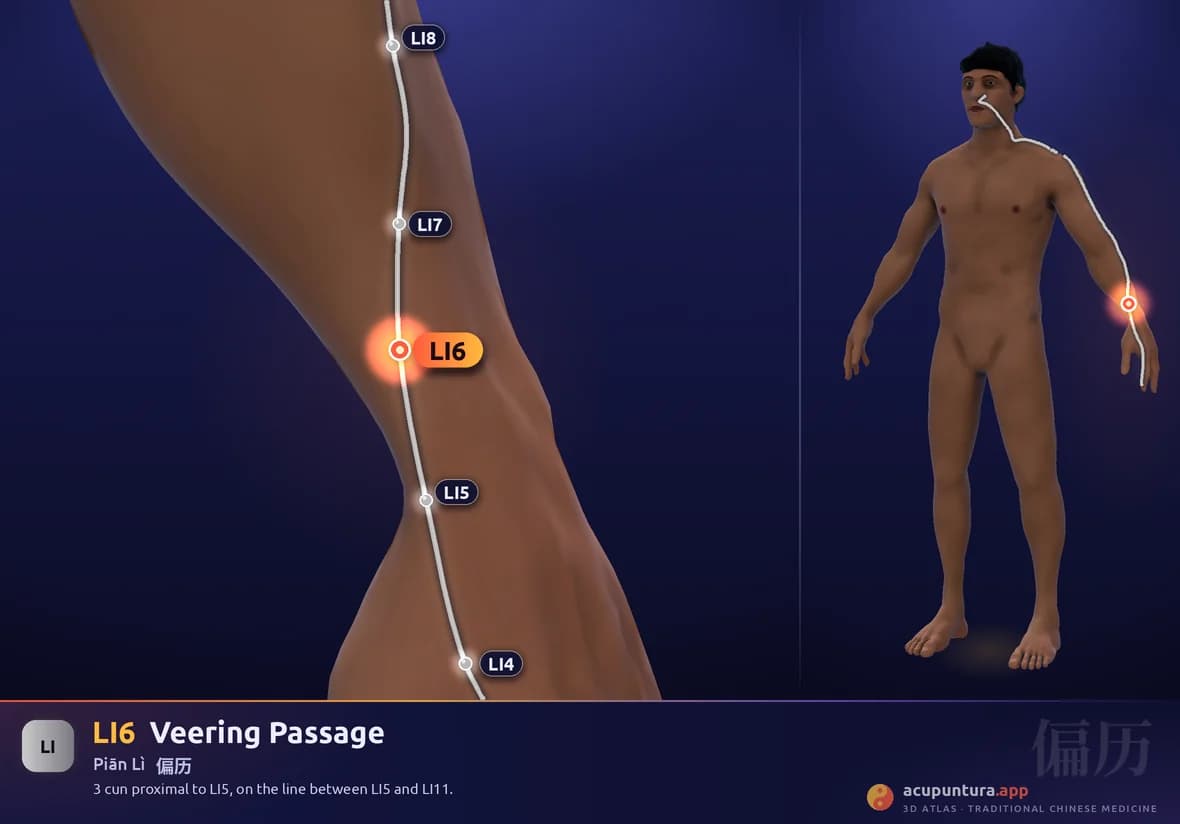
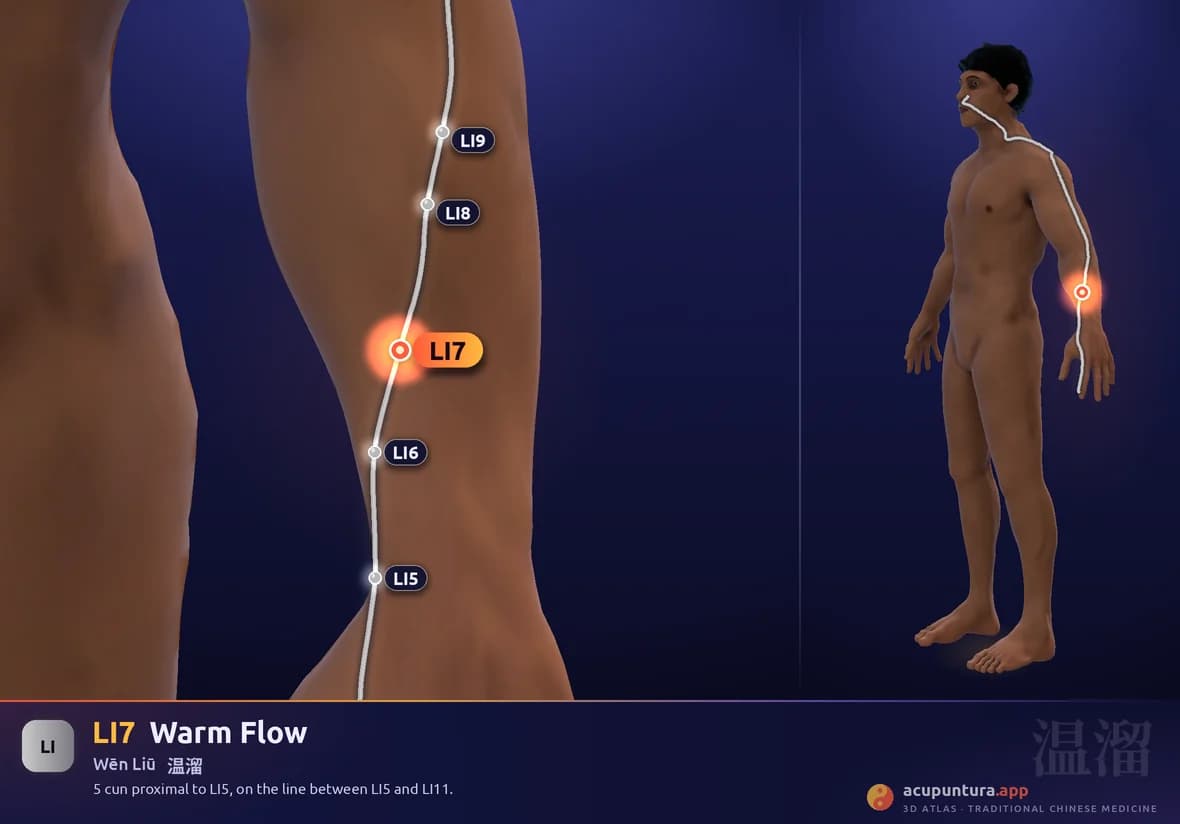
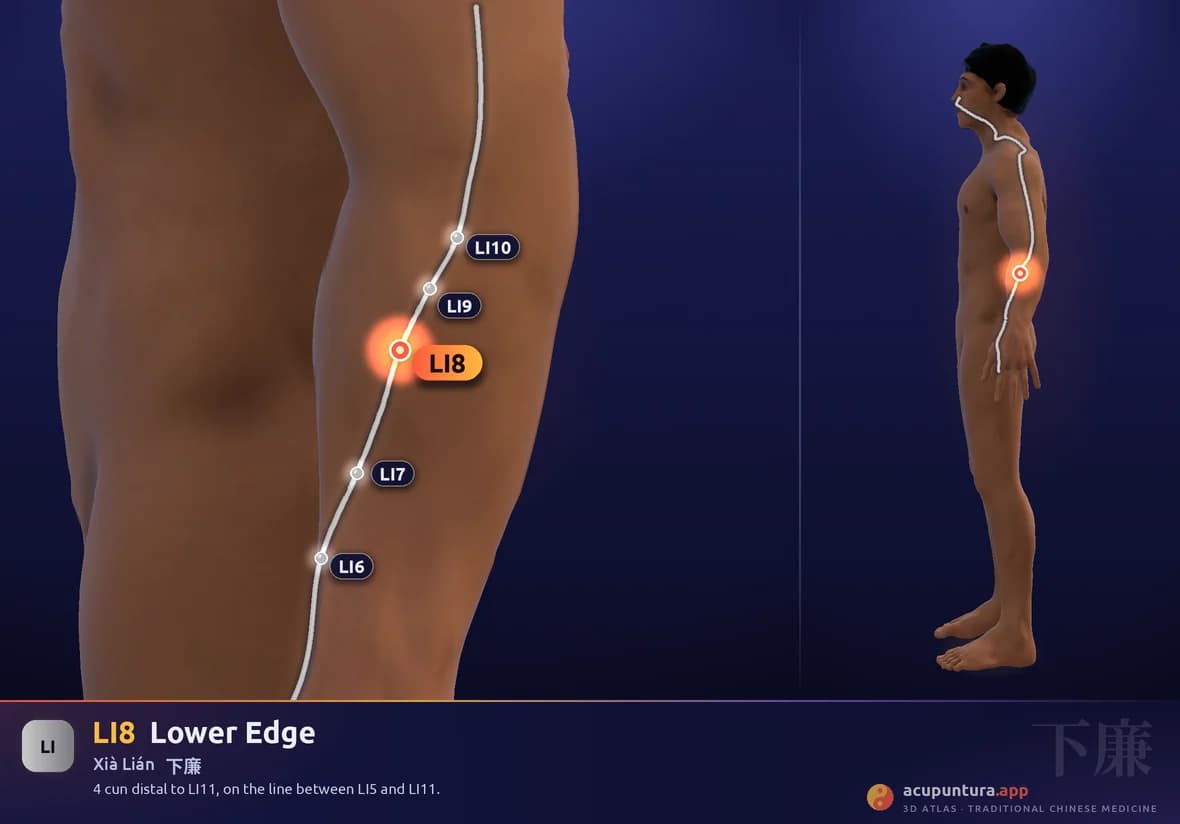
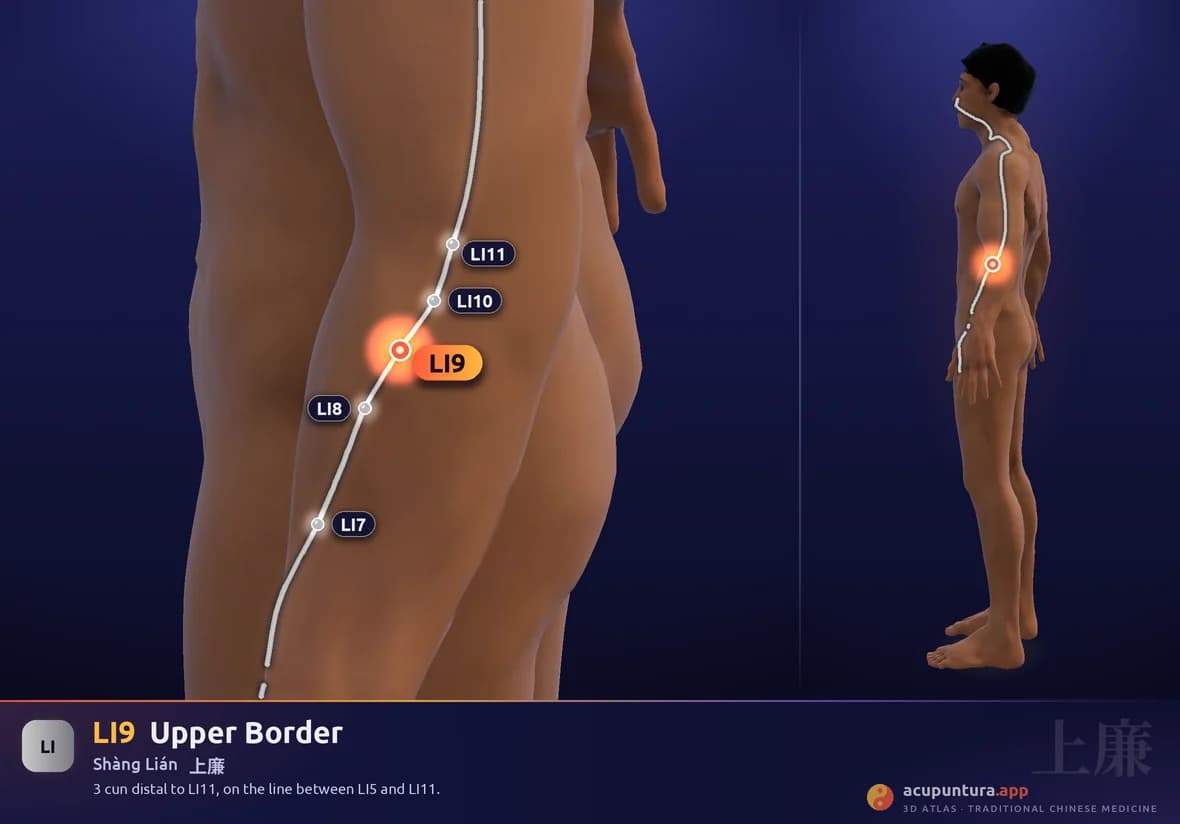
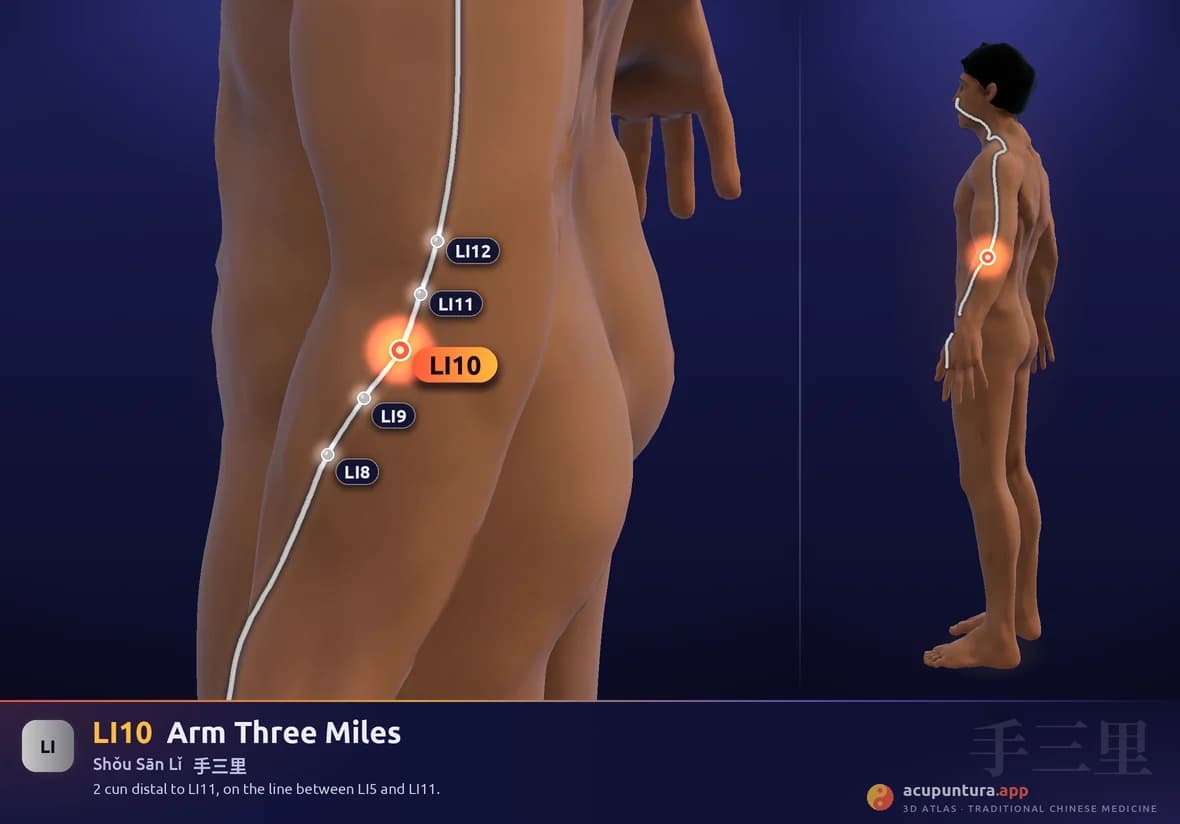
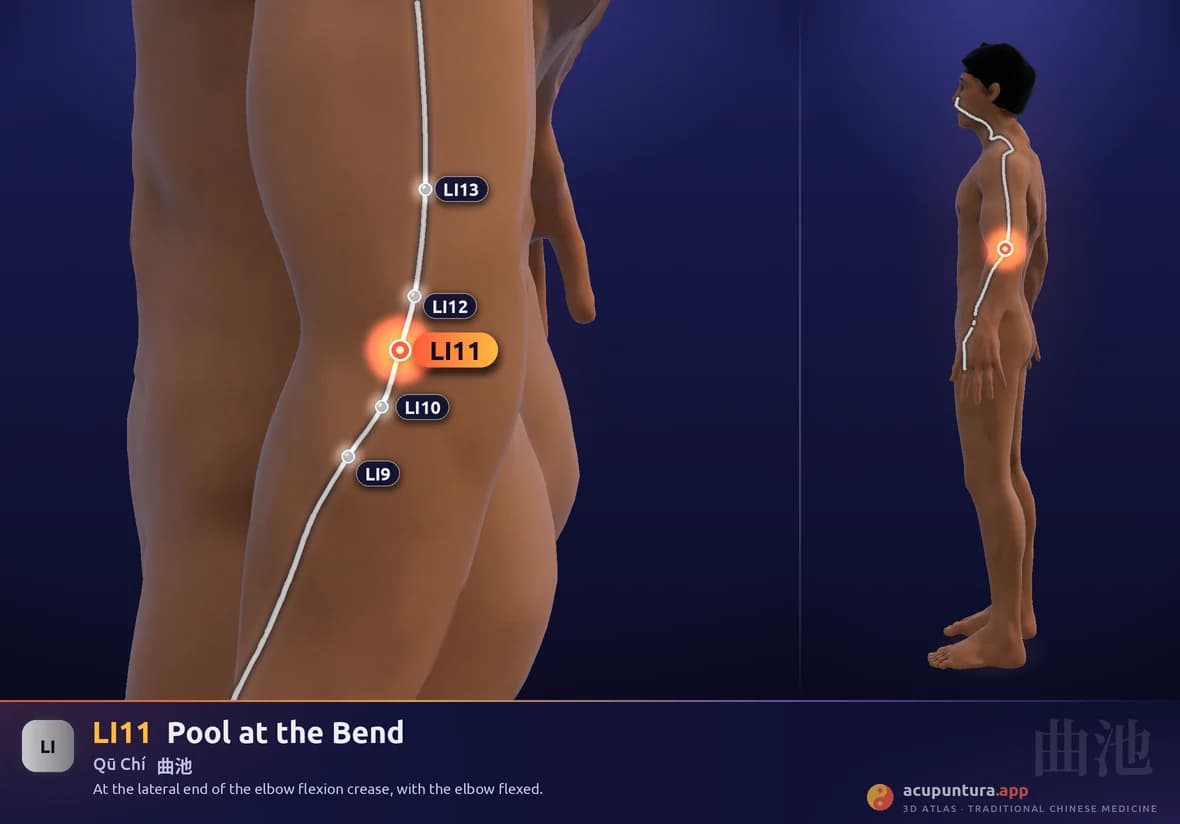
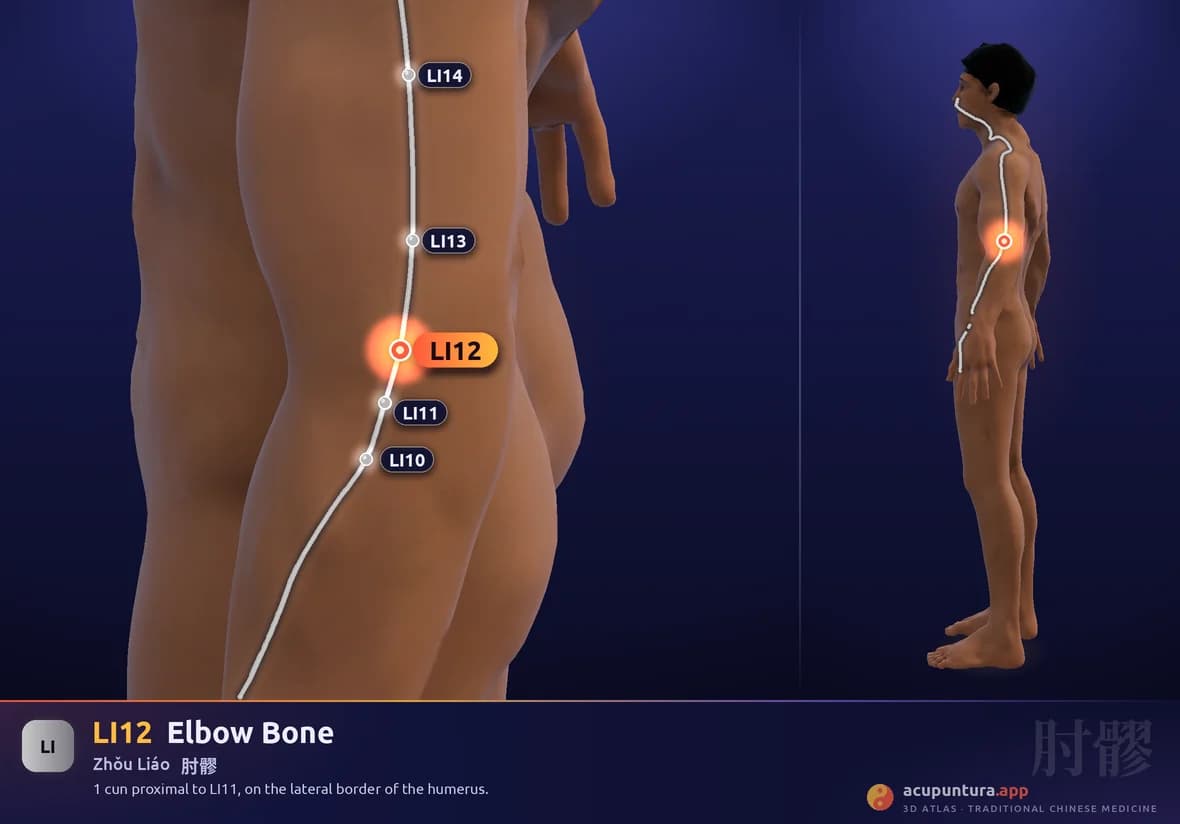
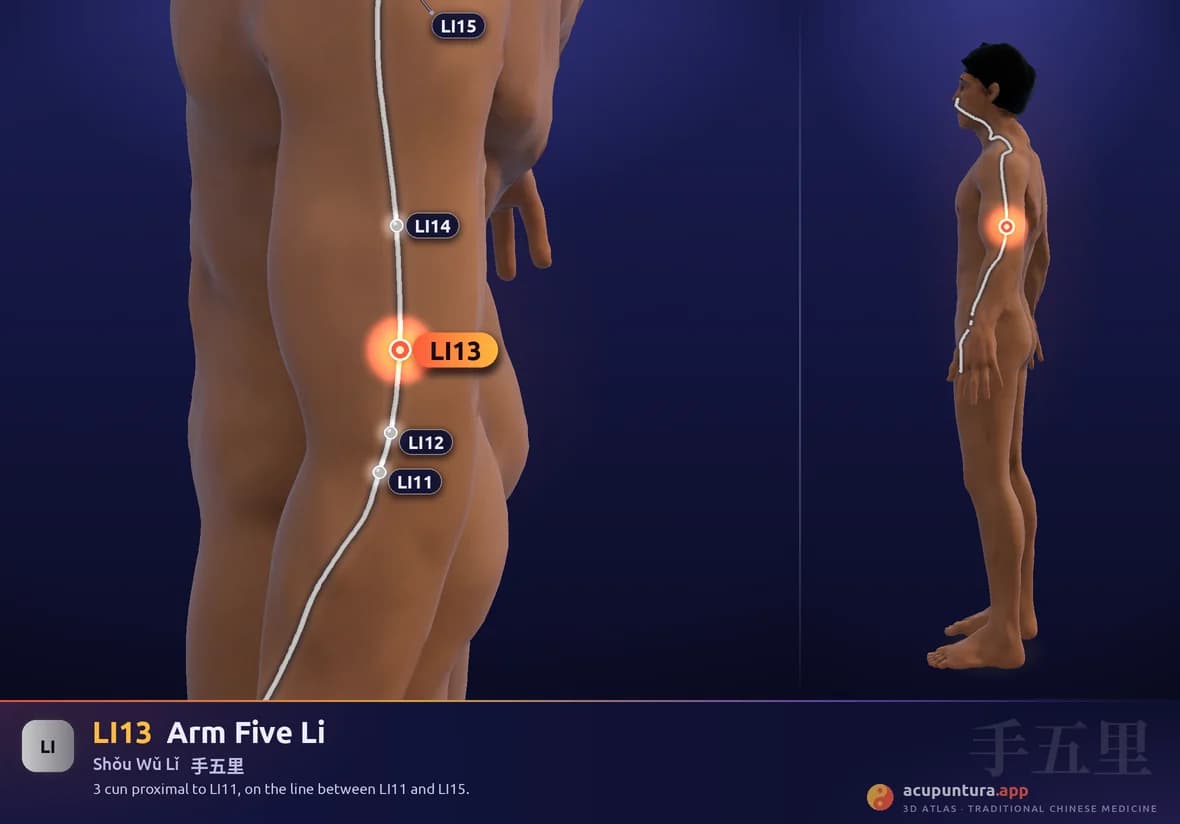
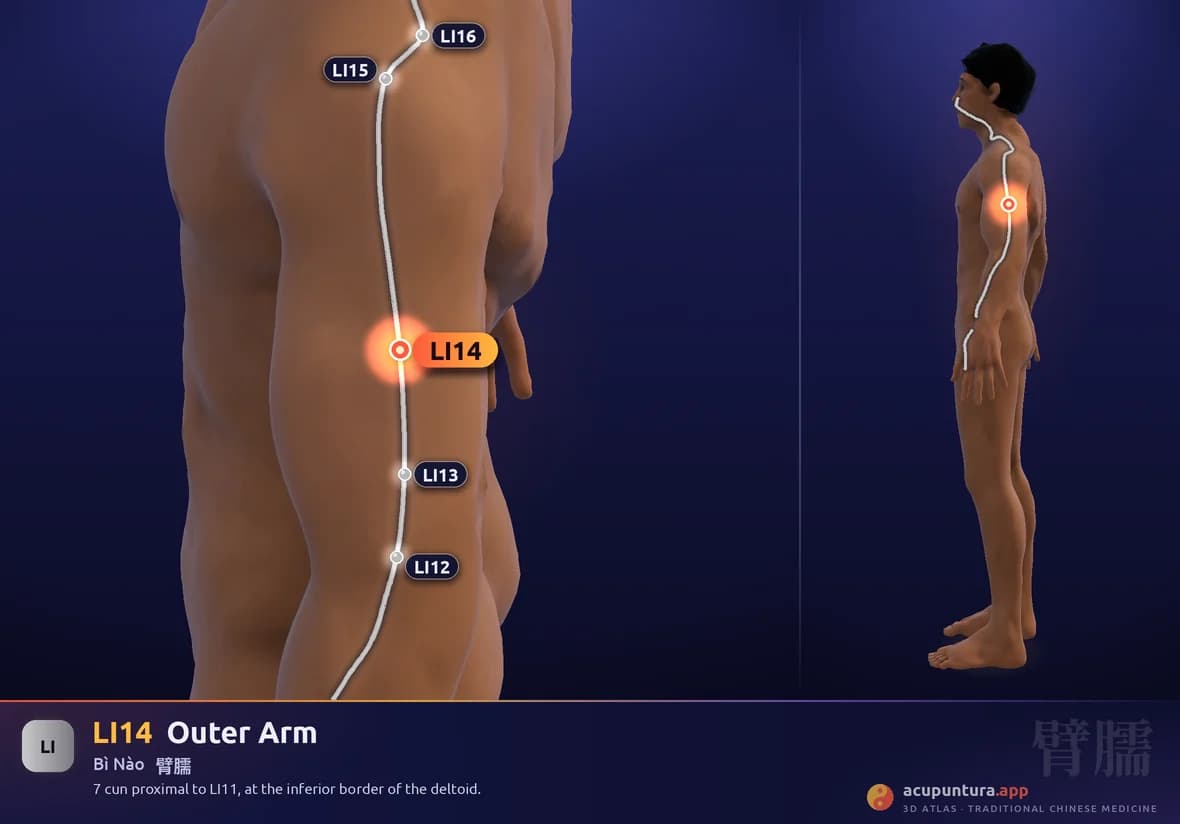
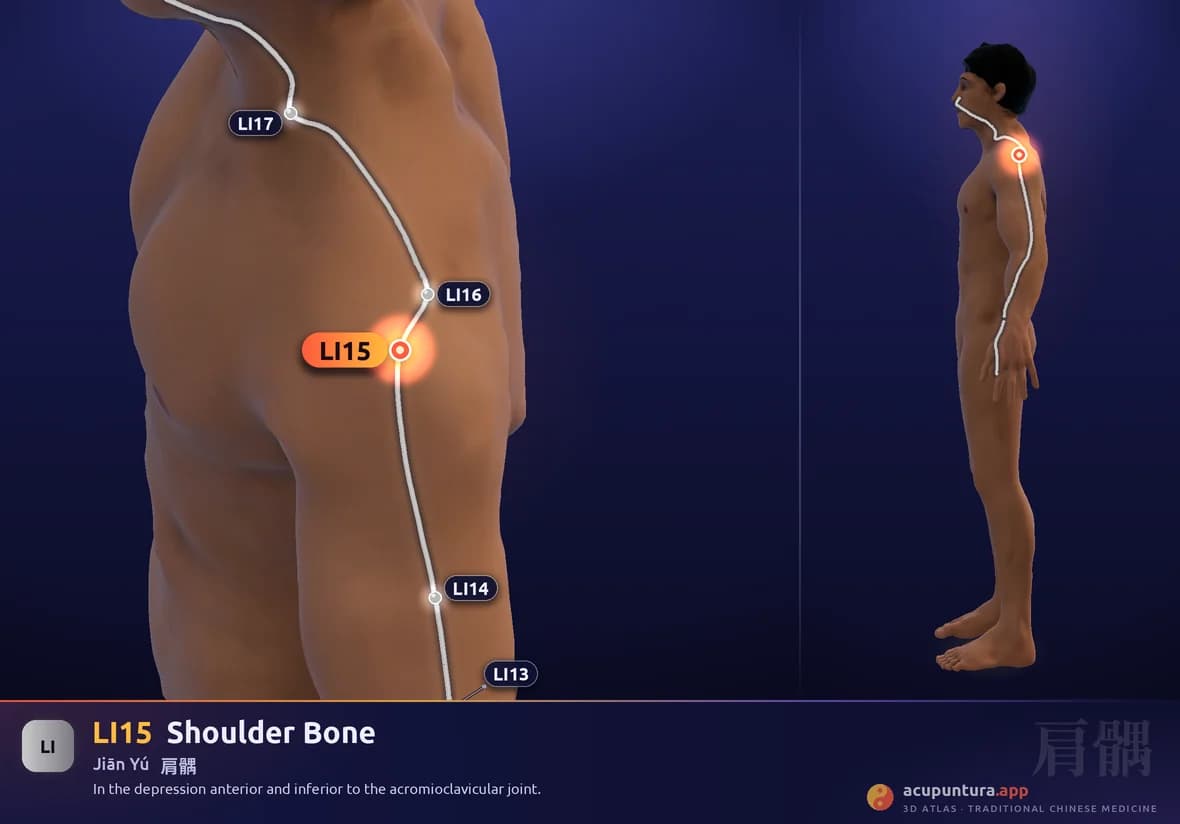
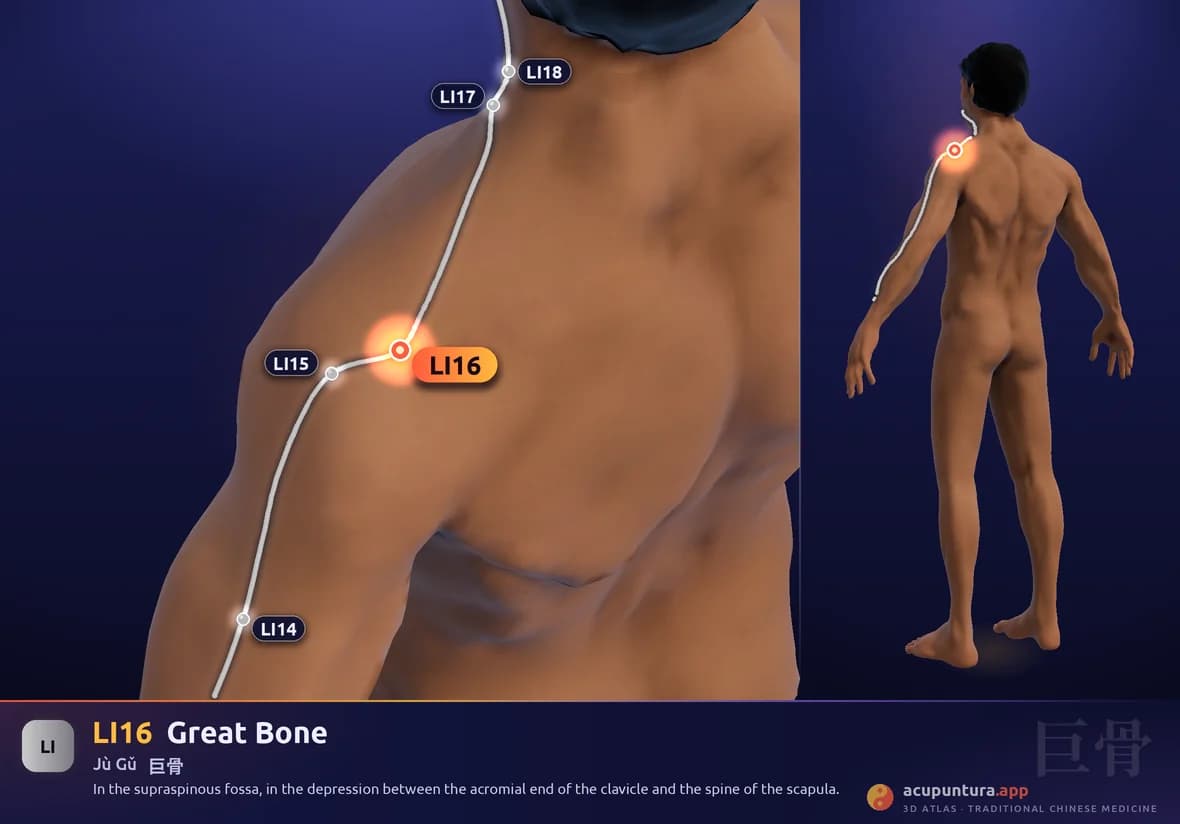
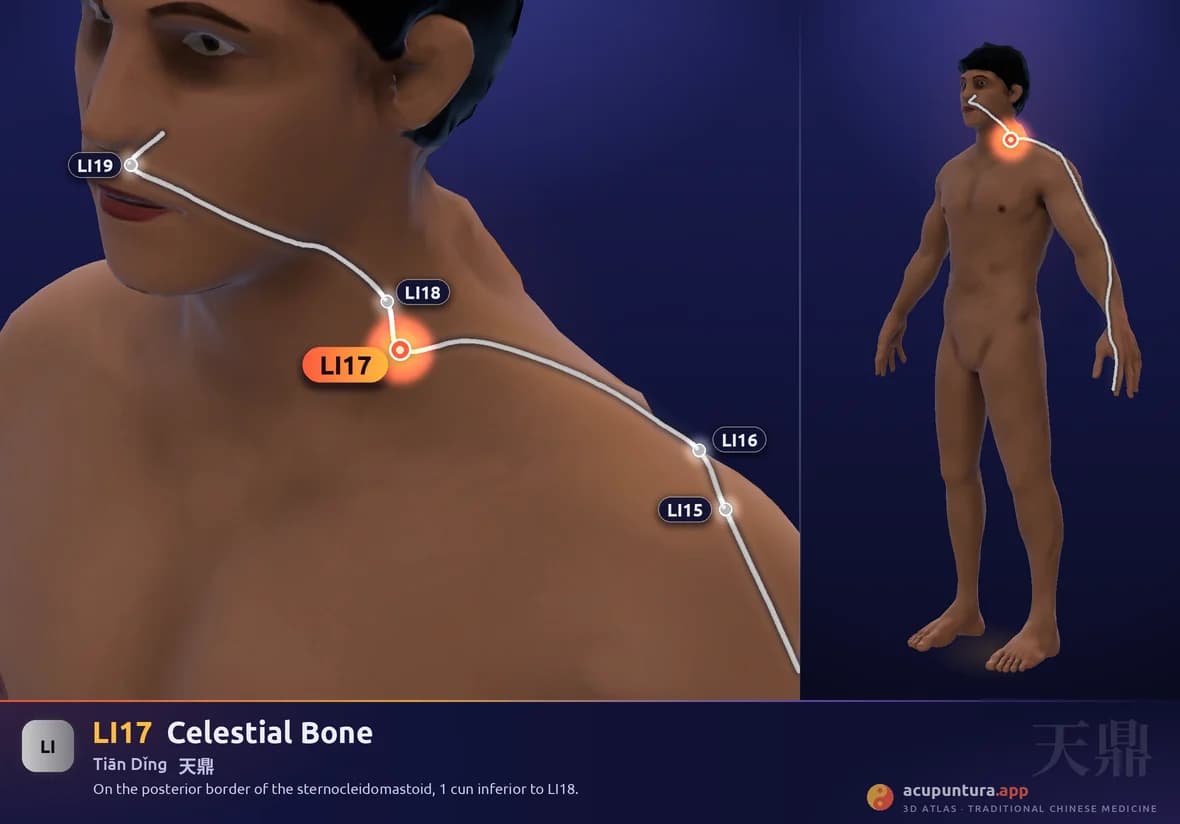
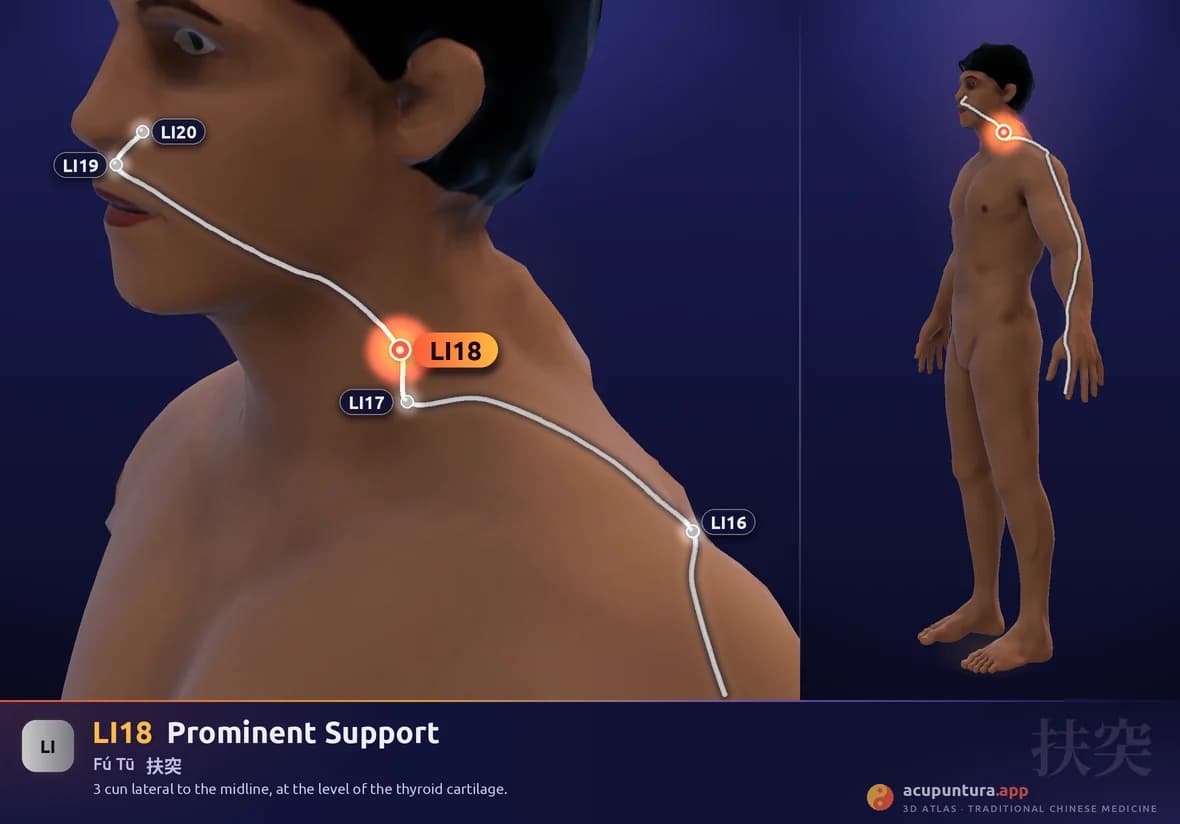
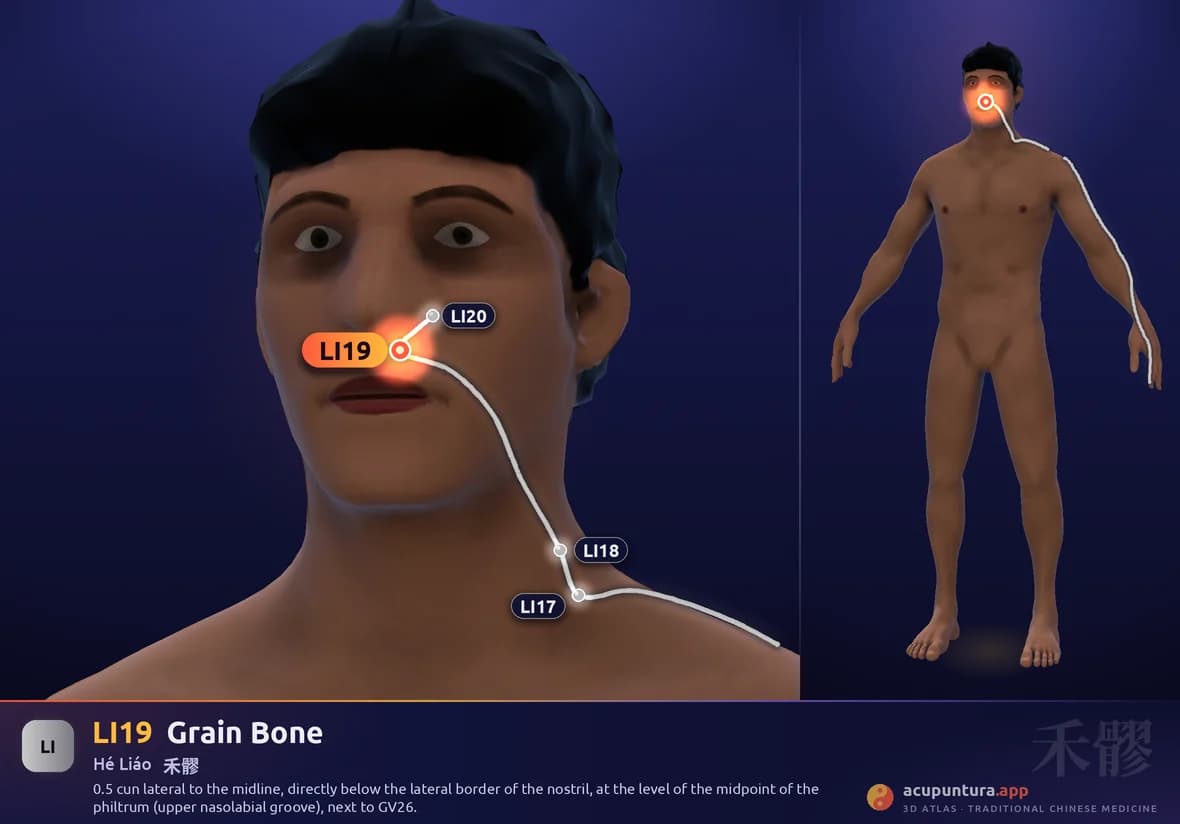
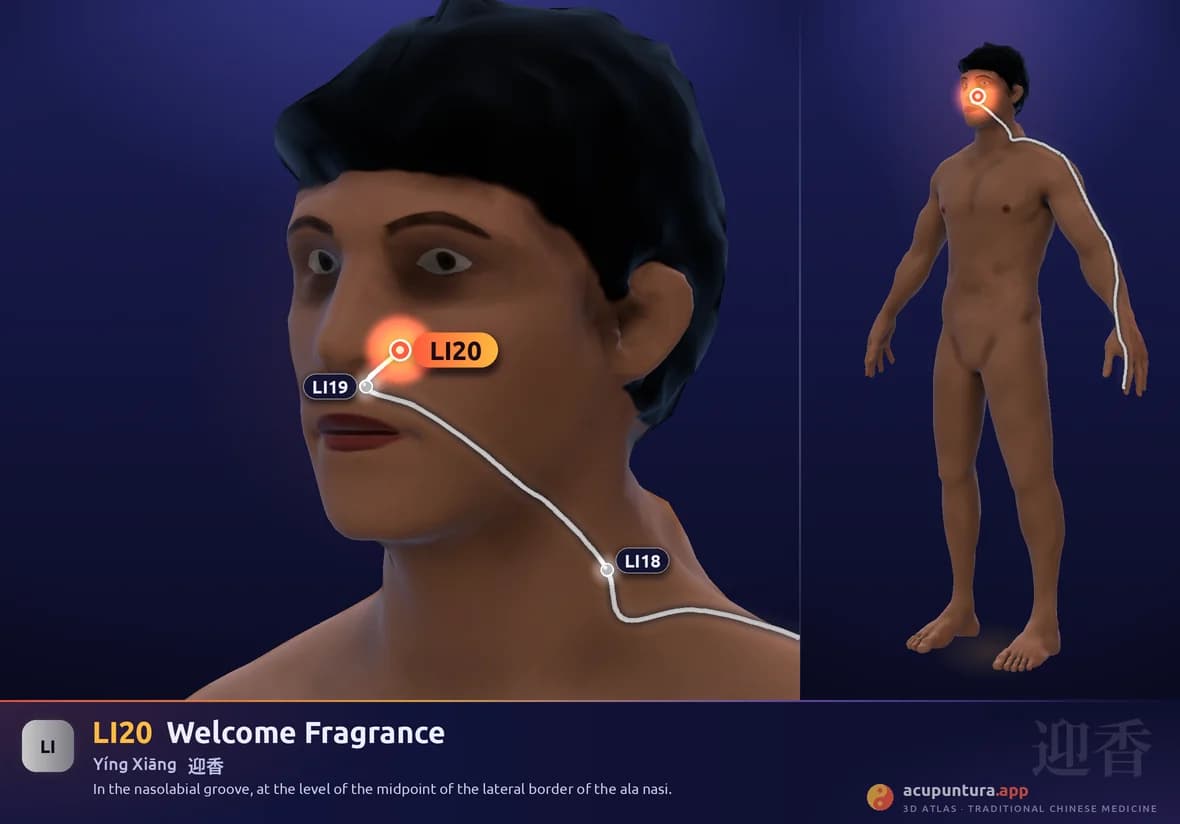
It begins at the radial corner of the index fingernail (LI1), ascends along the radial border of the hand, forearm, and arm, passes through the shoulder (LI15), rises to the neck, crosses the cheek, circles the upper lip, and ends at the nasolabial groove beside the wing of the nose (LI20).
The channel in the Lingshu
«大腸手陽明之脈,起於大指次指之端». The Large Intestine channel, the hand Yangming, begins where the Lung channel ended, at the tip of the index finger, at LI1. The Lingshu (Spiritual Pivot) takes it up the outer edge of the arm, «出合谷兩骨之間», between the two bones of Hegu, LI4, to the shoulder, and from the supraclavicular fossa makes it descend inward, to connect with the Lung and belong to the Large Intestine.
The neck branch explains its traditional territory. It rises through the cheek, enters the lower teeth, circles the mouth and does something unique among the channels: «交人中,左之右,右之左», it crosses below the nose, so that the left channel ends on the right and the right on the left, beside the nasal ala, at LI20. That is why its "是動" disorders are of the teeth and the neck: «齒痛,頸腫». Those that the chapter attributes to its own domain, that of the fluids (是主津液所生病者), include yellow eyes, dry mouth, nosebleeds and a blocked throat.
Its branch is «手陽明之別,名曰偏歷», Pianli, LI6, three cun from the wrist, which separates off toward the Taiyin. In the order of the circulation of qi, this channel receives it from the Lung and delivers it to the face: «上行注足陽明», it rises and pours into the foot Yangming.