Living with psoriasis or eczema means a lot more than carrying a few creams in your bag. These skin conditions tend to come back again and again, get worse with stress, cold, or certain foods, and affect self-esteem, sleep, and quality of life. If you're looking for a complementary approach that looks beyond the surface of the skin, Traditional Chinese Medicine (TCM) can offer a different and very interesting perspective. In this article we explain, in plain language and without miracle promises, how Chinese medicine understands these conditions, what the approach looks like in the treatment room, and what to expect if you decide to try it.
What are psoriasis and eczema?
Although they are different conditions, psoriasis and eczema (also called atopic dermatitis) share several traits that make them especially frustrating:
They tend to be chronic. They show up in flare-ups: there are times when the skin is almost fine and others when it gets worse for no apparent reason.
Itching is one of the main complaints, especially in eczema, and scratching makes the lesions worse.
Stress triggers or worsens them very clearly. Many people say a flare-up coincides with a period of nerves, worries, or major life changes.
Climate matters. Cold and dry air tend to aggravate both conditions, while moderate sun tends to improve them.
Conventional medicine has no definitive cure for them, although there are very effective treatments for keeping symptoms under control.
Psoriasis is characterized by patches of reddened skin covered with whitish scales, usually appearing on the elbows, knees, scalp, and lower back. Eczema, for its part, causes redness, dryness, cracking, and intense itching, often in skin folds such as the inside of the elbows and knees, and it frequently begins in childhood.
The Traditional Chinese Medicine View: Skin as a Mirror of What's Inside
The central idea in Traditional Chinese Medicine is that the skin is not an isolated organ but the visible reflection of what is happening inside the body. From this perspective, psoriasis or eczema flare-ups are not purely a "skin problem" but the outward expression of an internal imbalance that needs to be understood and supported.
Two concepts come up most often when these conditions are approached in a Chinese medicine practice, and it helps to know them because they explain the logic of the treatment:
Internal Heat and Dryness
In the language of Chinese medicine, many skin conditions with redness, itching, and flaking are interpreted as a buildup of "Heat" in the body. This Heat can take different forms: a more damp Heat, associated with lesions that ooze or stay moist, or a dry Heat, associated with very dry, scaly, cracked skin. Wind, in traditional terminology, is added to this picture to explain the itch, which "moves" and shifts from place to place, just like the wind.
Blood and Overall Balance
The other great pillar of traditional reasoning is the state of the Blood. In Chinese medicine, Blood doesn't just carry oxygen and nutrients: it nourishes, moistens, and calms. When the Blood is "deficient" or "dry," the skin loses its natural moisture and becomes rough, cracked, and itchy. That is why, for many people with dry-type psoriasis or eczema, the traditional approach focuses on nourishing and moistening from within, not just on calming the surface.
The Emotional Factor: Skin That Speaks
Perhaps one of the most valued contributions of Traditional Chinese Medicine in this field is its attention to the emotional component. Since ancient times, the classical texts have linked the skin with the capacity to process emotions and established a connection between a person's inner state and the health of their body's surface.
Clinical experience agrees: stress, ongoing worry, frustration, or major life changes often come before flare-ups. That's why, in a Chinese medicine consultation, the questions aren't only about the skin. We ask about sleep, digestion, energy, emotions, and pace of life. This isn't idle curiosity: all of it is part of the picture that explains why the skin has suffered at that particular moment.
What Does Treatment Look Like in Chinese Medicine?
The usual approach combines several tools, and the practitioner adapts them to each person and each stage of the process. These are the most common:
Acupuncture. By inserting very fine needles at selected points, the aim is to restore internal balance, calm the itch, promote circulation, and help the body manage stress. Many people report a greater overall sense of calm from the first sessions, which is especially valuable when flare-ups are tied to anxiety. For Heat and itching, Quchi (LI11), Xuehai (SP10), the "Sea of Blood," and Geshu (BL17) are frequently used; in the atlas you'll find the points indicated for psoriasis.
Chinese herbal medicine. Customized herbal formulas are one of the most powerful tools in Chinese medicine for skin conditions. The practitioner adjusts the composition as each person progresses, and it is often a highly valued complement alongside the rest of the treatment.
Dietary advice. From the Chinese medicine perspective, certain foods can aggravate internal Heat or Dampness, while others help cool and moisten. Your practitioner will guide you on eating habits that may help, always tailored to you.
External care and lifestyle recommendations. Skin hygiene, type of clothing, itch control, stress management, sleep rhythm… all of these factors are addressed in the consultation as part of the plan.
Acupuncture Points for Atopic Dermatitis and Eczema
The points that come up most often are Quchi (LI11), at the end of the elbow crease, which the tradition uses to "clear Heat" from the skin; Xuehai (SP10), on the thigh above the knee, whose name means "Sea of Blood" and which is associated with itching; Sanyinjiao (SP6) and Zusanli (ST36) for the underlying foundation, and Hegu (LI4) on the hand. Needles are never inserted into skin with active lesions. In eczema, the most interesting line of research is about itching: a German group published a small trial in 2012 in which acupuncture reduced itch intensity in people with atopic dermatitis more than sham acupuncture did. At home, when the itch gets intense, pressing on Quchi for a minute or two is an alternative to scratching that works for some people.
What Results Can I Expect?
Here it's worth being honest and cautious, because your health deserves rigorous information. Traditional Chinese Medicine does not promise to cure psoriasis or eczema, which are conditions with a genetic and autoimmune component, and scientific research on them is still advancing. What it can offer, based on clinical experience and some preliminary studies, is complementary support aimed at:
Reducing the frequency and intensity of flare-ups in some people.
Calming itching and the feeling of tightness, improving everyday comfort.
Improving sleep quality and emotional well-being, factors that in turn influence how the skin does.
Reducing reliance on symptomatic treatments in certain cases, always in coordination with your dermatologist.
Results vary a great deal from person to person and depend on factors such as how long you've had the condition, your lifestyle habits, and how consistently you follow through. Improvements, when they happen, tend to be gradual.
Frequently asked questions
Does acupuncture hurt?
The needles are very fine, much finer than those used for injections. Most commonly, you feel a slight prick on insertion and then sensations of heaviness, warmth, or spreading relaxation in the area, which most people describe as pleasant.
Can I continue my medical treatment?
Yes, and that's what we recommend. Traditional Chinese Medicine is a complement, not a substitute. If you're following a dermatological treatment, don't stop it on your own, and share all relevant information with both your doctor and your acupuncturist.
How many sessions are needed?
Skin conditions tend to progress slowly, so the practitioner usually proposes a plan of several weeks or months, with periodic reviews. It's typical to start with weekly sessions that are gradually spaced out as the person improves.
Is acupuncture safe for sensitive skin?
Acupuncture is performed with disposable needles and strict hygiene protocols. In people with active skin lesions, the practitioner will carefully choose the areas to treat so as not to needle directly over the plaques.
Skin Care in Daily Life
Regardless of the treatment you follow, these habits help take care of skin with psoriasis or eczema:
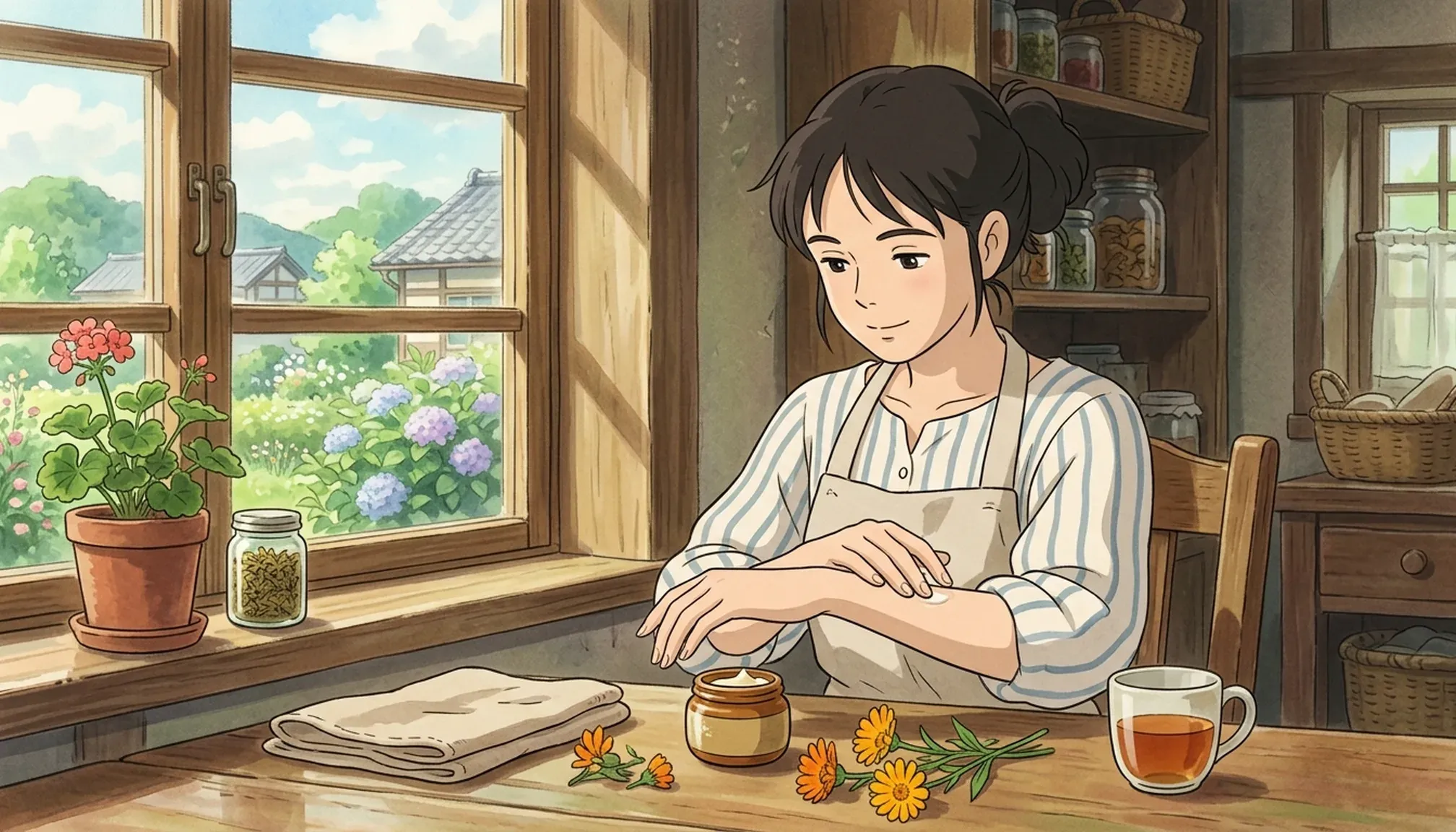
Moisturize your skin daily, preferably after showering and with fragrance-free, non-irritating creams.
Avoid very hot water and long showers, which dry out the skin.
Don't scratch, however intense the itch; try a cold compress, emollient creams, or the technique of pressing gently instead of scratching.
Manage stress with walks, breathing exercises, real breaks during the day, or whatever technique works best for you.
Notice your triggers (foods, cosmetic products, synthetic fabrics, weather) and write them down: knowing them gives you power over flare-ups.
In Summary
Psoriasis and eczema are complex, chronic conditions that deserve a comprehensive approach: baseline medical treatment, daily skin care, stress management, and, if you're interested, the support of Traditional Chinese Medicine. Its greatest value lies in looking at the whole person and not just the lesion, working on the internal balance that, from its perspective, shows up on the surface of the skin. If you decide to try it, always look for a qualified practitioner and keep your dermatologist in the loop, and think of it as a path of several weeks, not an instant fix. Your skin, like the rest of you, deserves that care.