Maybe you've heard acupuncture described as something that "works for everything" and you wonder whether that's true. Or maybe a doctor or a family member has recommended it and you don't know where to start. The underlying question is a simple one: what is acupuncture used for, what exactly happens during a visit, and what can you realistically expect from it? The short answer is that it's used mainly as a complement to support common complaints, such as pain, stress, or sleep problems, and not as a substitute for medical care.
In this article we explain what acupuncture is and how a session unfolds, the most common reasons people seek it out, which of its benefits have research behind them and which don't, who should be especially cautious, and how to take a first step safely. Think of it as a front door: if a specific condition interests you, you'll find more detailed information on each one afterward.
What is acupuncture and where does it come from?
Acupuncture is one of the tools of Traditional Chinese Medicine (TCM), a medical system with many centuries of history. It involves stimulating specific points on the body, almost always by inserting very fine, single-use needles, with the aim of supporting the body's own regulation and easing discomfort.
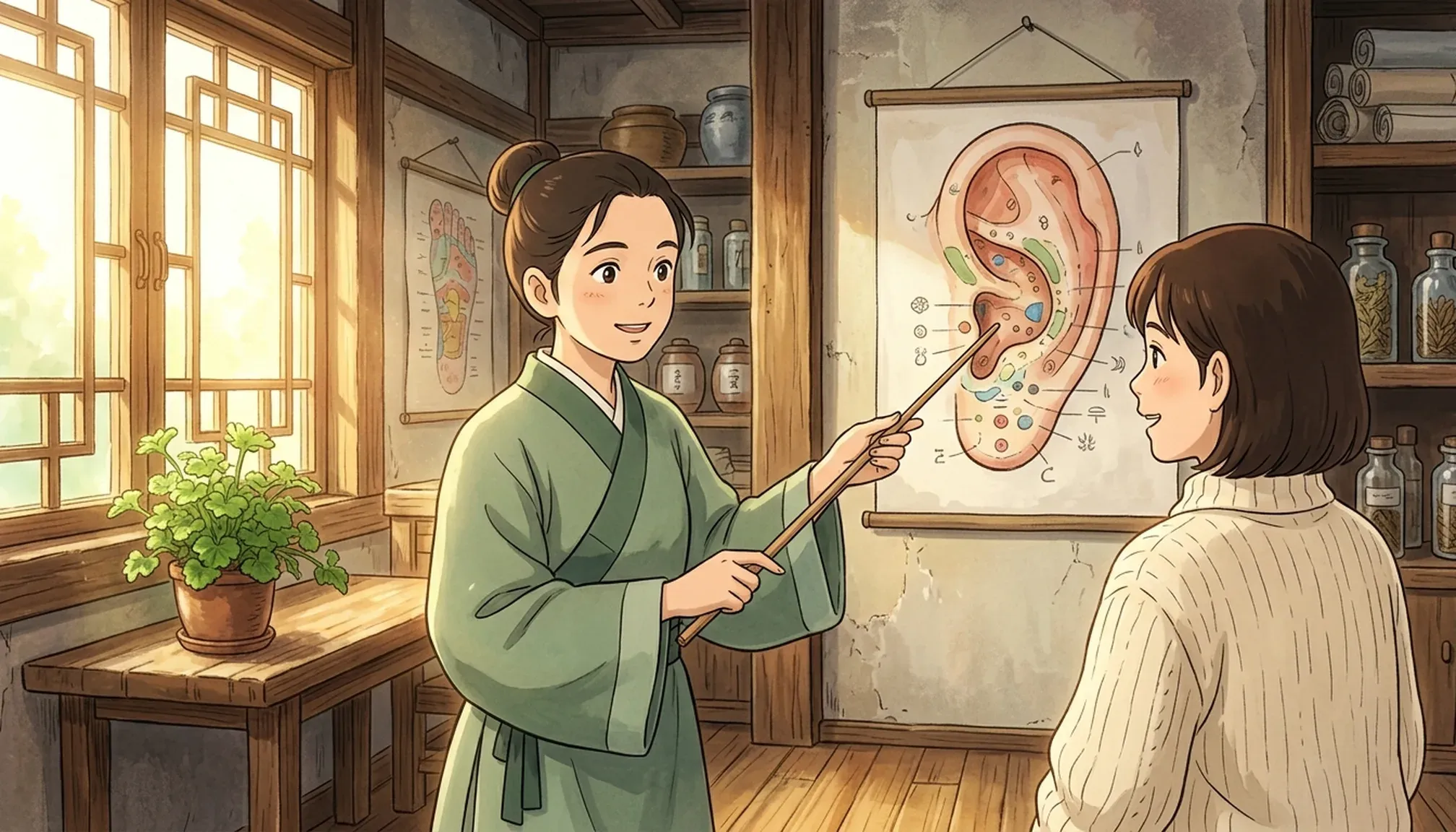
To understand how TCM approaches it, a few basic ideas help. According to this tradition, Qi, the body's vital energy, circulates through a network of pathways called channels (meridians). When Qi flows freely and there is balance between Yin (what cools, nourishes, and calms) and Yang (what warms, activates, and moves), a person feels well. If the flow becomes blocked, weakened, or disordered, symptoms appear: pain, fatigue, poor sleep, or heavy digestion. Acupuncture points are places along those pathways where it's possible to intervene.
It's important to stress that this is the way Chinese medicine understands the body, not a Western anatomical description. That's why two languages coexist: the language of the tradition, which speaks of Qi, Dampness, Heat, or Wind, and the language of modern research, which studies what happens in the nervous system or in pain perception when those areas are stimulated. Much remains to be clarified about how it works, and it's best to say so plainly.
What acupuncture does in the body and what it's really used for
Knowing what acupuncture is isn't enough to understand what it's used for: you also need to know what each needle is meant to do. Here too two perspectives coexist, and it's worth looking at them separately so that what the tradition says doesn't get mixed up with what has actually been observed.
What it does according to Chinese medicine
From the TCM perspective, the acupuncturist doesn't insert needles to "remove" a symptom but to correct the imbalance that, according to their diagnosis, is causing it. In practice, needles are used with three main intentions:
Move what is stagnant, such as Qi and Blood that get stuck in a painful or tense area.
Tonify what is weak, for example when there is underlying fatigue, sluggish digestion, or low mood.
Calm and settle, when agitation, poor sleep, or a racing mind predominate. A classic point for this is Baihui (GV20), at the top of the head, often combined with Shenmen (HT7).
That's why two people with the same headache can receive different points: one is interpreted as having an excess of tension that needs to be dispersed, the other as having depletion that needs to be nourished. A point such as Hegu (LI4) is chosen to open and get things moving; Zusanli (ST36), to strengthen. The choice depends on the whole picture, not just the symptom.
What current research observes
Modern research doesn't speak of Qi, but it does study what happens when a fine needle is inserted into the skin and muscle. We know that the needle stimulates nerves and tissues, and researchers are investigating how this may influence the way the nervous system processes pain, local muscle tension, and the body's relaxation response. These are reasonable hypotheses with partial support, not a settled explanation, and the calm of the session, the attentive listening, and each person's expectations add to the picture.
What acupuncture is used for, and what it isn't
Putting both perspectives together, the honest answer is that acupuncture is used to support relief of symptoms and improve a sense of well-being, especially when the problem has a component of pain, tension, or stress. It is not a substitute for a diagnosis, and it should not be used on its own to treat an infection, a tumor, or an illness that requires medication. Nor does it make sense to think of it as something that "works for everything": there are uses where it's worth a try and others where it's better not to set your hopes high.
What does acupuncture involve? What a session is like
If you're wondering what acupuncture involves in practice, here is a typical session:
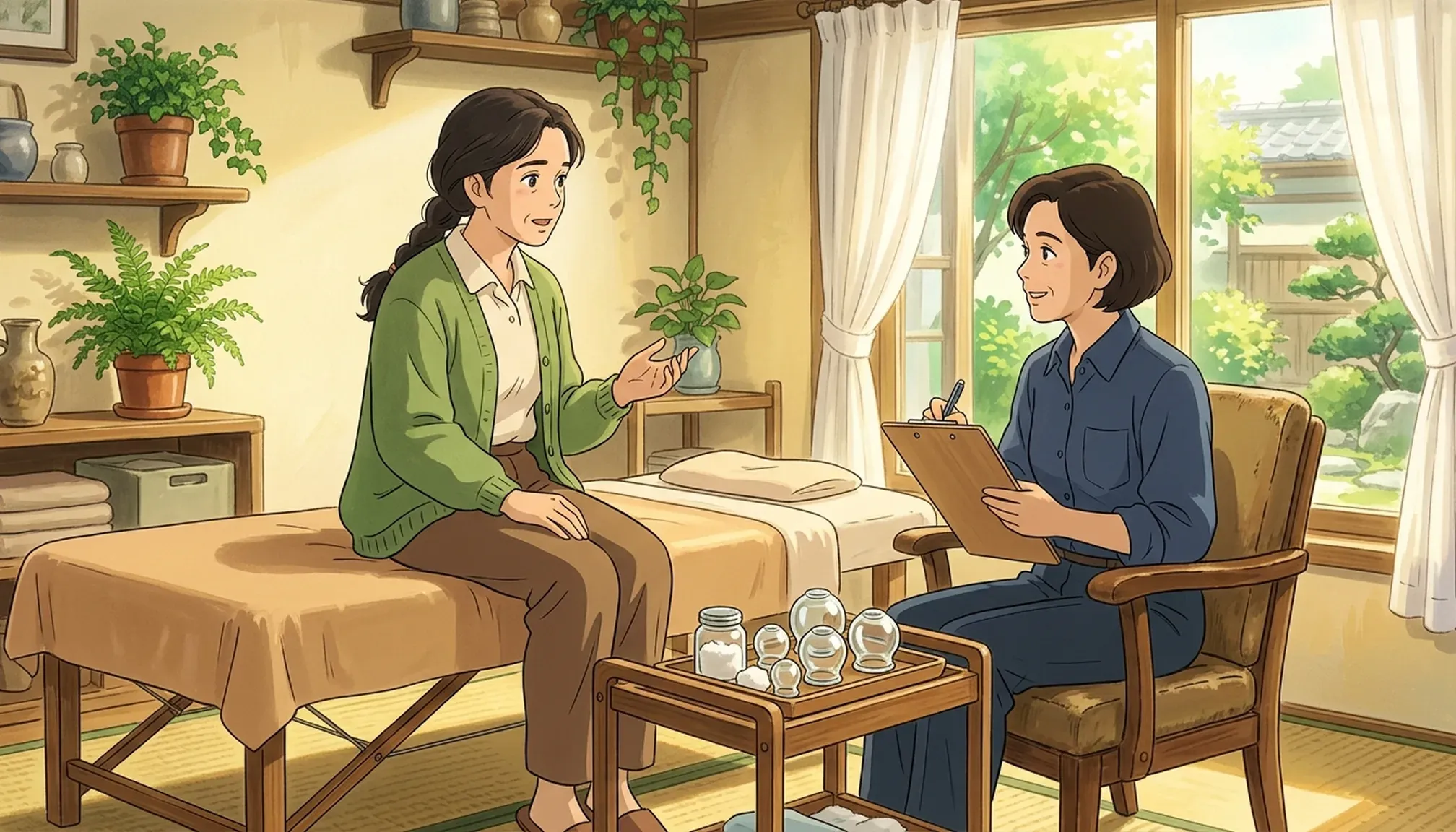
Initial conversation. The practitioner asks about your reason for the visit, your medical history, the medications you take, how you sleep, how you digest, and how you handle stress. It's a broad interview, because TCM looks at the whole person and not just the symptom.
Examination. They usually look at your tongue, take your pulse at the wrist, and palpate painful or tense areas. From this they build a diagnosis in terms of Chinese medicine.
Needle placement. Anywhere from a few needles to a dozen are inserted, depending on the case, at points in the affected area and also away from it. For example, for a digestive complaint they might use Zusanli (ST36), on the leg, and for emotional tension Taichong (LR3), on the foot.
Rest. You stay lying down or seated for about 20 to 30 minutes, often with a feeling of calm. Sometimes this is combined with heat (moxibustion) or massage.
Removal and recommendations. The needles are removed, and you're given advice on habits and sometimes acupressure instructions to practice at home.
About the sensation: the needles are much thinner than those used for injections. Many people barely feel the insertion and describe, at most, a tingling, heaviness, or passing warmth. It shouldn't be painful, and if anything bothers you, you should say so right then.
What is acupuncture good for? The most common reasons people seek it out
When people ask what acupuncture is good for, they are usually looking for relief in one of these areas. These are the most common reasons for seeking it out, and in all of them it's used as a complement.
Musculoskeletal pain and headaches
Back pain, neck, shoulder, or knee pain, and headaches are by far the most common reason for a visit. In TCM they are understood as stagnation of Qi and Blood in the area. Many people report that the sessions help them ease tension and move more comfortably, especially when combined with gentle exercise and good posture habits.
Stress, anxiety, and emotional tension
Chinese medicine doesn't separate the body from the emotions. Prolonged worry, irritability, or the feeling of always being "on edge" are interpreted as an imbalance that affects organs such as the Liver or the Heart. Points such as Shenmen (HT7), "the gate of the Shen," or spirit, and Neiguan (PC6) are frequently used to promote calm. What many people describe is deep relaxation during the session and mental rest afterward.
Sleep problems
Sleeping poorly, waking in the early hours, or having a racing mind at bedtime is another very common reason for a visit. Acupuncture is used to support restful sleep by addressing the stress and the habits that disrupt it. If insomnia is persistent, it's worth discussing it with your doctor as well, because it can have causes that need to be investigated.
Digestion
Heaviness, bloating, sluggish digestion, constipation, or discomfort linked to nerves are common complaints. In TCM, digestion depends on the Spleen-Stomach axis, which is why points such as Zusanli (ST36) hold a central place in many treatment plans. It's used as a support, alongside diet and whatever medical treatment is appropriate.
Women's health
Many women come in for menstrual pain, irregular cycles, or menopausal symptoms such as hot flashes and poor sleep. Sanyinjiao (SP6), the "meeting of the three Yin," often comes up here, a point widely used in Chinese gynecology. This is an area where medical follow-up is essential, and during pregnancy there are points that should be avoided, as we'll see below.
Benefits of acupuncture: what is supported and what isn't
This is the section where honesty matters most. The benefits of acupuncture are not the same across all uses, and not everything you hear has the same level of support.
What has the most support. There is extensive research on its use in some types of pain, such as back pain, neck pain, and headaches, and the results suggest it may help relieve them in some people. It is also being studied for nausea and other symptoms. Even so, studies don't always agree, it's hard to design good trials with needles, and part of the effect could be due to relaxation, expectation, or the attention received. Those factors don't take away from the fact that the person feels better, but it's worth keeping them in mind.
What is promising but limited. For stress, sleep, digestion, or menopausal symptoms, studies are under way with mixed results. Many people report an improvement in their well-being, but the conclusions are still limited.
What isn't supported. No evidence shows that acupuncture cures serious diseases such as cancer, diabetes, or heart disease, or that it replaces a medication, surgery, or an ongoing treatment. Be wary of anyone who promises that, who guarantees results, or who asks you to give up your medical treatment.
The most sensible way to see it is this: acupuncture can add well-being and ease discomfort as a complement, but it does not replace medical diagnosis or treatment.
Who should not have acupuncture, or should be cautious?
Acupuncture that is well practiced, with sterile single-use equipment and by a qualified professional, is considered safe. Even so, some situations call for always telling your acupuncturist and, in some cases, checking with your doctor first:
Pregnancy. There are points that are avoided as a precaution, including some as commonly used as Sanyinjiao (SP6) or Hegu (LI4), and you should only be treated by a practitioner with specific training.
Anticoagulants or clotting disorders. They increase the risk of bruising or bleeding at the needle site.
Pacemakers or other implanted devices. This matters if electroacupuncture is used.
Skin infections in the area, or serious undiagnosed illness. It needs to be investigated first.
Children. They need a practitioner with pediatric experience and very gentle techniques.
Intense fear of needles. Needle-free techniques exist, such as acupressure or laser, which you can discuss with the practitioner.
And here is a list worth not ignoring. See your doctor, and not only your acupuncturist, if you have:
Intense or sudden pain, or pain that is progressively getting worse.
High fever, unexplained weight loss, or extreme fatigue.
Chest pain, shortness of breath, or sudden weakness on one side of the body.
Blood in your stool or urine, or noticeable changes in your bowel habits.
How to get started with acupuncture
If you decide to try it, these steps will help you do it well:
Talk to your doctor first if you have a diagnosed illness, take medication, or are pregnant.
Choose a qualified practitioner with accredited training, who works in a clean facility and uses sterile disposable needles.
Tell them everything at the first visit: your symptoms, medications, allergies, and expectations.
Ask how many sessions you might need and within what time frame you should notice something. A good practitioner will give you a realistic idea and review your progress with you.
Be patient and observe. Some people notice changes within a few sessions and others notice nothing. If after a reasonable time you see no benefit, it's perfectly legitimate to reconsider the treatment.
Frequently asked questions
What is acupuncture used for, in a nutshell?
It's used as a complement to relieve common complaints, especially musculoskeletal pain, headaches, stress, sleep disturbances, digestive discomfort, and symptoms linked to the female cycle. It doesn't cure diseases or replace medical treatment; it supports the body and can improve well-being.
What is acupuncture, explained simply?
It's a Traditional Chinese Medicine technique that involves inserting very fine, sterile needles at specific points on the body. According to the tradition, this regulates the circulation of Qi and restores balance; according to current research, the stimulus acts on nerves and tissues. In practice it's used as a complement to ease discomfort and promote well-being.
What is acupuncture good for if I don't have any specific complaint?
Some people use it to relax, sleep better, or get through periods of heavy stress, without a defined problem. In that case the goal is general well-being, not treating a disease. It makes sense if it feels good to you and a qualified professional performs it, but there's no need to keep doing it indefinitely or as "prevention" of disease.
What are acupuncture points used for?
Points are the specific places where the needle is inserted. The tradition describes 361 classical points distributed along fourteen channels, plus hundreds of extra points, and each has a precise location and its own indications, gathered over centuries. Some act on the area where they are located, like the knee points for the knee; others have effects at a distance, and that is where much of the logic of acupuncture lies: Hegu (LI4), on the hand, is used for headaches and toothaches; Neiguan (PC6), on the wrist, for nausea; and Zusanli (ST36), below the knee, for digestion and fatigue. The acupuncturist combines several according to each person's picture. If you'd like to see where each one is and what it's used for, you can look them up in our Acupuncture Atlas.
What will I notice in the first session?
The first visit is mostly the assessment: medical history, tongue, pulse, and a first round of needles. Many people feel calm or drowsy afterward. Changes in the symptom usually take several sessions, and in some cases they never come.
Does acupuncture hurt?
The needles are very thin, and most people feel only a slight prick, tingling, heaviness, or warmth. There may be a little soreness or a bruise at a point. If something hurts during the session, say so and the practitioner will adjust.
How many sessions are needed?
It depends on the reason for the visit, how long the problem has been present, and the individual. It's common to start with one session a week for a few weeks and space them out according to progress. Your acupuncturist should explain the plan and review it with you, with no open-ended commitments.
Does it have side effects?
When performed by a qualified professional with sterile equipment, the effects are usually mild: small bruises, tenderness in the area, or drowsiness after the session. Serious problems are very rare and are mostly related to poor practice or inadequate equipment.
Can I stop my medication if I have acupuncture?
No. Never stop or change a treatment on your own. Acupuncture should be coordinated with your doctor, who should be told that you're trying it, so that both approaches add up safely.
In summary
What acupuncture is used for has an honest answer: to support, with very fine needles and a whole-person perspective, relief of complaints such as pain, stress, poor sleep, heavy digestion, or imbalances of the female cycle. It has reasonable support in some types of pain, still-limited results in other uses, and none as a sole treatment for serious diseases. If it interests you, talk to your doctor, choose a qualified professional, and follow your progress patiently: that is the best way to find out what it can offer you.