Maybe you've heard of traditional Chinese medicine from a friend who goes to acupuncture, from an herbal tea someone recommended, or because at some point you got curious about what lies behind the needles, the cupping, and the concepts of Yin and Yang. It is a medical system with a very long history, with its own way of understanding the body, assessing a person, and supporting them when something is off. And, as often happens with anything that comes from another culture, it is frequently only half understood: some see it as magic, others as a mere pile of beliefs.
In this article we introduce it from scratch and with our feet on the ground: what Chinese medicine is, what ideas it rests on, which therapies it uses, what people usually consult it for, what can be said today about its evidence, and how it fits with conventional medicine. It is an overview; each topic has its own in-depth article elsewhere.
What is traditional Chinese medicine, and where does it come from?
Traditional Chinese medicine (TCM) is the body of health knowledge and practices that developed in China over more than two thousand years. It grew out of patient observation of nature, the seasons, the body, and illness, and it was consolidated in classic texts that are still studied today. It is not a single technique but a complete system that includes a theory of how the body works, methods of diagnosis, and several forms of treatment.
It helps to understand its starting point. The ancient Chinese physicians had no microscopes or blood tests, so they described health based on what they could see, touch, and ask about: the color of the face, the look of the tongue, the pulse, sleep, appetite, temperament, and the relationship with cold and heat. From this emerged a language of its own — that of Qi, Yin and Yang, and the organs and their functions — which does not set out to describe anatomy as we know it, but rather the patterns of how a person functions.
Over the centuries, this system spread across East Asia and, later, to the rest of the world. Today Chinese medicine and acupuncture are practiced in many countries, and the World Health Organization recognizes traditional medicine as part of the health care landscape, although that does not mean every technique has the same level of evidence.
The pillars of Chinese medicine
To understand how traditional Chinese medicine thinks, you only need to know four basic ideas. You don't have to memorize them: they serve to grasp the logic of the whole.
Yin and Yang
Yin and Yang are two complementary poles found in everything: rest and activity, cold and heat, inside and outside, night and day. Neither is better than the other, and health is understood as a dynamic balance between the two. When one of them overflows or falls short, discomfort appears. For example, a person with a lot of heat, restlessness, and light sleep would be described as having an excess of Yang or too little Yin to hold it in check.
Qi
Qi is the word this tradition uses for vitality and for the processes that keep the body alive and working: moving, digesting, defending itself, recovering. It is not understood as a mystical substance but as a practical concept for talking about how strong and fluid someone's energy is. Qi is said to be weak, stagnant, or disordered, and a good part of treatment aims to get it circulating harmoniously again.
The Five Phases
Wood, Fire, Earth, Metal, and Water are five categories that Chinese medicine uses to describe the transformations of nature and of the body. Each Phase is associated with a group of organs, a season, an emotion, and a tissue, and all of them influence one another. More than a rigid scheme, it works as a map for seeing relationships: why stress can affect digestion, or why prolonged fatigue can leave someone more vulnerable to colds.
Diagnosis
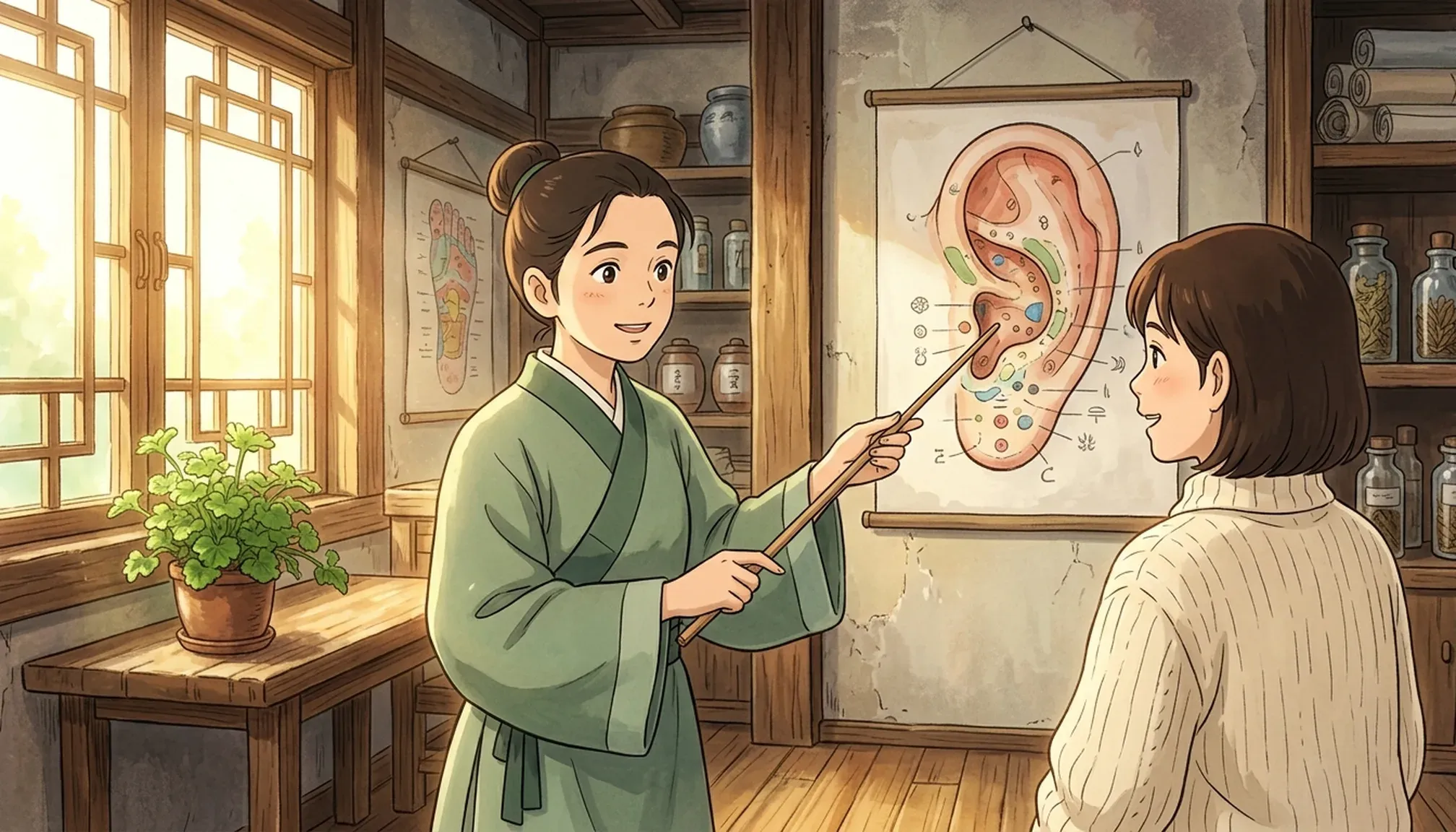
Examination in Chinese medicine is holistic. The practitioner talks at length with you about symptoms, sleep, digestion, emotions, and habits; observes your general appearance and, above all, your tongue; and takes the pulse at the wrist, assessing its strength, rhythm, and quality. From all of this they build what is called a pattern, which describes the state of the person as a whole and not just the symptom that brings them to the appointment. Two people with the same headache may receive different approaches, because their patterns are different.
Therapies in Chinese medicine
The therapies of Chinese medicine fall into several families that are often combined depending on each case.
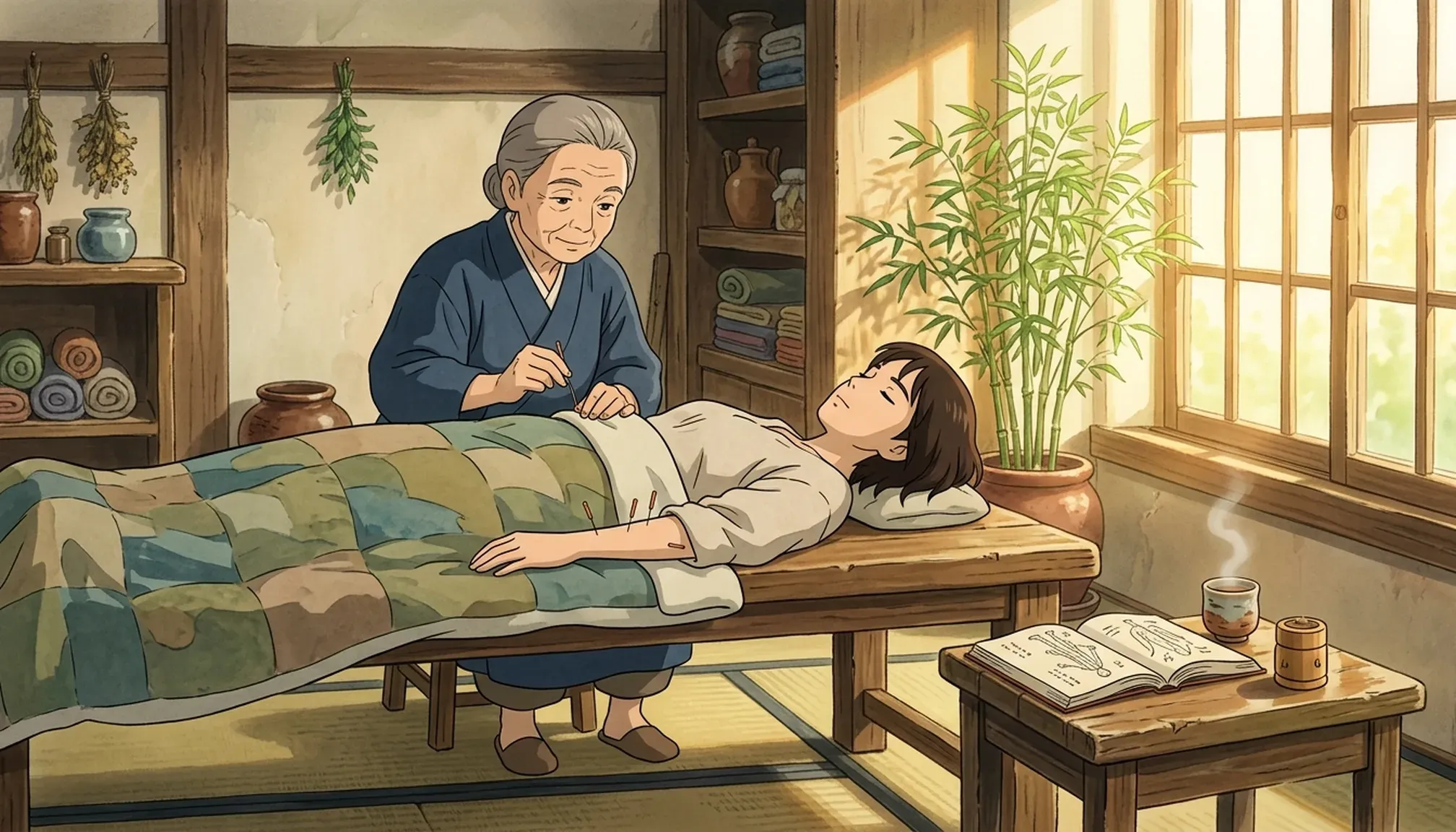
Acupuncture: the insertion of very fine needles at specific points on the body. It is the best known and the most studied. It is used mainly to relieve pain, tension, and other discomforts, and many people describe it as a relaxing experience.
Chinese herbal medicine: the use of plants and other substances, usually in formulas that combine several ingredients. It should only be prescribed by a professional, because plants have real effects and can interact with medications.
Tuina: a therapeutic massage that combines pressing, kneading, and mobilization techniques, designed to work on the muscles, the joints, and overall well-being.
Moxibustion: the application of heat to specific areas by burning mugwort, a plant used in the form of a stick or cones. It is used mainly when the picture is interpreted as one of cold or weakness.
Cupping: small cups that create gentle suction on the skin to release the muscles. They can leave temporary round marks, which are not bruises from a blow and disappear within a few days.
Qigong and tai chi: gentle exercises that coordinate movement, breathing, and attention, and that are practiced as everyday health care.
The relationship between Chinese medicine and acupuncture is close, but they are not synonyms: acupuncture is one of the tools of a broader system, and many practitioners combine it with moxibustion, cupping, dietary advice, or exercises. If you want to go deeper into the technique of needling, it has its own separate space. Among the points most used in the clinic are Zusanli (ST36), on the leg, Hegu (LI4), on the hand, and Taichong (LR3), on the foot. All three appear among the twelve celestial star points, a song recorded in the Zhenjiu Dacheng (Great Compendium of Acupuncture and Moxibustion) that promised twelve points were enough to cover the three hundred and sixty.
What do people usually consult it for, and what benefits does it offer?
When talking about the benefits of Chinese medicine, we have to be careful. It does not cure diseases and it does not replace conventional medicine; what is attributed to it is the ability to support and to relieve. The most common reasons for consulting are:
Muscle and joint pain, such as in the back, neck, or shoulder.
Headaches and migraines.
Stress, emotional tension, and difficulty sleeping.
Functional digestive complaints.
Fatigue and a feeling of low vitality.
Discomfort associated with the menstrual cycle or menopause.
In these cases, many people report feeling more relaxed, sleeping better, or noticing less pain after several sessions. In addition, there is something that tends to be highly valued: the dedicated attention. A Chinese medicine appointment lasts longer and asks about aspects that other appointments don't have time to explore, and that global view is part of what people appreciate.
What does the science say?
The honest answer is that it depends on the technique and the condition. Acupuncture is the most researched, and there is a considerable body of studies on its use in chronic pain and other situations; results are generally promising in some areas, but limited or debated in others, and designing rigorous studies with needles is complicated. For herbal medicine, tuina, or qigong, the research is less abundant and of variable quality. In short: research is under way, there are encouraging signs, and there is still a lot to clarify. Be wary of anyone who promises you guaranteed results.
What does traditional Chinese medicine do in a consultation?
Knowing what traditional Chinese medicine is in theory helps, but many people want something more concrete: what exactly does the practitioner do when you arrive with a problem? The answer has three stages that repeat in almost every consultation.
First, they listen and assess
The first visit is usually long. The practitioner asks about your reason for consulting, but also about how you sleep, how you digest, whether you run more cold or more hot, how your mood is, and what pace of life you lead. Then they look at your tongue and take the pulse at both wrists. With all of this they are not trying to put a name to a disease, which is the doctor's job, but to understand which pattern of imbalance lies behind your complaints: whether Qi deficiency, stagnation, excess heat, or dampness predominates, for example.
Then they choose the tools
With the pattern defined, they decide which therapies to use and in what order. A person with tension and poor rest may receive acupuncture at points such as Baihui (GV20), on the top of the head, or Neiguan (PC6), on the inner side of the wrist, often together with Sanyinjiao (SP6), on the leg. Another, with a picture of cold and tiredness, might receive more moxibustion. Sometimes cupping, a tuina massage, or an herbal formula is added, which must always be prescribed by someone with training. The selection changes from one person to another and also from one session to the next, because it adjusts to how you are progressing.
And finally, they give you homework
An important part of Chinese medicine happens outside the treatment table. It is common to leave with dietary recommendations based on your pattern, advice on sleep schedules, a qigong exercise, or points you can press gently with your finger. The idea is that you also take part in caring for your health and don't depend only on the sessions.
Traditional Chinese medicine: what it's for and what it's not for
When someone asks what traditional Chinese medicine is for, the most honest answer is that it is mainly for supporting: relieving discomforts that have no simple solution, improving the sense of well-being, helping manage stress, and encouraging good habits. Its natural territory is functional and chronic problems, in which a person feels unwell even though test results come back normal, and prevention, understood as maintaining balance before symptoms appear.
Just as important is knowing what it's not for. It is not the route for handling an emergency, a serious infection, sudden chest pain, a high fever, or a lump that appears suddenly; nor does it replace surgery, antibiotics, or cancer treatment. In those cases the doctor always comes first, and Chinese medicine, if used, comes afterward as support and with the doctor's knowledge. A good practitioner is clear about this and will tell you plainly.
Chinese medicine and conventional medicine: how they relate
Traditional Chinese medicine and Western medicine look at the same body from different traditions. Conventional medicine excels at precise diagnosis, emergencies, surgery, serious infections, and treatments with proven efficacy; Chinese medicine puts the emphasis on the whole person, lifestyle, and the prevention of imbalances. That is why the sensible approach is to see them as complementary rather than as enemies.
In practice, this means several things:
If you have new, intense, or persistent symptoms, the first step is to see a doctor for a diagnosis.
If you are following a treatment, don't stop it or change it without talking to the person who prescribed it, and tell your therapist what medication you take.
Pregnancy, anticoagulant use, pacemakers, children, and serious illnesses call for special caution: in all of these cases it is best to check with your doctor first.
Always look for a professional with accredited training, who works with sterilized, single-use materials and who doesn't promise cures.
Frequently asked questions
What is Chinese medicine in a nutshell?
It is a traditional medical system of Chinese origin, with more than two thousand years of history, that understands health as a balance between Yin and Yang and the circulation of Qi. It includes acupuncture, herbal medicine, tuina, moxibustion, cupping, and qigong, and today it is used as a complement to conventional medicine.
Are Chinese medicine and acupuncture the same thing?
No. Acupuncture is one of the therapies of Chinese medicine, the best known, but the system is broader: it also includes medicinal plants, tuina massage, moxibustion, cupping, exercises such as qigong, and recommendations on diet and lifestyle. Many treatments combine several of these techniques.
Does traditional Chinese medicine have a scientific basis?
Part of it is studied with scientific methods, especially acupuncture for pain. Results are promising in some cases and limited in others. Its traditional concepts, such as Qi, cannot be measured with instruments, and the research on other therapies is even less solid. There is still a lot to study.
Can Chinese medicine replace my medical treatment?
No. It is meant as a complement, never as a substitute. If you have a diagnosis or a treatment under way, keep it and tell your doctor that you are interested in a complementary approach. A good Chinese medicine practitioner will recommend the same and will refer you to a doctor when the case calls for it.
What is traditional Chinese medicine used for?
It is used as a complement to relieve common complaints, such as back pain or headaches, stress, poor sleep, heavy digestion, or fatigue, and to look after your health preventively. It does not cure serious diseases or replace the doctor, but many people report feeling better when they combine it with their usual treatment.
What does a traditional Chinese medicine practitioner do in the first session?
They conduct a detailed interview about your symptoms, sleep, digestion, and emotions, look at your tongue, and take your pulse. With that information they identify a pattern and propose a treatment, which may include acupuncture, moxibustion, cupping, or massage, along with advice on diet and habits to follow at home.
How many sessions does it take to notice benefits?
It depends on the person and the reason for consulting, and no one can guarantee it. Some people report an improvement in their symptoms after a few sessions, and others need longer follow-up. The reasonable approach is to agree with the practitioner on a timeframe to assess how you are progressing and decide together whether it is worth continuing.
Does it have contraindications or risks?
When practiced by a qualified professional using single-use materials, acupuncture is generally considered safe, although it can cause mild discomfort such as a small bruise. Herbs can have effects and interactions with drugs. Always let your practitioner know if you are pregnant, take anticoagulants, have a pacemaker, or have a serious illness.
In summary
Traditional Chinese medicine is much more than needles: it is a complete way of understanding health, with its own ideas, its own assessment, and its own therapies, which millions of people use as a companion to conventional medical care. Getting to know it without prejudice or miracle expectations lets you appreciate it for what it offers: a global, close, person-centered view. If you are interested in trying it, look for a qualified professional, tell them your whole story, and, for any symptom that worries you, see your doctor first.