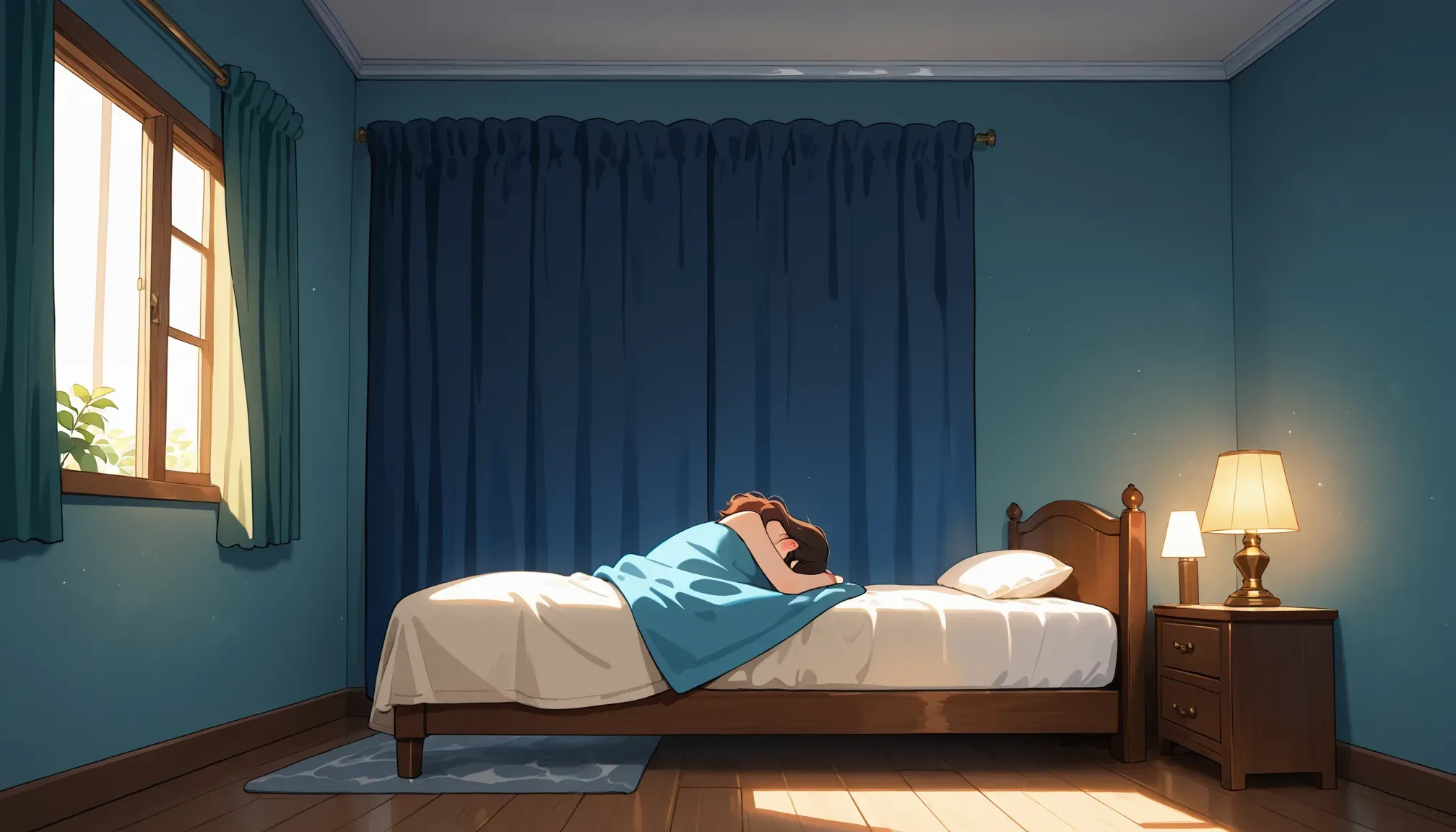
You go to bed at a reasonable hour, you get your hours in… and you still wake up feeling as if you hadn't slept at all. Morning tiredness that won't go away even though you "sleep well" is one of the most common and most frustrating complaints: if sleep is the great restorer, what's going wrong? The reality is that sleeping many hours doesn't guarantee restful sleep, and a number of very ordinary factors — schedules, diet, stress, screens, a sedentary routine — can be draining your energy at night without your noticing. Traditional Chinese medicine offers an interesting perspective on why this happens and what you can do about it. In this article, we explain it honestly and without jargon.
Is It Normal to Wake Up Tired Some Days?
Yes, absolutely. We all have mornings when it's hard to get going, especially after an intense week or a change in schedule, but that feeling usually fades within minutes, or once you've had breakfast or a shower.
What deserves attention is when morning tiredness becomes the norm: when, for weeks, you wake up feeling as though you haven't slept, or the fatigue lasts all day. In that case, it may be a sign that something is interfering with your nightly recovery.
Why Do I Wake Up Tired If I Sleep Well? The Most Common Causes
"I sleep well" usually means "I sleep enough hours," but quantity and quality are not the same thing. These are the most frequent causes of that morning tiredness that seems to have no explanation:
Heavy or Late Dinners
Digestion is one of the most demanding jobs the body does. If you eat dinner late, eat a lot, or eat very heavy foods, your body spends a good part of the night processing the meal instead of resting and repairing. The result: you wake up feeling heavy or with no appetite for breakfast, as if your body hadn't finished its shift.
Screens Until the Last Minute
Your phone, tablet, or TV right up until bedtime keeps your brain active and stimulated. On top of that, the bright light from screens at night confuses the body's natural rhythms. You may fall asleep with no trouble, but your rest is less deep and restorative than it seems.
Alcohol at Night
A drink can relax you and help you fall asleep, it's true, but it also disrupts sleep architecture: it fragments the deep stages and encourages awakenings you don't remember. That's why it's so common to wake up feeling you haven't slept well after a night with alcohol, even if you slept your usual hours.
Irregular Schedules
Going to bed and getting up at different times every day — late on weekdays, very late on weekends — is what sleep experts call "social jet lag." The body runs on internal clocks, and they struggle to adapt to changing schedules: you can sleep the same number of hours, but outside the time when your body is ready to do so, and that lowers the quality of your rest.
Stress and Rumination
Sleeping isn't just closing your eyes: it's also letting your mind let go. If you go to bed with your head full of worries, sleep comes, but it's light and full of micro-awakenings. Many people with this pattern have intense, even exhausting dreams, and get up as tired as when they went to bed.
A Sedentary Lifestyle
It may seem contradictory — "how can I be tired if I don't do anything?" — but the body is designed to move. Spending the day sitting slows circulation and makes it harder to reach the healthy level of physical tiredness that promotes deep sleep. Regular movement, even just walking, is one of the best allies of good rest.
Other Causes Worth Ruling Out
Some medical conditions produce persistent fatigue and morning tiredness: thyroid problems, anemia, sleep apnea, deficiencies of certain vitamins, or depression, among others. None of them is resolved by changing habits, and most can be detected with a simple blood test. If the tiredness lasts for weeks, the right thing to do is to talk to your doctor rather than look for remedies on your own.
How Traditional Chinese Medicine Interprets Morning Tiredness
Traditional Chinese medicine (TCM) understands health as a balance: the body's energy is spent during the day and recovered during the night. Waking up tired, from this point of view, means that recovery hasn't been completed. TCM goes a step further and asks why that happens, and its answers make a lot of common sense:
Nightly Recovery Hasn't Been Completed
In the Chinese view, night is the time for withdrawal: the body stores its energy, repairs, and renews. If that phase is interrupted — by heavy digestion, by a mind that won't settle, or by sleeping at times out of step with the natural rhythm — the "recharge" is left half done, and TCM associates this with symptoms such as waking up with no energy or feeling cold in the morning.
Wear and Tear from Overspending
Energy can also run out through overspending: very long days, constant demands, never stopping. In the Chinese tradition, it is said that rest is built during the day, not only at night: breaks, relaxed meals, and moments of calm are part of the energy you will later enjoy when you sleep. Someone who lives in nonstop mode without catching a breath during the day gets up empty in the morning.
Stress That Prevents Restorative Rest
For centuries, TCM has described how worry and overthinking keep the body on alert and make truly deep rest difficult. The traditional image is that of a mind that can't "set down" its activity and keeps working while the body tries to sleep. Hence the dream-filled sleep, the awakenings, and that feeling of having spent the night busy without knowing with what.
The Importance of Regular Rhythms
Few principles are as deeply rooted in Chinese medicine as living in harmony with rhythms: those of day and night, of meals, of the seasons. Getting up and going to bed at similar times each day and reserving the night for withdrawal is not superstition, but a recognition that the body works in cycles, and that respecting them is the simplest way to preserve energy.
Habits for Waking Up with Energy: Practical Tips
The good thing about most of these causes is that they respond to simple changes. These are the most effective:
Eat a light dinner and, if you can, eat early. Leave at least two or three hours between dinner and bedtime. Prioritize light, cooked dishes: vegetables, creamy soups, fish, or legumes in moderate portions.
Switch off screens before sleep. Put your phone away an hour before bed. Instead: a warm shower, some quiet reading, or a few minutes of slow breathing.
Keep regular hours. Go to bed and get up at the same time every day, weekends included. Your body will appreciate the predictability.
Move every day. Walking for thirty minutes already promotes deeper sleep. Avoid intense exercise right before bed.
Set aside a moment to let go of the day. Before going to bed, write down on paper what you'll do tomorrow about whatever is pending: a surprisingly effective way to get your mind to stop going in circles.
Moderate alcohol and afternoon stimulants. Caffeine takes hours to clear; it's better to leave it for the morning.
Find breaks during the day. Five minutes of calm in the middle of the morning and the afternoon are a way of saving energy for nighttime rest.
An Acupressure Routine for Waking Up
If you have trouble getting going, try these three minutes before getting up, still sitting on the bed:
Rub your ears with your fingers, from top to bottom, until they feel warm. The ear is full of nerve endings and is a very fast alarm clock.
Tap the top of your head, at Baihui (GV20), with your fingertips for half a minute.
Press Zusanli (ST36), four finger-widths below the kneecap and one finger-width to the outside, for one minute on each leg.
Rub the soles of your feet, in the area of Yongquan (KI1), just before putting them on the floor.
Afterward, open the window and get natural light within the first half hour: morning light is the most powerful signal for the body to finish waking up and, in addition, it helps you sleep better the following night.
Can Acupuncture and Moxibustion Help with Rest?
In traditional Chinese medicine, both acupuncture and moxibustion (the therapeutic heat of mugwort) have been used for centuries to promote more restorative rest and support the recovery of energy. The underlying idea is simple: when the body is balanced and the mind lets go of accumulated tension, sleep tends to be of better quality. Practitioners often work with Shenmen (HT7) and Anmian, the "peaceful sleep" point, and, when low energy predominates, with Zusanli (ST36) warmed with moxa.
Many people come to an acupuncture visit for exactly this reason: they aren't looking to "cure" anything, but to help their body rest better, especially during times of stress or exhaustion. A qualified professional will ask you about your schedule, your diet, and your general condition, and will propose a personalized approach. The World Health Organization recognizes acupuncture and its associated techniques as widely used traditional practices, and research into their effects continues to develop.
Important: these techniques are a complement, never a substitute. If the tiredness lasts for weeks, if it is very intense, or if it comes with other symptoms, the first step is to see your doctor to rule out causes that require medical attention.
When to See Your Doctor
Persistent fatigue is not something to normalize. See your doctor if the morning tiredness lasts for several weeks despite getting enough sleep, if it is so intense that it makes your daily life difficult, or if it comes with other symptoms such as unexplained weight loss, palpitations, shortness of breath, or persistent sadness. A simple blood test can rule out common causes such as anemia or thyroid problems. Traditional Chinese medicine works best hand in hand with conventional medicine, not in place of it.
Frequently asked questions
Why do I wake up tired if I sleep eight hours?
Because hours aren't everything: the quality of your sleep and what happens before you go to bed matter as much as the quantity. Heavy dinners, alcohol, screens, stress, and irregular schedules can make those eight hours less restorative than they should be. And if the tiredness persists, it's worth ruling out medical causes with your doctor.
Is it bad to wake up tired every day?
Waking up tired now and then is normal, but if it happens every day for weeks, it's a sign worth investigating. Most likely, lifestyle factors are interfering with your rest, but there can also be medical causes behind it.
What does Chinese medicine say about morning tiredness?
It interprets it as insufficient nightly recovery: the body hasn't completed its repair phase, often because of overspending during the day, stress that keeps the mind from letting go, heavy digestion, or disorder in the daily rhythms. That's why it puts so much emphasis on regular habits as the foundation of rest.
Will acupuncture help me sleep better?
Many people turn to acupuncture and moxibustion precisely to promote more restorative rest and regain energy. A qualified professional will assess your case individually. Keep in mind that it is a complement to healthy habits and medical care, not a substitute: with persistent symptoms, the first step is to see your doctor.
Wake Up with Energy: Start Today
Waking up tired even though you sleep well is not something you have to accept. Most of the time, the answer lies in everyday things: lighter dinners, regular schedules, fewer screens at night, daily movement, and moments of calm to release stress. Traditional Chinese medicine adds to these habits a holistic view of the body's balance that has been refined over centuries. If you want to get your mornings back, see your doctor first to rule out medical causes, and then consider consulting a qualified professional in acupuncture and traditional Chinese medicine, who will assess your situation in a personalized way. Your mornings can be very different.